

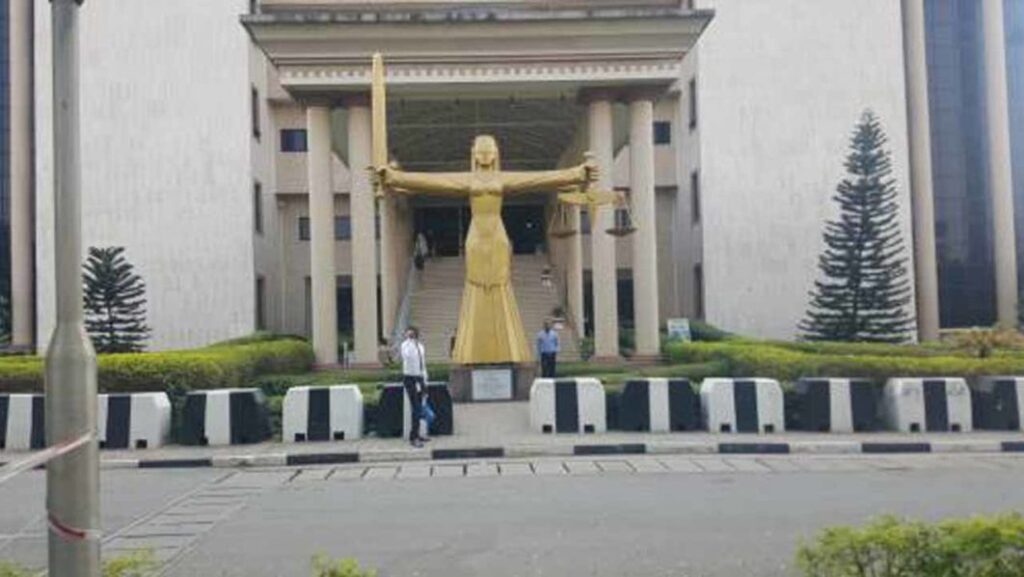
The Federal High Court in Abuja has delivered a major ruling that could significantly reshape preparations for Nigeria’s 2027 general elections, after invalidating portions of the Independent National Electoral Commission’s (INEC) revised timetable for party primaries and candidate nominations.
In a judgment delivered by Justice Mohammed Umar, the court held that several timelines fixed by INEC were inconsistent with the provisions of the Electoral Act, 2026, stressing that the electoral body lacked the statutory powers to shorten deadlines already guaranteed by law.
The court specifically nullified INEC’s May 10 deadline that required political parties to submit their membership registers and databases as a condition for participation in the 2027 elections.
Justice Umar ruled that under Section 29(1) of the Electoral Act, political parties are legally entitled to submit the personal particulars of their candidates up to 120 days before an election, adding that INEC cannot lawfully reduce that period through administrative guidelines.
The court also declared that INEC lacked the authority to impose earlier deadlines for the withdrawal and substitution of candidates, noting that Section 31 of the Electoral Act permits such changes up to 90 days before an election.
Similarly, the judge held that INEC could not publish the final list of candidates earlier than the 60-day minimum period stipulated by law.
The ruling followed a suit filed by the Youth Party, which challenged INEC’s authority to dictate timelines for party primaries and nomination processes ahead of the 2027 polls.
The suit, marked FHC/ABJ/CS/517/2016, argued that while INEC has powers to monitor party primaries and receive candidate details, it does not possess the authority to unilaterally determine the timeframe within which political parties must conduct their internal processes.
Justice Umar agreed with the plaintiff and subsequently set aside portions of INEC’s “Revised Timetable and Schedule of Activities for the 2027 General Election” found to be inconsistent with the Electoral Act.
The court further ruled that INEC lacked the statutory authority to compel campaigns to end two days before elections, as stipulated in its timetable.
Reacting to the judgment, the Coalition of United Political Parties, CUPP, urged INEC to immediately comply with the ruling and review its election timetable accordingly.
Acting National Chairman of CUPP, Peter Ameh, described the verdict as a victory for democracy and party autonomy.
He warned that any attempt by INEC to appeal the ruling could create uncertainty and undermine public confidence in the electoral process.
According to Ameh, at least 14 political parties are already considering adjustments to their internal schedules to accommodate new entrants and defectors ahead of the elections.
Former presidential candidate Gbenga Hashim also hailed the judgment, saying it vindicated his longstanding position that INEC exceeded its powers under the Electoral Act.
Hashim commended Justice Umar for what he described as a courageous decision that reaffirmed the supremacy of the law over administrative directives.
The judgment is expected to have far-reaching implications for political parties, aspirants and INEC as preparations intensify for the 2027 general elections.
















Comments