
The United States House of Representatives has approved a bill that would cut U.S. assistance to Nigeria by 50 percent unless the Federal Government demonstrates measurable progress in protecting Christian communities from religiously motivated violence.
The provision is contained in the National Security, Department of State, and Related Programs (NSRP) Appropriations Bill, which was passed by the House on Wednesday. The legislation provides a total discretionary allocation of $47.32 billion, representing a 6 percent ($2.69 billion) reduction from the FY2026 enacted level.
Under the bill, half of U.S. assistance to Nigeria will remain withheld until the U.S. Secretary of State certifies that the Nigerian government has taken concrete steps to protect Christians facing religious violence and to hold perpetrators accountable.
The House Appropriations Committee, in its accompanying report, cited the recent Palm Sunday massacre and expressed deep concern over the continued wave of violence across parts of Nigeria. It also directed that funds from the Security Sector Programme/National Security account be used to address attacks attributed to Fulani militias and worsening insecurity in the Middle Belt region.
The committee further instructed the Secretary of State to assess whether the Nigerian government is facilitating the safe return of internally displaced persons (IDPs) to their ancestral communities. The outcome of that assessment will form part of the certification process required before the suspended assistance can be released.
In addition, the legislation requires the State Department to submit reports to Congress within 45 to 60 days outlining efforts to curb targeted violence against Christians and improve accountability for violations of religious freedom.
To support these objectives, lawmakers approved an additional $2 million under the International Narcotics Control and Law Enforcement account for atrocity prevention, with part of the funding specifically earmarked to address violence in Nigeria’s Middle Belt.
The committee also encouraged stronger partnerships with Nigerian law enforcement agencies to improve professionalism, operational capacity and accountability at both federal and state levels.
The bill directs the Secretary of State to evaluate the impact of Nigeria’s blasphemy laws in the annual International Religious Freedom Report, while reaffirming U.S. support for persecuted Christians worldwide.
Speaking after the bill’s passage, Congressman Riley M. Moore, who sponsored the provisions relating to Nigeria, said the measure sends a strong message that the United States stands with Christians facing persecution.
“Christians in Nigeria continue to endure horrific violence, murder and persecution while much of the world turns a blind eye to their suffering,” Moore said. “This bill conditions U.S. assistance on tangible progress in protecting Christians, addressing the threat posed by Fulani terrorists, and ensuring displaced persons can safely return to their ancestral lands.”
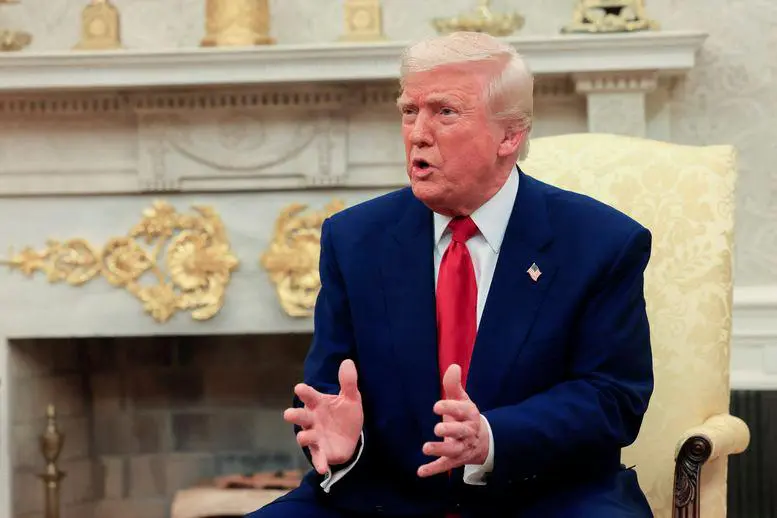
Moore added that the legislation also strengthens accountability, supports police reform in Nigeria, combats human trafficking, protects free speech and aligns with President Donald Trump’s “America First” foreign policy agenda.
Also backing the measure, Congressman Greg Steube accused the Nigerian government of failing to adequately respond to the violence, arguing that withholding only half of the assistance still represented a compromise.
The legislation also includes broader foreign policy measures, including reduced global health funding under the “America First Global Health Strategy,” continued funding for the Foreign Military Financing Programme, and restrictions on funding for what it describes as “irresponsible migration.”
The bill must still complete the remaining stages of the U.S. legislative process before becoming law.






Comments