

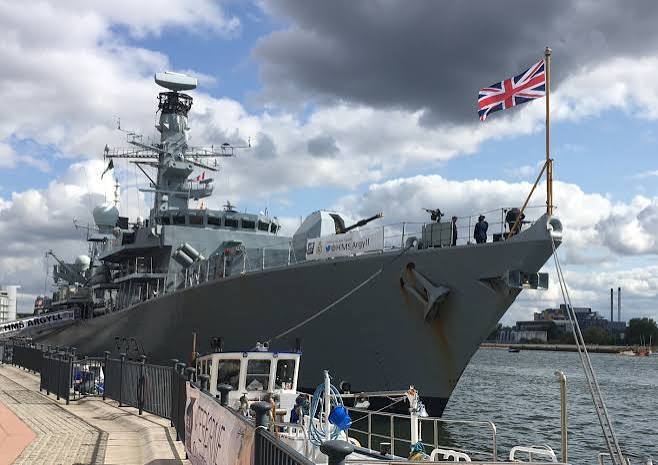
The United Kingdom has stepped up surveillance of Russian naval vessels operating near its waters, deploying several Royal Navy warships to monitor their movements amid heightened tensions linked to Moscow’s war in Ukraine.
The increased monitoring follows the UK’s interception of the sanctioned shadow fleet oil tanker Smyrtos in the English Channel in June. The British government said it has sanctioned more than 500 vessels as part of efforts to disrupt Russia’s so-called shadow fleet, which it accused of helping finance the Kremlin’s war effort in Ukraine.
On July 20, Portsmouth-based HMS Tyne monitored the Russian frigate Neustrashimy as it conducted gunnery exercises outside UK and French territorial waters.
According to the UK Ministry of Defence, HMS Tyne moved to within five nautical miles of the Russian vessel while observing the exercise and collecting intelligence.
The ministry said the Neustrashimy fired about 20 rounds from its main 100mm gun, along with additional rounds from its 30mm weapon system.
HMS Tyne commanding officer, Lieutenant Commander Sam Fields, said the deployment enabled the Royal Navy to maintain close surveillance of the Russian vessel while allowing other fleet units to continue their operational duties.
“Through sustained presence and close cooperation with allies, HMS Tyne was ideally suited to this task, providing reassurance and monitoring while enabling other Fleet units to continue their operational commitments,” Fields said.
Meanwhile, HMS Somerset has completed a four-month deployment monitoring Russian surface and underwater activity across the North Atlantic.
The Plymouth-based Type 23 frigate, equipped with advanced underwater sensors and an embarked Merlin anti-submarine warfare helicopter, returned to the UK on Friday after covering more than 24,000 nautical miles.
Its commanding officer, Commander Matt Millyard, said the deployment involved tracking submarines, working alongside NATO allies and the Carrier Strike Group, while maintaining a high level of operational readiness.
“This deployment demonstrates exactly what the Royal Navy exists to do, protect the UK and our allies from wherever our interests are threatened,” Millyard said.
HMS Severn was also deployed twice in July to monitor Russian warships.
The patrol vessel initially shadowed the Russian frigate Admiral Grigorovich as it sailed east from the French island of Ushant towards Dover.
Between July 23 and 26, HMS Severn was again deployed to monitor Neustrashimy, taking over the task from HMS Mersey in the North Sea.
The vessel tracked the Russian frigate as it escorted the shadow fleet tanker MV Vulkan from the Baltic Sea through the Dover Strait towards Ushant.
HMS Severn and HMS Mersey subsequently handed monitoring duties back and forth as Neustrashimy travelled west towards Dover after completing its escort mission.
The executive officer of HMS Severn, Lieutenant Commander Dom Jacobs, said the crew had demonstrated its ability to quickly adapt to changing operational demands while continuing its training responsibilities.
“I’m really proud of my ship’s company’s ability to adapt quickly to changes of tasking from Fleet Ready Escort to our training output as the Fleet Navigation Training Ship,” Jacobs said.
He added that the deployment highlighted the versatility of the Royal Navy’s crews and offshore patrol vessels in carrying out a wide range of operational tasks.


















Comments