

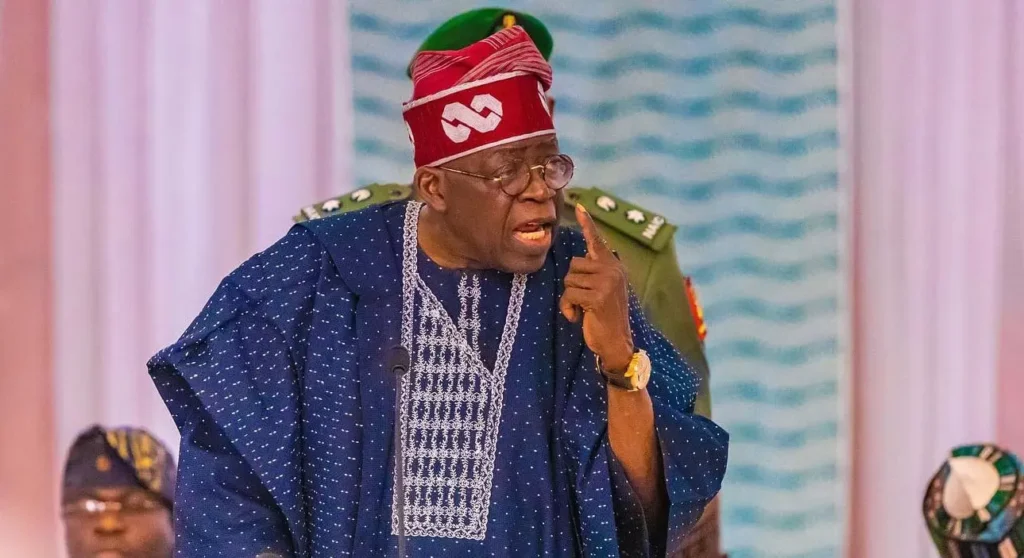
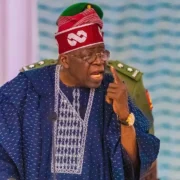
President Bola Ahmed Tinubu has defended his administration’s reliance on foreign loans, saying the Federal Government is borrowing to finance infrastructure and build assets that will benefit future generations.
The President said the value of government borrowing should be measured by the infrastructure developed, jobs created and economic opportunities generated rather than the amount of debt accumulated.
Tinubu made the remarks in an article titled, “From Reforms to Delivery: Our Infrastructure Investment and Growth Strategy,” released by his Special Adviser on Information and Strategy, Bayo Onanuga.
According to the President, his administration is redirecting public borrowing towards productive investments that will strengthen Nigeria’s economic capacity and support its ambition of becoming a $1 trillion economy by 2030.
“The real question is not how much we borrow, but what we build, what value we create and what future we leave behind,” he said.
Tinubu identified major infrastructure projects, including the Lagos-Calabar Coastal Highway, Sokoto-Badagry Superhighway, Trans-Sahara Superhighway, electricity grid upgrades and the modernisation of commercial ports in Lagos, as key investments expected to expand the country’s productive capacity.
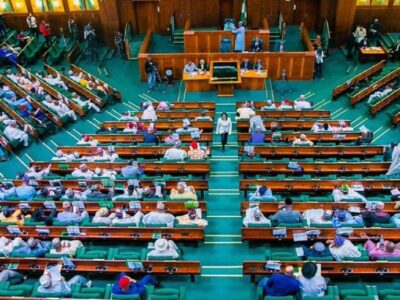
His defence of foreign borrowing comes amid renewed debate over Nigeria’s rising debt profile, following his request to the Senate for approval of a $21.7 billion external borrowing plan.
The Debt Management Office has put Nigeria’s outstanding domestic and external debt at approximately N166 trillion, with opposition figures and other critics questioning the sustainability and impact of the government’s borrowing.
However, the President maintained that the loans should be assessed based on the economic returns and long-term assets they generate.
He said the infrastructure projects, alongside investments in healthcare, education and vocational training, would connect economic regions, reduce transportation costs, unlock agricultural and industrial opportunities and attract private investment.
Tinubu projected that the Lagos-Calabar Coastal Highway could reduce logistics costs along its corridor by 15 to 20 per cent and contribute up to two per cent to Nigeria’s Gross Domestic Product through increased trade, tourism and industrial activities.
He added that the project was expected to generate about 100,000 direct jobs in construction and engineering, as well as more than 150,000 indirect jobs across logistics, materials and related sectors.
“We are not simply building highways. We are opening economic corridors,” the President said.
He further argued that Nigeria could not achieve its $1 trillion economic ambition without infrastructure capable of supporting increased productivity, industrialisation and trade.
“We cannot build a $1 trillion economy with infrastructure designed for an economy a fraction of that size,” he added.
Explaining the administration’s financing strategy, Tinubu said borrowing was being redirected from short-term fiscal obligations towards investments capable of generating economic returns, creating employment and expanding opportunities for future generations.
He also said the government was pursuing longer-term financing arrangements that align repayment periods with the lifespan of infrastructure assets, reduce refinancing pressures and secure more competitive funding.
The President attributed improvements in Nigeria’s economic indicators to reforms introduced since May 2023, including the removal of petrol subsidies, exchange rate unification, tax reforms and measures to address inflation.
He cited real GDP growth of 4.43 per cent in the second quarter of 2026 and a decline in headline inflation to 14.63 per cent in September, compared with 20.98 per cent recorded a year earlier.
Tinubu also disclosed that Nigeria’s gross external reserves had risen to $55.1 billion as of October 9, 2026, including approximately $46 billion in net reserves. He further said the country’s tax-to-GDP ratio had increased from seven per cent to 12.5 per cent.
According to him, the reforms have strengthened Nigeria’s financial position, improved investor confidence and reduced the country’s borrowing costs.
He also pointed to positive assessments by international credit rating agencies as evidence of improved confidence in the Nigerian economy.
Looking ahead, Tinubu outlined five priorities for the next phase of the Federal Executive Council’s economic strategy. They include improving food affordability and energy price stability, strengthening budget harmonisation and fiscal discipline, completing high-impact infrastructure projects, improving economic policies and regulatory efficiency, and expanding targeted household support and human development investments.
The President stressed that his administration would ultimately be judged by completed projects, increased investments, job creation and improvements in the living standards of Nigerians.
“Securing financing is not the achievement. Completing the project, delivering value and improving the lives of Nigerians are the achievement,” he said.
Meanwhile, the Federal Government has clarified that the proposed $21.7 billion external borrowing plan represents a five-year financing framework for productive investments and does not mean the entire amount has already been borrowed or will necessarily be drawn down in full.
About $10.6 billion of the proposed facility is earmarked for transport infrastructure, including the Sokoto-Badagry and Lagos-Calabar highways, as well as the Kano-Kaduna railway project.





Comments