

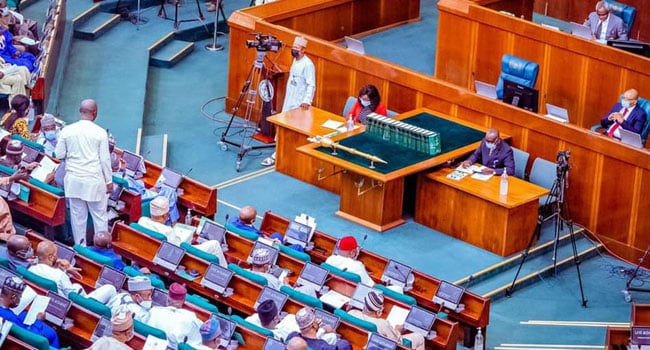
ABUJA — Nigeria moved significantly closer to adopting a state policing system on Thursday as the House of Representatives overwhelmingly approved a constitutional amendment bill seeking to establish State Police across the federation, while the Senate also advanced the proposal through second reading.
The development marks one of the most far-reaching security reforms under consideration by the 10th National Assembly, amid growing concerns over insecurity, banditry, kidnapping, terrorism and communal conflicts across the country.
In the House of Representatives, the proposed legislation received overwhelming support, with 289 of the 290 lawmakers present voting in favour of the bill, while only one member voted against it.
The bill seeks to amend relevant provisions of the 1999 Constitution to create a dual policing structure comprising a Federal Police and State Police, allowing individual states to establish and operate their own police services alongside the existing national force.
Lawmakers backing the proposal argued that Nigeria’s highly centralised policing system has become increasingly ineffective in addressing modern security challenges, stressing that locally recruited officers would possess better knowledge of their communities and respond more efficiently to emerging threats.
While concerns have been raised over the possibility of state governments abusing state police structures for political purposes, particularly during elections, supporters of the bill insisted that adequate constitutional safeguards have been incorporated to prevent misuse.
The approval by the House aligns with longstanding calls by governors, traditional rulers, security experts and civil society organisations advocating the decentralisation of policing as a strategy to strengthen grassroots security and improve intelligence gathering.
Meanwhile, the Senate also passed the bill for second reading during plenary.
The proposed legislation, titled the Establishment of State Police and Related Matters (Sixth Alteration) Bill, 2026 (SB. 794), was sponsored by Senate Leader, Senator Opeyemi Bamidele (APC, Ekiti Central).
Presenting the bill, Bamidele described the creation of State Police as a critical step toward modernising Nigeria’s security architecture and enhancing internal stability across the federation.
The bill received broad bipartisan support from senators, with several lawmakers, particularly from the northern region, arguing that State Police would provide a more sustainable solution to the country’s security challenges.
Chief Whip of the Senate, Senator Tahir Monguno (APC, Borno North), also endorsed the proposal, noting that it would help regulate and integrate the growing number of vigilante groups operating across the country.
Following the debate, Senate President Godswill Akpabio referred the bill to the Senate Ad-hoc Committee on the Review of the 1999 Constitution, chaired by Deputy Senate President Jibrin Barau, for further legislative scrutiny.
Key Provisions of the Bill
The proposed constitutional amendment provides for the establishment of two distinct police institutions — the Federal Police and State Police.
Under the arrangement, State Police formations can only become operational after being established through legislation passed by the respective State House of Assembly and certified as meeting national policing standards prescribed by the National Assembly.
The bill also creates safeguards against federal interference in state policing operations, limiting Federal Police intervention to exceptional circumstances such as a breakdown of law and order, requests by governors, or situations where a State Police service becomes incapable of performing its duties.
State Police Commissioners would be appointed by governors on the recommendation of the National Police Council and subject to confirmation by State Houses of Assembly, while the Inspector-General of Police would continue to head the Federal Police.
To ensure accountability, the bill establishes a restructured National Police Council and creates State Police Service Commissions to oversee recruitment, discipline, promotions and operational standards.
Additionally, the Federal Government would be empowered to provide grants and financial support to State Police formations upon recommendation of the National Police Council and approval by the National Assembly.
Next Stage
Despite the significant legislative progress, the bill must still complete the constitutional amendment process.
To become law, it requires final approval by both chambers of the National Assembly, endorsement by at least two-thirds of the 36 State Houses of Assembly, and eventual presidential assent.
If successfully enacted, the legislation would represent one of the most consequential security reforms in Nigeria’s democratic history, fundamentally restructuring policing and internal security management across the federation.



















Comments