

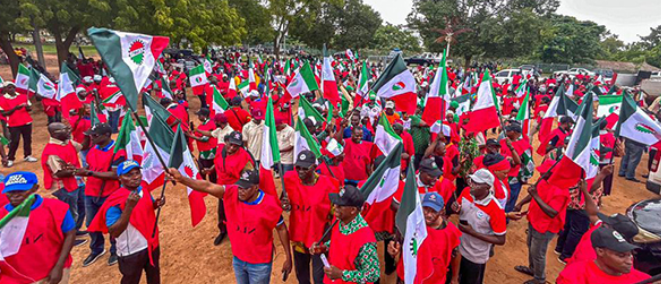
Organised labour has intensified calls for a fresh review of Nigeria’s national minimum wage, despite widespread complaints that several state governments are yet to fully implement the existing ₦70,000 wage approved in 2024.
The development is escalating tensions between labour unions and state governments, with the Nigeria Labour Congress (NLC), Nigeria Union of Local Government Employees (NULGE), and Nigeria Union of Teachers (NUT) accusing some governors of selective implementation of the wage law.
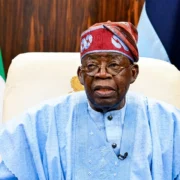
President Bola Tinubu signed the ₦70,000 national minimum wage into law on July 29, 2024, raising the benchmark from ₦30,000. However, nearly two years later, labour leaders say implementation remains inconsistent across several states, particularly affecting local government workers, primary school teachers, and primary healthcare workers.
States repeatedly cited in labour complaints include Yobe State, Zamfara State, Gombe State, Kaduna State, Imo State, Ebonyi State, Cross River State, Borno State, Sokoto State, Taraba State, Bauchi State, Nasarawa State, Adamawa State, Abia State, Benue State, Niger State, Kogi State, and the Federal Capital Territory Area Councils.
According to the unions, while some state governments publicly announced compliance with the new wage structure, thousands of workers are still earning old salaries, with consequential adjustments and arrears yet to be settled.
The growing frustration prompted the NLC, ahead of the 2026 International Workers’ Day celebration, to direct its state councils in defaulting states to boycott ceremonial May Day activities and instead organise street protests.
In a circular signed by the NLC General Secretary, Emmanuel Ugboaja, the Congress declared:
“Observe 2026 May Day on the Streets if the National Minimum Wage Act has not been fully implemented in your state.”
The union also warned against holding Workers’ Day celebrations inside Government Houses or participating in events organised alongside defaulting state governments.
“Comrades, the 2024 Minimum Wage Act did not come through supplication. It came through struggle. To celebrate May Day indoors while our rights are trampled upon is to betray that legacy,” the circular added.
Corroborating the NLC’s position, NULGE President Haruna Kankara disclosed during the 2026 Workers’ Day celebration in Abuja that about 20 states were yet to fully implement the ₦70,000 minimum wage for local government workers and primary school teachers.
Kankara specifically identified Kaduna, Gombe, Borno, Yobe, Zamfara, Imo, Ebonyi, Cross River, and the FCT among states with serious implementation gaps, alleging that some governors implemented the wage increase only for state civil servants while excluding grassroots workers.
The NUT also raised concerns over delays in implementation for teachers in several states. The union earlier identified Abia, Adamawa, Ebonyi, Gombe, Kaduna, Nasarawa, Yobe, Zamfara, and Enugu State among states experiencing implementation setbacks.
In the FCT, Area Council teachers have continued industrial action over the non-implementation of the wage, while local government workers in Borno staged protests over alleged selective payment practices. Workers in Zamfara and Cross River have also threatened strike actions over delayed implementation.
Despite the lingering disputes, organised labour is already mounting pressure for another wage review, insisting that soaring inflation has significantly eroded the value of the ₦70,000 minimum wage.
In his 2026 New Year message, NLC President Joe Ajaero said the Congress would push for an urgent wage review, arguing that rising living costs had severely weakened workers’ purchasing power.
“Workers’ income must guarantee life, not mere survival,” Ajaero stated.
Labour leaders argued that rising food prices, transportation costs, electricity tariffs, rent, and continued naira depreciation have wiped out the gains recorded from the last wage increase.
The NLC and the Trade Union Congress (TUC) have also announced plans to reopen negotiations for a fresh national wage structure by July 2026.
“The process for renegotiating the National Minimum Wage will commence by July 2026,” the labour centres stated.
The agitation has since expanded beyond calls for a review to demands for significantly higher wage benchmarks.
The Joint National Public Service Negotiating Council recently proposed a new national minimum wage of ₦154,000, describing the current economic conditions as unbearable for workers.
Similarly, the Nigeria Labour Congress Lagos State Chapter demanded an increase from ₦85,000 to ₦225,000 for workers in Lagos State.
Lagos NLC Chairperson, Funmi Sessi, argued that inflation and the rising cost of living had rendered current wages unsustainable.
Beyond fixed wage demands, organised labour is also advocating an inflation-linked wage system that would automatically adjust salaries in line with economic realities.
Ajaero recently hinted at what he described as a “radical shift” toward wage structures tied to living costs rather than fixed figures negotiated after long intervals.
While labour leaders insist workers can no longer survive on current wages, many state governments have argued that shrinking revenues, rising wage bills, mounting debt burdens, subsidy removal pressures, and weak local government finances are complicating implementation.
However, the NLC’s immediate past Acting General Secretary, Benson Upah, maintained that economic hardship could not justify violation of the law.
“Economic hardship cannot become an excuse for violating a national law,” he said.





Comments