

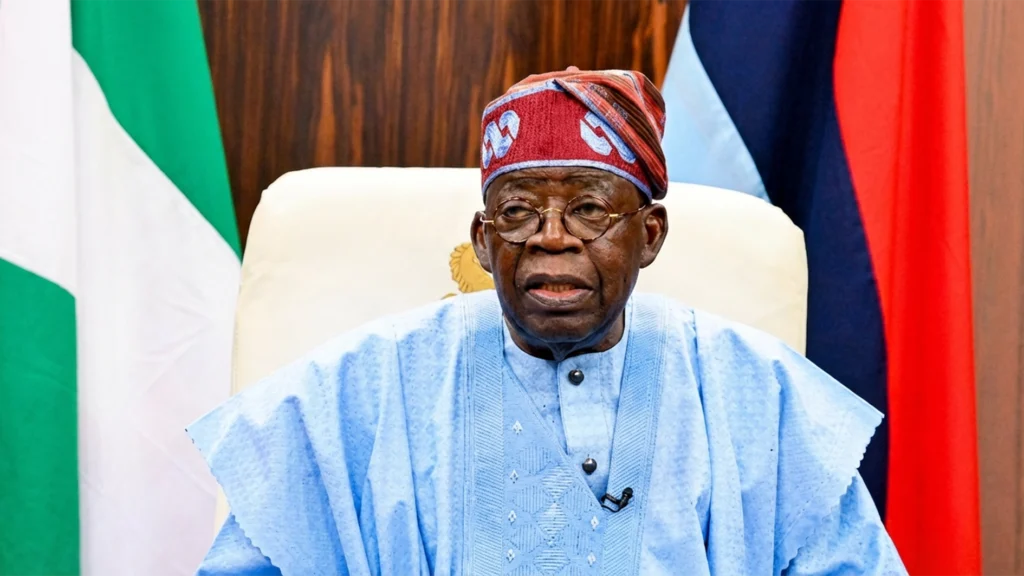
President Bola Ahmed Tinubu has said the prosperity of the South-East is inseparable from Nigeria’s overall economic growth, explaining that his decision to sign the South-East Development Commission (SEDC) Bill into law was driven by the need to accelerate development in the region.
Tinubu stated this on Tuesday at the South-East Gas Pipeline Infrastructure Investment Ceremony in Enugu, where he was represented by the Deputy Speaker of the House of Representatives, Benjamin Okezie Kalu.
The President recalled that he assented to the SEDC Bill in July 2024, noting that the commission was established to provide sustained institutional support for the reconstruction, rehabilitation and long-term development of the South-East.
He said the region’s industrial and commercial activities had significant implications for the national economy, citing manufacturing and trading centres such as Aba, Nnewi and Onitsha.
“When Aba’s industries thrive, when Nnewi’s factories expand, and when commerce flourishes in Onitsha, the entire Nigerian economy benefits,” Tinubu said.
He added that Nigeria could not achieve its full economic potential while any region operated below its productive capacity, describing the establishment of the commission as a key component of his administration’s Renewed Hope Agenda.
Tinubu stressed that the SEDC must focus on delivering measurable results rather than functioning as another government bureaucracy.
According to him, the commission’s performance should be assessed by the investments it attracts, the infrastructure it supports, the opportunities it creates and the lives it improves.
He commended the commission’s Chairman, Emeka Wogu, its board and management led by Managing Director and Chief Executive Officer Mark Okoye for their efforts towards advancing development in the region.
The President also highlighted the South-East Vision 2050 initiative, supported by the Federal Government and the region’s governors, as an important framework for coordinated economic development.
Tinubu disclosed that he had approved the establishment of the South-East Investment Company, explaining that his administration intended to use public resources to attract larger volumes of private investment.
He said development institutions should identify strategic economic opportunities, prepare credible projects and deploy public funds responsibly to mobilise private capital beyond what government budgets could independently support.
On infrastructure, the President reaffirmed his administration’s commitment to improving road, rail and energy connections across the region, citing the Enugu–Onitsha and Enugu–Port Harcourt corridors, supporting infrastructure around the Second Niger Bridge and the Eastern railway corridor.
He said the objective was not merely to award contracts but to deliver infrastructure that would reduce business costs, expand trade and create employment opportunities.
The President also highlighted natural gas as a critical component of the region’s industrial development, noting that Nigeria’s gas resources should translate into stronger manufacturing, job creation and economic prosperity.
He explained that the proposed South-East Gas Distribution Pipeline Project was designed to establish a regional gas distribution network serving industrial and commercial users across Imo, Abia, Anambra, Enugu and Ebonyi states.
Tinubu said the project would connect domestic gas resources to productive industries, building on developments such as the Assa North–Ohaji South gas processing project in Imo State, which he said achieved first gas earlier in the year.
According to him, the proposed pipeline could strengthen manufacturing in Aba, support industrial clusters in Nnewi and Onitsha, attract investment to Enugu and expand agro-processing and manufacturing opportunities in Ebonyi.
He maintained that the five states should be viewed as parts of an interconnected economic region rather than separate economies, stressing that gas infrastructure should serve industries and markets across state boundaries.
Tinubu also urged South-East governors to sustain cooperation, noting that no individual state could independently realise the full benefits of regional infrastructure.
He called on investors, manufacturers and entrepreneurs to take advantage of the region’s industrial potential, while assuring them that the Federal Government would continue to provide an enabling environment for businesses to thrive.
Addressing young people in the region, the President said the initiative was ultimately intended to create a future in which their skills would be valued, businesses could expand and limited economic opportunities would no longer constrain their ambitions.
He charged the SEDC and its partners to move beyond the ceremony with a clear implementation plan, defined milestones and measurable outcomes.
“Let this project be remembered not for the agreements signed today, but for the factories it powers, the investments it attracts and the jobs it creates,” Tinubu said.
He added that the government’s responsibility was to help build an economy in which businesses in the South-East could succeed because of adequate infrastructure rather than struggle in spite of its absence.














Comments