

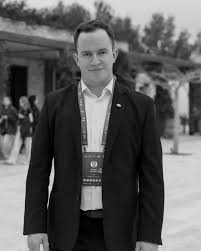
Russian chess official Sergei Indeikin has died at the age of 36 after reportedly developing a severe form of malaria following a work trip to Nigeria.
Indeikin, who served as an operational manager and delegate of the International Chess Federation (FIDE), travelled to Abuja earlier this month for the FIDE World Amateur Rapid and Blitz Chess Championships, held from August 1 to 8.
FIDE confirmed his presence at the tournament, where he was among the officials involved in the organisation of the competition.
The world chess governing body announced Indeikin’s death on August 23, describing it as the result of a “sudden illness” but did not publicly disclose the specific medical condition.
However, Russian business newspaper RBC, citing Indeikin’s mother, Tatiana, reported that he had contracted severe malaria while on the work trip.
According to his mother, Indeikin was taken to hospital after returning to his home city of Perm, but his condition had already deteriorated significantly.
“It was a very rapidly progressing illness. The most severe form,” she was quoted as saying.
Russian newspaper Argumenty i Fakty (AIF) also reported that Indeikin travelled from Abuja to Uzbekistan, where he began experiencing health problems, before later travelling through Moscow to Perm.
His father, Alexander, told AIF that information from Indeikin’s colleagues at FIDE suggested malaria may have been responsible for his deteriorating condition.
An ambulance was eventually called after his health worsened, and he was admitted to hospital, but efforts to save his life were unsuccessful.
Several Russian media outlets reported that Indeikin may have contracted malaria during his time in Nigeria, with some reports claiming he was bitten by a mosquito while attending the chess tournament.
Medical expert Professor Alexander Lukashev told AIF that malaria can be transmitted through the bite of an infected mosquito in Nigeria and other tropical regions.
Indeikin had been involved in FIDE events since 2021 and contributed to the organisation of several major international competitions, including World Championship matches, World Cups, Candidates tournaments, and World Rapid and Blitz Championships.
FIDE described him as an important member of its operations team who travelled extensively to support the successful organisation of major chess events.
He is survived by his wife and daughter.
However, while his family and several Russian media reports have linked his illness to severe malaria allegedly contracted during his visit to Nigeria, FIDE has officially attributed his death only to a sudden illness and has not independently confirmed malaria as the cause of death.



















Comments