

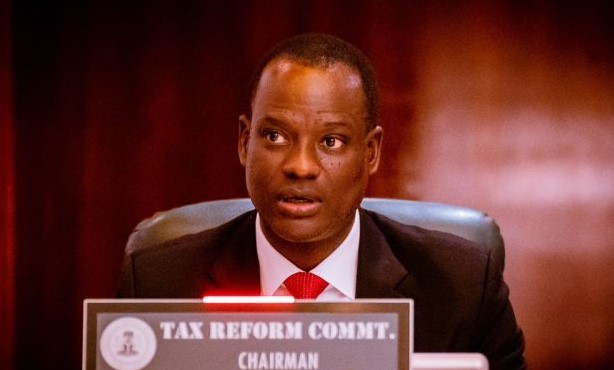
The Minister of Finance and Coordinating Minister of the Economy, Prof. Taiwo Oyedele, has disclosed that Nigeria recorded an estimated N15.8 trillion in savings from the removal of the fuel subsidy and liberalisation of the foreign exchange market between June 2023 and December 2025.
Oyedele, however, clarified that the savings did not translate into a huge pool of cash available to the Federal Government, stressing that the funds were distributed among the three tiers of government while the government continued to face significant expenditure pressures.
Speaking at the 2026 National Council on Finance and Economic Development (NACOFED) conference in Owerri, Imo State, Oyedele said the reforms had reduced the government’s borrowing burden but had not eliminated the need for borrowing.
According to him, the N15.8 trillion generated from the reforms was shared among the Federal Government, state governments and local government councils.
He said the Federal Government received N5.43 trillion, states received N6.52 trillion, while local governments received N3.88 trillion.
Oyedele explained that the reforms also contributed to a significant increase in monthly Federation Account allocations, which rose from between N300 billion and N600 billion before 2023 to more than N2 trillion.
“The figures tell a financing story, not simply a savings story,” the minister said, explaining that the savings from subsidy removal mainly reduced fiscal pressure and the amount the government would otherwise have needed to borrow.
He disclosed that the Federal Government generated an additional N20.4 trillion between June 2023 and December 2025 through subsidy savings, increased revenues and borrowing.
However, he said the government spent approximately N30.64 trillion during the same period on wages, debt servicing, infrastructure, electricity subsidies and other obligations.
Oyedele said the Federal Government spent N9.39 trillion on wages, driven largely by the new national minimum wage, wage awards, allowances and other personnel costs.
A further N9.37 trillion was spent on servicing external debt, while N6.47 trillion went into strategic infrastructure projects, including transport, housing, agriculture and security.
The government also spent N3.14 trillion on electricity subsidies to cushion consumers from the impact of higher electricity tariffs.
The minister said the Federal Government continued to borrow because its revenue remained insufficient to finance its expenditure.
“Subsidy removal resulted in less borrowing than would otherwise have been required, rather than eliminating the need to borrow,” he said.
Oyedele urged state governments to look beyond federal allocations and develop sustainable sources of internally generated revenue while investing in productive sectors.
He called for stronger fiscal federalism, improved revenue generation and economic diversification, stressing that Nigeria must transition from an allocation-dependent economy to one driven by production, investment and job creation.
He said resources generated through the reforms had been used to support salary increases, prompt payment of salaries and pensions, settlement of pension arrears and gratuities, expansion of the Nigerian Education Loan Fund (NELFUND), as well as consumer and small and medium-sized enterprise credit schemes.
Among the major infrastructure projects he listed were the Lagos-Calabar Coastal Highway, with N2.23 trillion committed; the Sokoto-Badagry Super Highway, N1.11 trillion; the Trans-Sahara Super Highway, N489.2 billion; and the Road Emergency Intervention Project, N366 billion.
On the Federal Government’s loan arrangement with First Abu Dhabi Bank, the Director-General of the Debt Management Office, Patience Oniha, said the facility was part of efforts to diversify Nigeria’s funding sources and secure financing on more favourable terms.
She said the transaction followed due process, received National Assembly approval and complied with the relevant provisions of the Fiscal Responsibility Act.
In his remarks, Imo State Governor, Hope Uzodimma, said his administration was investing in agriculture, the digital economy, power and infrastructure to diversify the state’s economic base.
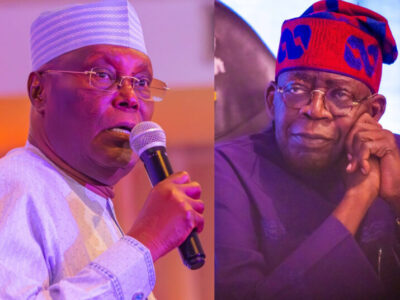
Meanwhile, former Vice President and presidential candidate of the African Democratic Congress (ADC), Atiku Abubakar, has challenged President Bola Tinubu’s administration to account for about N30 trillion in Federation revenues, deductions, savings and transfers.
Atiku, through his Senior Special Assistant on Public Communication, Phrank Shaibu, said the latest July 2026 Federation Account figures had raised further questions about the management and reconciliation of public revenues.
He particularly demanded an account of revenues and fiscal gains arising from the removal of petroleum and energy subsidies, arguing that Nigerians were promised that the painful reforms would free resources for development.
Atiku said his earlier reconciliation of published Federation Account figures had identified approximately N28 trillion requiring explanation up to June 2026, adding that the July figures had pushed the amount requiring proper public accounting towards N30 trillion.
He said gross statutory revenue for July stood at N4.359 trillion, while the Federation Account Allocation Committee approved N3.007 trillion for distribution to the Federal Government, the 36 states and 774 local government councils.
Atiku called for a comprehensive reconciliation of revenues accruing to the Federation Account and the deductions made before distribution.
“The question President Tinubu must answer remains painfully simple: Where is the money?” he said.






Comments