

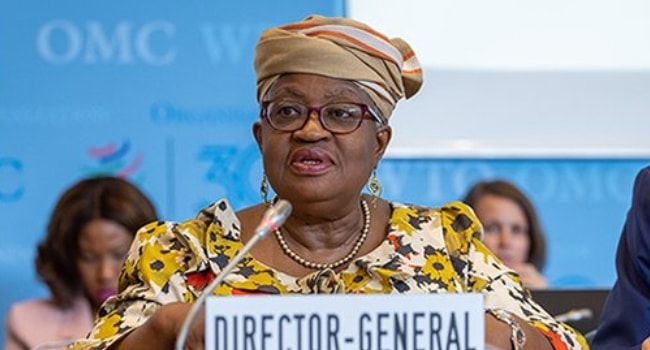
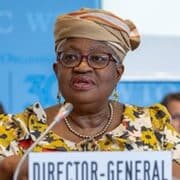
Director-General of the World Trade Organisation (WTO), Dr. Ngozi Okonjo-Iweala, has expressed confidence that Delta State has the potential to become Nigeria’s next major industrial hub, positioning itself alongside Lagos as a key driver of the nation’s economy.
Speaking on Monday at the Delta State Economic and Investment Summit, Okonjo-Iweala commended the state government’s newly unveiled $100 million (about N137.8 billion) Viability Gap Fund, describing it as a bold initiative capable of attracting private investment and accelerating industrial growth.
“The reason I came is because you take action. The fund you have just announced to de-risk investment is exactly the kind of thing that we need,” she said.
According to the WTO chief, shifting global trade dynamics have created fresh opportunities for Nigeria and Delta State to attract industries seeking alternative investment destinations.
“The world is looking for diversification. These opportunities were not available 10 or 15 years ago. The question is whether we will seize them or allow them to go elsewhere,” she stated.
Okonjo-Iweala urged the state government to make Special Economic Zones (SEZs) the cornerstone of its industrialisation strategy, stressing that successful zones require reliable infrastructure, including electricity, roads, rail networks, water supply and digital connectivity, as well as close collaboration with the Federal Government.
She also advised the state to focus on sectors where it holds a clear competitive advantage instead of spreading resources across multiple industries.
“Identify two or three areas where Delta has strong comparative advantage. Focus on those and build the entire value chain—from production to processing, standards, finance and market access. That is how value is created,” she said.
Highlighting opportunities in the blue economy, Okonjo-Iweala noted that Nigeria imports about 573,000 metric tonnes of fish and fish products valued at nearly $866 million annually, urging Delta to leverage its coastal resources.
“Delta can become Nigeria’s blue economy hub. Build fisheries, cold chain facilities, port services and marine logistics,” she added.
She further praised the state’s fiscal discipline, noting that Delta remains one of Nigeria’s strongest-performing states in debt sustainability.
“Keep the fiscal prudence because without it you will not be able to build the Delta State you want,” she said, expressing confidence that the state could transform into “a diversified, inclusive and resilient economy.”
Earlier, Governor Sheriff Oborevwori announced the establishment of the $100 million Viability Gap Fund, saying the initiative demonstrates his administration’s commitment to reducing investment risks and ensuring that agreements reached during the summit translate into real projects.
“The government has set aside $100 million, approximately N137.8 billion, as Viability Gap Funding to de-risk new investments in the state,” the governor said.
Also speaking at the summit, Founding Chairman of Seplat Energy and Chairman of the Delta State Economic and Investment Summit, Austin Avuru, called on the state government to prioritise maritime reforms, industrial parks and commercial agriculture to unlock private sector investment.
Avuru said Delta must deliberately move away from over-reliance on traditional economic models by developing sectors where it enjoys a competitive advantage, adding that strategic investments would position the state for sustainable economic growth and industrial expansion.












Comments