

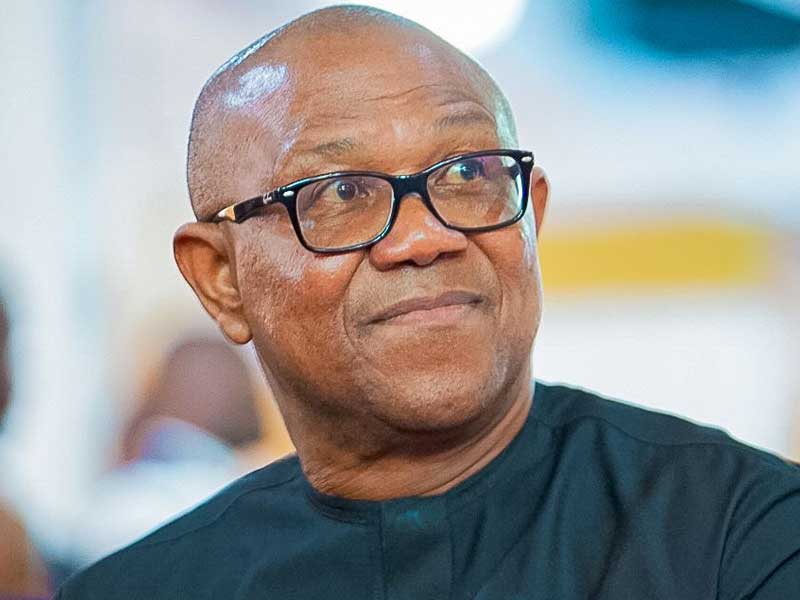
A Kano-based political analyst, Hassan Ibrahim, has said the support of a single northern youth organisation cannot determine the outcome of the 2027 presidential election or guarantee victory for the presidential candidate of the Nigeria Democratic Congress (NDC), Peter Obi.
Ibrahim said while engaging youth groups was important for political acceptance, Obi needed to build broader support across northern Nigeria by reaching out to different interest groups and addressing issues affecting the region.
He was reacting to comments by the National President of the Arewa Youth Assembly for Good Leadership, Ambassador Abdul Danbature, who said Obi could not become Nigeria’s president without the support of northern youth.
Danbature had criticised Obi for allegedly failing to consult northern youth before declaring his presidential ambition and argued that the North would favour candidates who supported former President Muhammadu Buhari.
However, Ibrahim said consultation with any particular group was not a constitutional requirement for contesting or winning the presidency.
“Consultation in politics is not mandatory or constitutional, but it is very crucial and strategic. However, consultation with a northern youth group cannot be a yardstick for winning a presidential election because youth votes alone cannot determine who wins a presidential election in a country like Nigeria,” he said.
The analyst recalled that Obi had engaged with northern youth ahead of the 2023 presidential election and received commendation from some groups, but still failed to win the election.
“In the 2023 presidential election, Peter Obi consulted the northern youth group, and they even commended him for consulting them before formally declaring his intention to run. But he went on to lose the election despite that consultation,” Ibrahim said.
He noted that while northern votes remained crucial because of the region’s large population, the endorsement of one youth organisation should not be interpreted as the position of the entire North.
“The electoral history of Nigeria has shown that northern votes are a factor in winning the presidential election because of the population size. But that is entirely different from saying that a candidate needs the backing of the northern youth group before winning the election,” he said.
Ibrahim advised Obi to expand his engagement in the North by reaching out to traditional rulers, religious leaders, farmers, community leaders and youth organisations.
He also urged the former Anambra State governor to communicate his policies directly to northerners and make deliberate efforts to understand their concerns.
“For Peter Obi to improve his support base in northern Nigeria, he needs to engage, dialogue and consult with all the interest groups in the region,” he said.
The analyst further advised Obi to make greater use of Hausa in his political communication, saying it would help him reach a wider audience and communicate his policies and campaign promises more effectively.
“More importantly, he should use the Hausa language as a means of communicating with the larger part of the North. That will help convey his message and campaign promises directly to his target voters,” Ibrahim said.
He said Obi also needed to confront negative perceptions and allegations circulating about him in parts of the North, including claims that he was hostile to Muslims and northerners.
Ibrahim also referenced allegations linking Obi to the Indigenous People of Biafra (IPOB) and claims that he would release its leader, Nnamdi Kanu, if elected president.
“There are sponsored campaigns from opposition parties in the region aimed at blackmailing Peter Obi. He has to do much more to tackle the perceptions about him, including allegations that he destroyed Muslim worship centres and sent law-abiding northerners residing in his state back home during his tenure as governor,” he said.
“He also has to address the campaign that he is backing IPOB and the allegation that he intends to release its leader, Nnamdi Kanu, if he becomes president,” he added.
According to Ibrahim, Obi’s engagement should extend beyond politicians to include traditional and religious leaders, youth groups and grassroots communities.
“He has to engage with the youth groups, traditional and religious leaders, sell himself to them and show them his real plan for the North,” he said.
He also urged Obi to present a clear strategy for tackling insecurity, particularly its impact on farming and livelihoods across northern communities.
“He needs to communicate to them his genuine intent and commitment to ending insecurity in the North when he becomes president. He should also reveal his plans for farmers and explain how he intends to provide adequate support to northerners who are largely farmers and depend on farming to feed themselves and earn a living,” Ibrahim said.
The analyst argued that a credible security and agricultural agenda could help Obi build confidence among voters affected by insecurity and economic hardship.
He further warned that Obi would need to overcome the perception in some northern communities that he was primarily a southern or Christian candidate.
According to him, Obi’s strong performance in the South-East during the 2023 election contributed to that perception.
“His performance in the South-East in 2023 has created a perception among people in the North that he is principally a southern candidate. Therefore, Peter Obi needs to demonstrate through people, policies and presence that he is building a genuinely Nigerian political project,” Ibrahim said.
He urged Obi to ensure that his campaign structure, including his spokespersons, policy team and grassroots network, reflects Nigeria’s diversity.
“His campaign blueprint, spokespersons, policy team and grassroots supporters should clearly reflect a Nigerian project. To improve his performance in the North, Obi should intentionally establish himself as a national candidate and not a regional or religious candidate,” he said.
Ibrahim also recommended that Obi bring respected northern political and community leaders into his campaign and coalition to strengthen his connection with voters in the region.
He maintained that Obi’s challenge in the North was therefore not simply securing the endorsement of a particular youth organisation but building broad-based political acceptance.
The analyst said Obi must establish a stronger presence in northern communities, engage directly with various groups and provide practical solutions to the region’s security and economic challenges.
“Lastly, he should have in place a credible Northern Economic and Security Agenda,” Ibrahim said.





Comments