

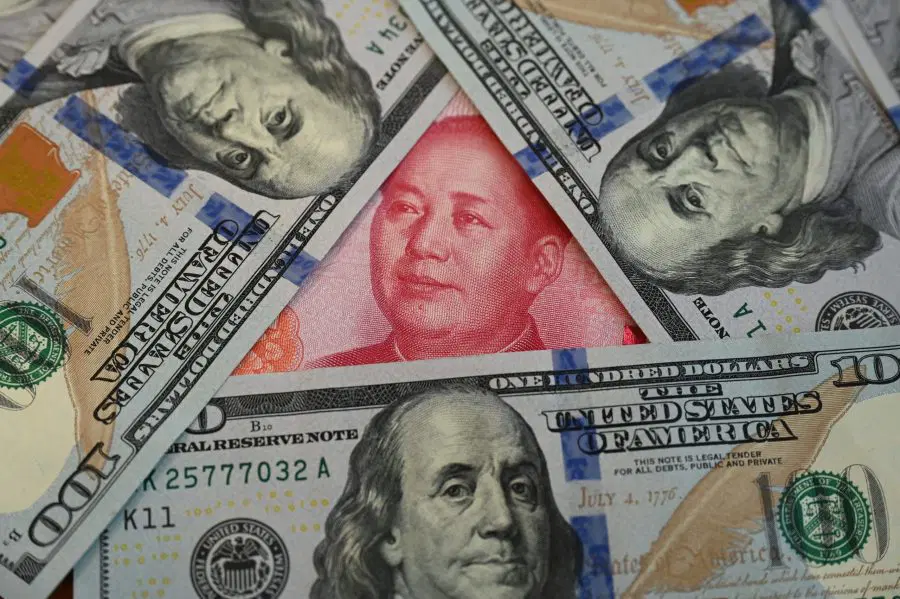
China has imposed export restrictions on 10 American companies involved in defence manufacturing and rare earths mining, escalating tensions with the United States following Washington’s decision to blacklist dozens of Chinese firms.
The Chinese Ministry of Commerce announced on Monday that the measures were a direct response to the US government’s recent expansion of its list of companies allegedly linked to China’s military.
The move comes barely a month after US President Donald Trump visited Beijing for talks with Chinese President Xi Jinping aimed at easing strained relations between the world’s two largest economies. Despite agreements to work toward reducing tariffs and improving cooperation, relations have remained fragile, particularly in the areas of technology, defence and national security.
Earlier this month, Washington added 80 Chinese companies and their subsidiaries to a blacklist, accusing them of supporting China’s military development. Among the firms affected were technology giants Alibaba and Baidu, as well as electric vehicle manufacturer BYD.
Reacting to the US action, Beijing said the new restrictions were necessary to safeguard its national security and protect its legitimate interests.
The affected US companies include aerospace contractor Aveox, military vehicle manufacturer Oshkosh Defense, and rare earths producers MP Materials and USA Rare Earth.
Under the new rules, Chinese exporters are prohibited from supplying dual-use goods—items with both civilian and military applications—to the listed entities. The ministry further directed that any ongoing transactions involving the affected firms be halted immediately.
China also warned that organisations or individuals in any country or region would be prohibited from transferring Chinese-origin dual-use products to the sanctioned companies.
In a related move, China’s Ministry of Finance announced that government procurement agencies would no longer purchase products from 46 American companies, including major defence contractors Lockheed Martin, Raytheon, Boeing Defense, General Dynamics and Anduril Industries.
However, the ban does not apply to products manufactured within China by companies with American investments, according to the ministry.
Several of the affected firms had previously been sanctioned by Beijing in 2024 and 2025 over their involvement in US arms sales to Taiwan.
Taiwan remains a major source of friction between Beijing and Washington. China regards the self-governing island as part of its territory and has repeatedly warned against foreign interference, while the United States continues to provide military support to Taipei.
US Secretary of State Marco Rubio recently disclosed that a proposed $14 billion arms package for Taiwan remains under review.
Despite the latest exchange of sanctions, President Trump has continued to publicly project confidence in US-China relations. Speaking at the G7 summit in France last week, Trump thanked President Xi for maintaining a neutral stance during the recent US-Iran conflict as both countries moved toward an initial ceasefire agreement.
The latest measures underscore the continuing geopolitical rivalry between Beijing and Washington, with trade, technology and defence remaining key battlegrounds in the increasingly complex relationship between the two global powers.

















Comments