

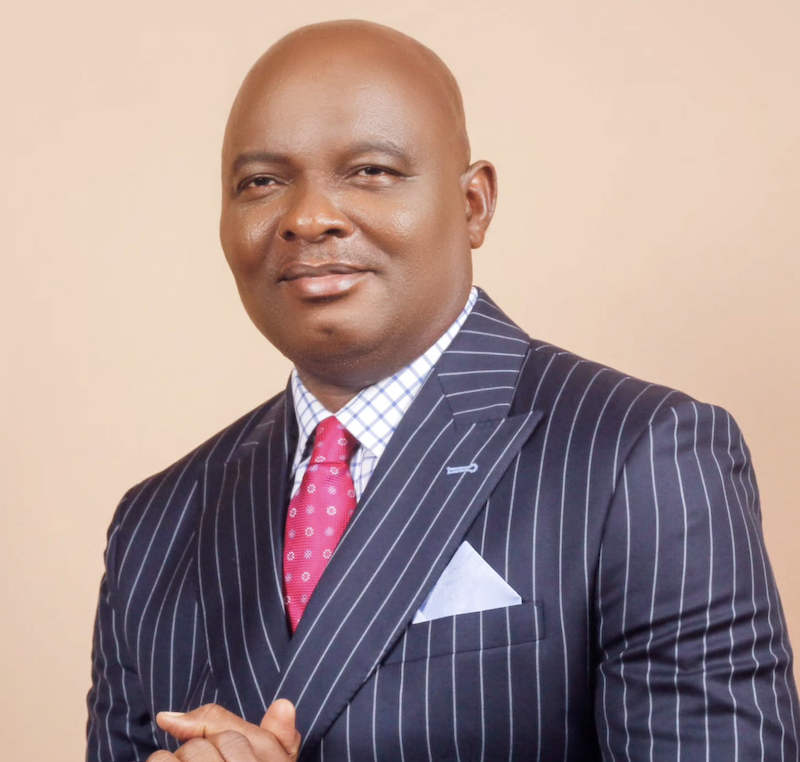
What began as an ordinary moment inside the departure lounge of the Akanu Ibiam International Airport quickly evolved into a thought-provoking conversation on leadership, accountability, and political reform.
Amid the bustle of travelers, flight announcements, and hurried movement through the terminal stood Dr. Ikechukwu Ezeugwu, the Nigeria Democratic Congress (NDC) aspirant for the Igbo-Eze North/Udenu Federal Constituency seat, whose recently launched “Display Your CV” initiative has continued to dominate political conversations across Enugu State.
The initiative, which challenges political aspirants to publicly present their credentials, experience, and leadership background, has stirred intense debate within political circles and among constituents. While supporters have praised the campaign as a bold push for transparency, critics have described it as disruptive to Nigeria’s traditional political culture.
Yet, regardless of differing opinions, the campaign has succeeded in forcing a critical public conversation: Who truly deserves the trust of the people?
There was nothing flamboyant about Ezeugwu’s presence at the airport. No loud entourage. No orchestrated spectacle. Instead, he carried a calm composure and quiet confidence that reflected a politician deeply committed to his convictions.
Speaking on the inspiration behind the now widely discussed campaign, Ezeugwu described transparency as the foundation of credible leadership.
“Leadership is built on trust, and trust cannot exist where there is secrecy,” he said. “Nigerians have reached a point where people can no longer simply appear during elections, make promises, and disappear after winning. The people deserve to know who wants to represent them. Transparency is not an attack on anyone; it is respect for the electorate.”
His remarks reflected less of political aggression and more of a carefully structured argument for accountability in public service.
Addressing concerns about whether Nigerian politicians are prepared for such openness, Ezeugwu acknowledged that resistance to reform is inevitable.
“Every meaningful reform begins by challenging old habits,” he stated. “If somebody is genuinely prepared for public service, displaying his or her credentials should not become a burden. Public office is not a private inheritance. It is a trust given by the people, and trust requires openness.”
He further clarified that the initiative was not targeted at any individual or political group within the constituency.
“This is not about personalities. It is about principles,” he explained. “My interest is to establish a political culture where credibility becomes the foundation for leadership recruitment. Whether young or old, rich or poor, experienced or new in politics, the people deserve to know your background, your competence, your values, and your capacity.”
As the discussion shifted toward governance and leadership philosophy, Ezeugwu emphasized the urgent need for value-driven politics in Nigeria.
“Nigeria needs value-driven leadership,” he said firmly. “We must move away from politics built on sentiments, manipulation, and personal interests. The future belongs to leaders who are consistent, transparent, productive, and accountable.”
Perhaps the defining moment of the interaction came when he delivered the rhetorical statement now increasingly associated with his reform narrative:
“I am Ikechukwu Ezeugwu, an entrepreneur, a financial advisor, a philanthropist, a legislator par excellence, and a master strategist; please may I meet you?”
Though simple in delivery, the statement carried a deeper challenge to Nigeria’s political culture — one that questions why ordinary citizens are subjected to scrutiny before employment, while individuals seeking legislative authority often evade similar accountability.
According to Ezeugwu, employers routinely request credentials and references before hiring drivers, office assistants, security personnel, and other workers. He argued that the same standard should apply — even more strictly — to those seeking legislative offices responsible for making laws and screening high-level public appointees.
Observers say his arguments reflect a blend of intellectual discipline, legislative experience, and strategic political thinking — qualities that have earned him the reputation of “The Master Strategist.”
Between 2018 and 2023, Ezeugwu served as Chairman of the Southeast Legislative and Governance Reform Committee, where he played a key role in the development of the Uniform Standing Order currently operational across the five Southeast State Houses of Assembly.
He also referenced his participation in a Harvard mastery session on “Strategies for Leading Successful Change Initiatives” in Cambridge, Massachusetts, stressing that genuine reform must begin with the deliberate disruption of unhealthy political traditions.
Standing inside an airport — itself a symbol of movement, transition, and new beginnings — while discussing transparency and political accountability felt symbolic in many ways.
Already, the “Display Your CV” initiative appears to be gaining momentum beyond the constituency, with many political observers suggesting it could evolve into a broader standard for political participation in Nigeria.
For Ezeugwu, however, the campaign appears to represent something beyond political ambition. Throughout the conversation, he repeatedly returned to the values of integrity, consistency, humanity, productivity, and transparency as the pillars of responsible leadership.
As boarding announcements echoed through the terminal and the brief interaction came to an end, one thing remained clear: this was more than a routine airport encounter.
It was a meeting that offered a glimpse into a growing reform movement — one determined to challenge old political habits and redefine the conversation around leadership in Nigeria.












Comments