


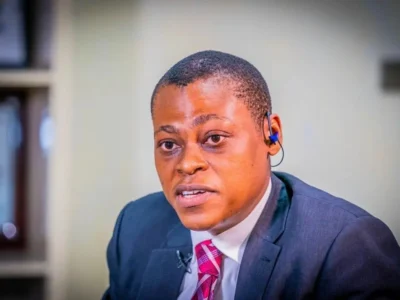
A Fellow of the Institute of Credit Administration, Asiwaju Busari Shaamsuddeen Akande, has cautioned President Bola Tinubu against excessive reliance on borrowing to finance infrastructure development, urging the Federal Government to explore alternative funding mechanisms.
Akande recommended asset-backed financing, Public-Private Partnerships (PPPs) and sovereign Sukuk financing as more sustainable alternatives to conventional borrowing.
He warned that Nigeria’s ambition of building a $1 trillion economy by 2030 could be jeopardised if the government continued accumulating debts without ensuring that infrastructure investments generated sufficient economic returns.
His comments come amid renewed efforts by the Tinubu administration to secure additional external loans to finance government projects.
In his assessment of Nigeria’s economic direction, Akande said the government must look beyond the volume of infrastructure being constructed and focus on how quickly such investments could translate into industrial output, increased business activities and government revenue.
He explained that heavy borrowing for projects with long gestation periods could create a mismatch between immediate debt-servicing obligations and the time required for the investments to generate revenue.
Akande said Nigeria should reduce its dependence on conventional borrowing by embracing Public-Private Partnerships and sovereign Sukuk financing, which would enable private investors to participate in infrastructure development while sharing the associated commercial risks.
He also warned that high government borrowing costs could discourage commercial banks from extending credit to businesses, as financial institutions might prefer investing in government securities offering attractive returns.
The financial expert stressed that infrastructure development must be strategically connected to industrial and agricultural production centres to ensure that local businesses, particularly small and medium-scale enterprises, benefit from such investments.
He further called for mechanisms that would ensure part of the revenue generated from infrastructure projects is channelled towards reducing public debt.
Akande, a Certified Islamic Finance Executive, maintained that achieving the $1 trillion economic target would depend not merely on the scale of government spending but also on investment productivity, equitable access to economic opportunities and effective public debt management.











Comments