


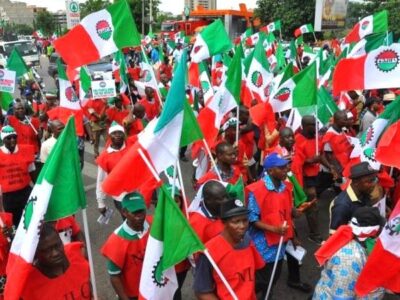
Arise Television presenter, Rufai Oseni, has criticised the presidents of the Nigeria Labour Congress (NLC), Joe Ajaero, and the Trade Union Congress (TUC), Festus Osifo, over their disagreement on workers’ welfare and leadership of the labour movement.
Oseni described both union leaders as unworthy of the title of labour leaders, accusing them of failing to adequately defend Nigerian workers amid worsening economic hardship.
The Arise Television Morning Show anchor made the remarks on Tuesday while reacting to the public disagreement between Ajaero and Osifo.
He lamented that organised labour had lost the unity, coordination and advocacy standards demonstrated by previous leaders, including former NLC president, Peter Esele.
Oseni said the labour movement had become divided and politicised, leaving Nigerian workers without adequate representation as their purchasing power and disposable income continued to decline.
“For Osifo and Ajaero, both of you should be thoroughly ashamed of yourselves, and that’s why you see that labour has been dead in this administration,” he said.
He further questioned the silence of organised labour over the Federal Government’s alleged failure to fulfil several promises made to workers.
“Wages cannot really take you anywhere. A lot has happened as regards disposable income of the people, but labour has just been quiet.
“This government failed on many promises made to labour, and labour has just been quiet about it,” Oseni added.
The disagreement between the two labour centres followed the Federal Government’s approval of a N70,000 transport allowance for public sector workers for six months.
The TUC rejected the arrangement, arguing that the NLC could not independently negotiate on behalf of workers without its participation.
Osifo described the agreement as an aberration, insisting that both labour centres must be involved in negotiations affecting their respective affiliates.
However, Ajaero maintained that the NLC had the authority to negotiate independently, citing its numerical strength and the principle of majority representation recognised by the International Labour Organisation (ILO).















Comments