


Former President Olusegun Obasanjo has criticised President Bola Ahmed Tinubu over his recent defence of government borrowing, declaring that debt is worse than leprosy because its consequences can affect generations.
Obasanjo made the remarks on Friday in Abeokuta, Ogun State, while speaking at the Ajibosin Platform, a public forum themed “Leveraging Artificial Intelligence to Solve Grassroots Problems and Accelerate National Development.”
The former president was reacting to Tinubu’s earlier comment that borrowing should not be regarded negatively, insisting that his administration would continue to obtain loans whenever necessary to finance government activities and projects.
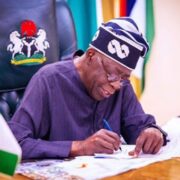
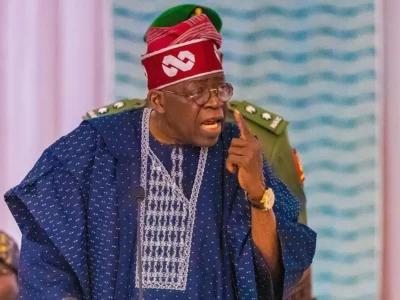
Speaking during a meeting with Plateau State leaders at the Presidential Villa in April, Tinubu had said, “If we have to borrow, we borrow. Borrowing is not leprosy, we just have to work hard to be able to pay for it.”
However, Obasanjo strongly disagreed with the President’s position, arguing that excessive borrowing places an unfair burden on future generations.
He said, “And for anybody to say debt is no leprosy, is absolute nonsense. Debt is worse than leprosy. Because leprosy destroys only one person. Debt destroys generations.”
The former president also expressed concern over the continued depreciation of the naira, recalling that when he established his farm 47 years ago, the exchange rate stood at approximately N1 to $1.85.
Questioning the country’s economic performance over the years, Obasanjo asked how the naira had deteriorated to about N1,500 to the dollar.
“When I started my farm, 47 years ago, naira to the dollar was one naira to $1.85. Forty-seven years ago. What has Nigeria done in 47 years that we now have 1,500 naira to a dollar? What have we done?” he asked.
He also questioned the capacity of the country’s political leadership to address the challenges facing Nigerians, asking what leaders understand about governance and how effectively they can translate that knowledge into improved living conditions.
Obasanjo further criticised Nigeria’s dependence on the World Bank and the International Monetary Fund (IMF), arguing that the institutions were established before Nigeria’s independence and were not designed around the country’s specific economic realities.
“World Bank and IMF were not designed for us. They were not built by us. They were built before we became independent. And that’s the people who would determine what we do,” he said.
The former president warned against blindly adopting foreign economic policies without considering Nigeria’s circumstances and development priorities.
Meanwhile, historian and public policy scholar, Dr Umar Ardo, who also spoke at the event, warned that artificial intelligence (AI) could become another instrument of foreign control if African countries failed to establish ownership of their technological infrastructure and resources.
Ardo argued that although AI could improve human intellectual capacity and provide useful information, it could not independently develop appropriate solutions for African societies without local knowledge, ownership and institutional control.
He explained that his experience using AI as an intellectual assistant while researching his book, The Nigerian Development Doctrine, had exposed both its benefits and limitations.
According to him, AI can organise information, identify patterns and assist human reasoning, but cannot replace sound judgement, political responsibility or institutions capable of implementing policies.
He warned that Nigeria and other African countries risk becoming dependent on foreign-controlled technology unless they invest in critical infrastructure, including semiconductor manufacturing, data centres and locally owned datasets.
Ardo also called for stronger continental cooperation through the African Union Data Policy Framework, stressing that Africa must develop the capacity to control its technological priorities and resources.
Earlier, the chairperson of the occasion, Mrs Onikepo Akande, said artificial intelligence was already transforming how people work and think, making it essential for Nigeria to embrace its opportunities.
Akande acknowledged that AI could help businesses identify opportunities, improve logistics, navigate challenges and compete more effectively.
She, however, urged Nigerians to deploy the technology responsibly, particularly in healthcare, agriculture, education and other critical sectors, to promote sustainable national development.













Comments