

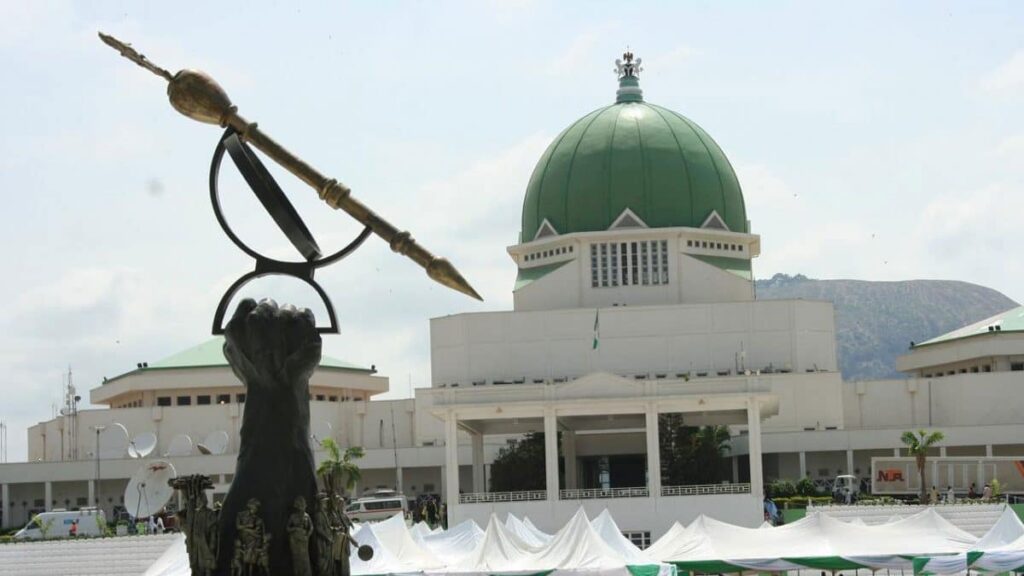
The proposed establishment of state police in Nigeria has moved closer to reality, with 30 State Houses of Assembly endorsing the constitutional amendment required to pave the way for decentralised policing.
The development brings the proposal closer to meeting the constitutional requirements for amendment, with the remaining steps involving the collation of state endorsements and transmission of the bill through the National Assembly to President Bola Tinubu for assent.
The latest endorsements came from the Lagos, Niger, Kogi and Ebonyi State Houses of Assembly, signalling growing legislative support for the reform.
The Presidency has also called on the organised private sector to develop a financing and implementation framework for the proposed state police system, citing the economic consequences of insecurity across the country.
Chief of Staff to the President, Femi Gbajabiamila, made the appeal during a plenary session on security, stability and economic resilience at the 32nd Nigerian Economic Summit in Abuja.
Gbajabiamila, who chairs the Presidential Working Group on the National Policing Bill, said insecurity had continued to discourage investment, disrupt supply chains, delay factory expansions and undermine employment opportunities.
He urged the Nigerian Economic Summit Group, chambers of commerce and business associations to develop practical proposals for financing state police and establishing accountable partnerships with state governments.
According to him, businesses have a strong interest in supporting the reform because the consequences of insecurity extend beyond the cost of private security to the disruption of commercial activities and abandoned investments.
He said the private sector should contribute expertise in institutional management, expenditure control, risk assessment and security infrastructure while ensuring that such involvement does not compromise police independence.
Gbajabiamila warned that any business contribution to the proposed system must be transparent and subject to independent scrutiny.
“Public funding must remain dependable, and a donation must never purchase influence over an investigation or preferential treatment,” he said.
He also stressed that states seeking to establish their own police services must demonstrate the financial capacity to sustain them, including paying salaries, funding professional training and maintaining operational equipment.
The presidential aide added that states that were not financially or institutionally prepared to establish their own police services would continue to rely on the federal police.
30 Assemblies endorse amendment
Providing an update on the reform, Gbajabiamila said 24 State Houses of Assembly had approved the constitutional amendment as of October 23, meeting the required two-thirds threshold at that stage.
The number has since increased to 30 following additional endorsements.
He disclosed that the Presidential Working Group submitted the draft National Policing Bill and 29 consequential amendment bills to the Federal Ministry of Justice on October 19 for legislative review.
The proposals are expected to undergo further consideration before being presented to President Tinubu for approval and subsequent transmission through the National Assembly.
Addressing concerns about possible political interference, Gbajabiamila said the proposed framework would include enforceable safeguards, national professional standards, independent oversight and remedies for misconduct.
He maintained that access to police protection should not depend on political affiliation or place of origin.
Lagos Assembly calls for greater state autonomy
The Lagos State House of Assembly unanimously endorsed the constitutional amendment after cutting short its recess to consider the proposal.
However, Speaker Mudashiru Obasa expressed reservations about aspects of the proposed framework, arguing that it did not give states sufficient control over their police services.
Obasa said successive state assemblies had advocated state police, but the current amendment still left significant powers at the federal level.
He welcomed the development as a step forward while expressing hope that future constitutional amendments would grant states greater autonomy over their police institutions.
The Lagos Assembly speaker also advocated the establishment of parliamentary police to protect legislative institutions and safeguard their independence.
Ebonyi, Kogi and Niger back proposal
In Ebonyi State, all 24 members of the House of Assembly voted in favour of the constitutional amendment during plenary in Abakaliki.
Speaker Moses Ije Odunwa said the unanimous endorsement reflected the lawmakers’ commitment to reforms aimed at strengthening security and protecting lives and property.
He noted that Ebonyi had previously expressed support for state police during a National Assembly public hearing on constitutional review.
The Kogi State House of Assembly also unanimously approved the amendment after Speaker Aliyu Umar Yusuf urged lawmakers to support the proposal.
Yusuf cited terrorism, banditry, kidnapping, farmer-herder conflicts, political thuggery and other criminal activities as reasons for adopting a more responsive policing system.
In Niger State, Governor Mohammed Umaru Bago announced the passage of the bill while speaking in Minna at the inauguration of the All Progressives Congress presidential and governorship campaign council.
He commended Speaker Abdulmalik Sarkindaji and other lawmakers for their role in the deliberations leading to the endorsement.
Akpabio defends state police proposal
Senate President Godswill Akpabio has defended the proposed state police system, describing it as a measure that would strengthen Nigeria’s security architecture rather than replace the existing federal police.
Akpabio, represented by Deputy Senate President Barau Jibrin, spoke at the 10th convocation of the National Institute for Legislative and Democratic Studies and the University of Benin in Abuja.
He disagreed with criminologist Professor Etannibi Alemika’s position that public hearings on the proposal had been inadequate, insisting that consultations had taken place in Abuja and across the six geopolitical zones.
“The federal police will remain intact. The objective is to complement the work of the existing police force,” he said.
Akpabio added that state police would operate under regulatory safeguards and federal oversight, with clearly defined limits on their weapons and powers.
Concerns over political interference remain
Despite the growing legislative support, concerns persist over whether state governments can adequately finance their police services, protect their operational independence and prevent political abuse.
Alemika warned that decentralising policing without effective safeguards could worsen insecurity, particularly in states where governors exercise considerable influence over public institutions.
He argued that establishing state police alone would not resolve the underlying causes of insecurity, including unemployment, poverty, inequality, inadequate healthcare, poor education and environmental degradation.
“The solution to Nigeria’s insecurity lies not simply in state police or federal police, but in good governance,” he said.
The criminologist also questioned whether the proposed constitutional safeguards would be sufficient to prevent political interference, given governors’ influence over state legislatures, judiciaries and electoral commissions.
The debate over funding, accountability and institutional independence is expected to remain central as the proposed reform advances through the constitutional amendment process.
















Comments