

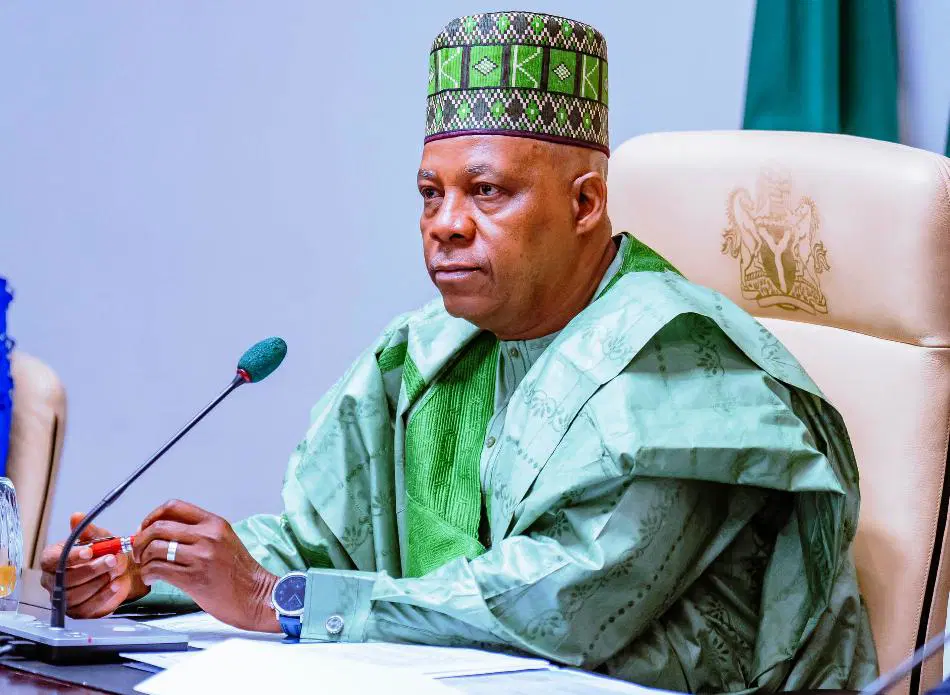
KANO, Nigeria — Vice President Kashim Shettima has disclosed that more than eight million children in Nigeria’s North-West region are currently out of school, describing the situation as a stark reflection of the deep multidimensional poverty affecting the region.
Shettima made the revelation on Wednesday at the North-West Policy Dialogue on Reducing Multidimensional Poverty Through Innovative Financing and a Scaled Social Protection System in Kano. The Vice President was represented at the event by Deputy Senate President Senator Barau Jibrin.
According to him, despite the North-West’s strategic importance to Nigeria’s economic growth, population strength and youthful workforce, the region continues to grapple with severe challenges in education, healthcare, nutrition and income security.
“The burden is grave. We inherited deprivations across health, education, nutrition and income security. Over eight million children are out of school. Maternal mortality remains frighteningly high, under-five mortality is painful, and child stunting affects more than half of our children in some communities,” he said.
Shettima stressed that poverty should no longer be viewed solely through the lens of income, noting that lack of access to education, healthcare, adequate nutrition and economic opportunities offers a more realistic picture of deprivation.
“Poverty is the child who cannot read at ten, the mother who approaches childbirth with fear, the household unsure of tomorrow’s food, and the young mind outside the classroom while the world races towards artificial intelligence and a knowledge economy,” he stated.
The Vice President reaffirmed the commitment of President Bola Tinubu’s administration to expanding social protection programmes designed to support vulnerable households and shield citizens from poverty, insecurity and economic shocks.
He also advocated the introduction of a Universal Child Benefit Scheme, arguing that such a programme could significantly improve child nutrition, boost school enrolment and reduce the prevalence of child labour and early marriage.
“The child is the most honest measure of any society. When a child is hungry, the future is hungry; when a child is out of school, the nation is out of position,” he added.
Shettima urged governors, policymakers, development partners and other stakeholders to move beyond policy discussions and focus on implementing practical interventions that will improve the lives of children and vulnerable families across the North-West region.
The policy dialogue brought together government officials, development experts and key stakeholders to explore innovative financing mechanisms and strengthen social protection systems aimed at tackling poverty and improving human development outcomes in the region.
















Comments