

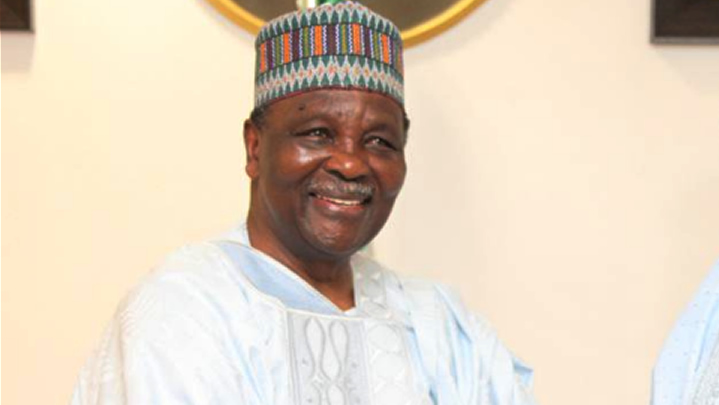
Former Head of State, Yakubu Gowon, has reignited longstanding debate over the origins of Nigeria’s civil war, attributing the collapse of pre-war peace negotiations to the actions of late Biafran leader, Chukwuemeka Odumegwu Ojukwu.
In his newly released autobiography, My Life of Service and Allegiance, Gowon gives a detailed account of the political tensions, failed negotiations, and mistrust that preceded the 1967–1970 civil war, insisting that repeated efforts to preserve national unity were frustrated by opposing interpretations of key agreements.
A central focus of his account is the 1967 Aburi meeting in Ghana, brokered by Ghana’s then-leader, Lt.-Gen. Joseph Arthur Ankrah, where Nigeria’s military leadership sought to resolve escalating constitutional and ethnic tensions. The talks later became controversial, with both sides presenting conflicting interpretations of the outcome.
Gowon argues that Ojukwu’s interpretation of the Aburi discussions amounted to a framework that would have significantly weakened the authority of the federal government, warning that such a structure risked the collapse of the federation. He maintained that the federal side attended the meeting in good faith, hoping to prevent the country’s disintegration.
He further stated that despite rising tensions following the 1966 coups and retaliatory killings in parts of Northern Nigeria, the federal government continued to pursue reconciliation. However, he claimed that mistrust deepened over time, making compromise increasingly difficult.
Gowon also defended the creation of 12 states shortly before the declaration of Biafra in 1967, describing it as an attempt to address fears of domination among minority groups and to reduce regional concentration of power.
According to him, communication between both sides deteriorated sharply in the months leading up to the declaration of the Republic of Biafra on May 30, 1967. He maintained that the federal government was left with no alternative after the secession was announced.
Rejecting suggestions that the federal side was eager for conflict, Gowon insisted that all peaceful options were exhausted before war became unavoidable. He also reiterated that the post-war “No Victor, No Vanquished” policy was designed to promote reconciliation and national healing after years of devastating conflict.
While acknowledging the deep humanitarian toll of the war, including widespread displacement and loss of life, Gowon maintained that his administration’s overriding objective was to preserve Nigeria’s unity.
Ojukwu, who led the secessionist Eastern Region during the conflict until his death in 2011, consistently argued that the declaration of Biafra was a response to insecurity and political breakdown within the Nigerian state. Gowon’s memoir, however, presents a contrasting account, placing responsibility for the failure of peace efforts largely on the Biafran leadership.
The renewed claims are expected to reignite historical and political debates over one of Nigeria’s most sensitive chapters.


















Comments