

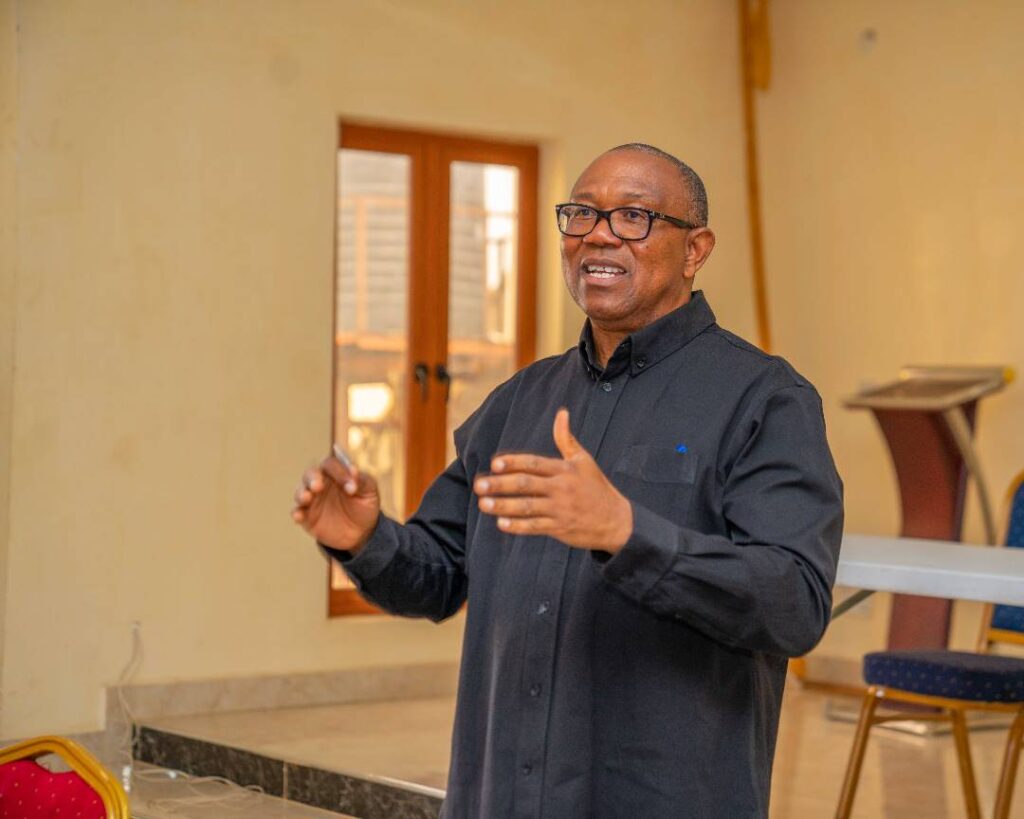
Presidential candidate of the Nigeria Democratic Congress (NDC), Peter Obi, has unveiled the vision driving his 2027 presidential ambition, pledging to build a productive, prosperous, and united Nigeria through sweeping reforms in education, healthcare, governance, and industrial development.
In a statement titled “My Vision for a Productive and Prosperous Nigeria,” released on Wednesday via his official X account, the former Anambra State governor said his administration would be anchored on unity, inclusion, social justice, equity, and good governance.
Obi revealed that in the coming weeks and months, he would present a detailed roadmap aimed at tackling government abuse, improving the quality of life of Nigerians, and setting the country on a path of sustained peace, progress, and prosperity.
According to him, human capital development will be at the heart of his administration, with education and healthcare receiving priority attention.
He pledged to establish a presidential task force to drastically reduce the number of out-of-school children while expanding investment in Technical and Vocational Education and Training (TVET) to equip young Nigerians with practical skills needed for industrial growth.
Obi said his government would partner with the private sector and faith-based institutions to strengthen TVET, promote apprenticeship programmes modeled after Germany’s dual education system, and support industrialisation through agricultural value chains and industrial parks across Nigeria’s geopolitical zones.
He lamented the paradox of high unemployment despite Nigerian businesses relocating abroad due to a shortage of skilled labour, describing the situation as one that must be addressed to transform Nigeria from a consumption-driven economy into a production-driven one.
The NDC presidential candidate also promised to strengthen character and civic education to promote trust, leadership, national values, and responsible citizenship.
Obi maintained that his proposed reforms are designed to unlock Nigeria’s youthful population as a catalyst for economic growth and national development.










Comments