

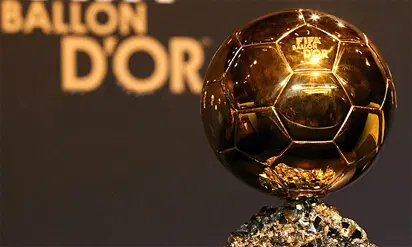
France Football has put to rest the long-standing belief that winning the FIFA World Cup automatically secures the Ballon d’Or, revealing that the sport’s most prestigious individual award is ultimately decided by a player’s overall season rather than international success alone.
As the FIFA World Cup unfolds across Canada, Mexico and the United States, the publication revisited the history of the Ballon d’Or to examine how often World Cup winners have gone on to claim football’s highest individual honour since 1995, when the award became open to players from outside Europe.
Historically, the two achievements often went hand in hand. Football greats such as Bobby Charlton, Paolo Rossi and Lothar Matthäus all completed the World Cup-Ballon d’Or double. That pattern continued with Zinedine Zidane in 1998, Ronaldo in 2002 and Fabio Cannavaro in 2006, each winning both honours in the same year.
However, the trend has weakened significantly in recent years.
After Spain’s World Cup triumph in 2010, the Ballon d’Or went to Lionel Messi instead of Spanish stars Andrés Iniesta or Xavi. In 2014, Cristiano Ronaldo claimed the award despite Portugal failing to win the World Cup, edging out Argentina’s Lionel Messi and Germany’s World Cup-winning goalkeeper Manuel Neuer.
A similar pattern emerged in 2018 when Luka Modrić won the Ballon d’Or after leading Croatia to the World Cup final, despite France lifting the trophy.
The World Cup-Ballon d’Or double returned in 2022 when Lionel Messi inspired Argentina to World Cup glory before winning the Ballon d’Or the following year.
According to France Football’s analysis, only four of the seven World Cup-winning players since 1995 have also won the Ballon d’Or in the same year, representing a success rate of just 57 percent.
The publication concluded that while World Cup success remains a major advantage, it is no longer enough on its own to secure football’s most coveted individual prize.
“To win the coveted award, you need to have been the best player of the season,” France Football stated.















Comments