

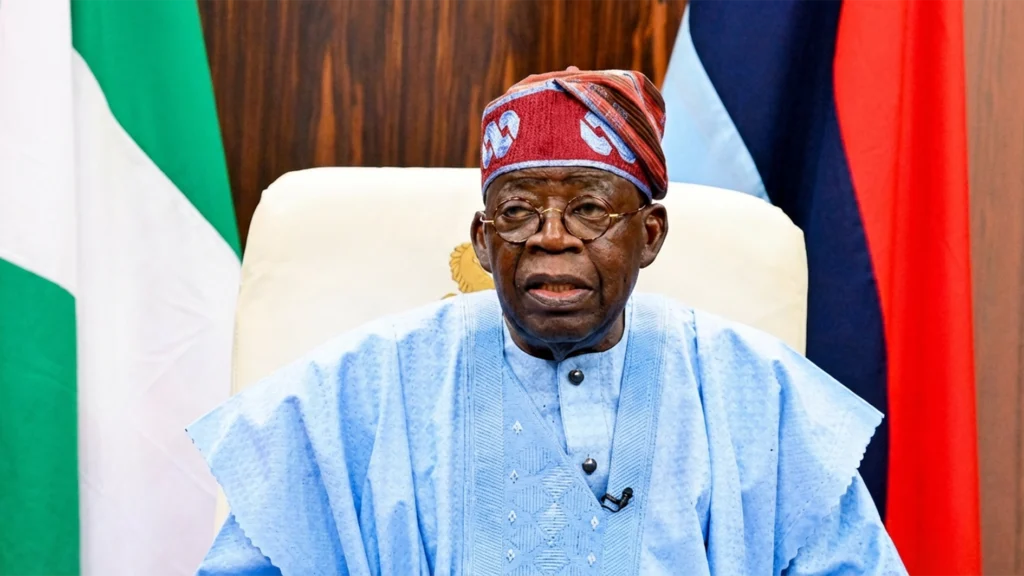
Minister of State for Petroleum Resources (Oil), Senator Heineken Lokpobiri, says reforms implemented by President Bola Tinubu’s administration have increased Nigeria’s crude oil production by more than 80 per cent.
Lokpobiri made the claim in Yenagoa, Bayelsa State, during a breakfast meeting with media stakeholders led by Elder Asu Beks.
The meeting, themed “Counting the Gains of the Oil Sector Reforms Under President Bola Tinubu,” focused on the impact of the administration’s policies on Nigeria’s oil and gas industry.
According to the minister, Nigeria was producing less than one million barrels of crude oil and condensate per day when the Tinubu administration assumed office in 2023.
He said production had since risen to 1.824 million barrels per day, including condensate, citing the latest weekly report of the Nigerian Upstream Regulatory Commission.
“Condensate is not counted by OPEC. As of the last weekly report from NUPRC, we are producing 1,824,000 barrels per day inclusive of condensate. That is over 80 per cent from where we started in 2023,” Lokpobiri said.
He attributed the increase to the combined efforts of stakeholders in the oil and gas industry under the leadership of the President.
Lokpobiri also said the number of active drilling rigs in the country had increased from fewer than 10 to more than 70. He noted that drilling a well costs between $25 million and $30 million onshore, while offshore drilling can cost between $80 million and $100 million.
The minister further claimed that Nigeria now accounts for about 60 per cent of oil and gas investments coming into Africa, following years of limited investment in the sector.
He attributed part of the renewed investment to the Federal Government’s approval of Shell’s divestment to Renaissance and ExxonMobil’s divestment to Seplat.
According to him, the approvals have helped unlock investments in major projects, including the Bonga North, Bonga South-West and Zabazaba fields.
Lokpobiri also said indigenous oil companies now account for about 60 per cent of Nigeria’s crude oil production, compared with the period when international oil companies accounted for about 90 per cent.
Subsidy Removal
On petrol subsidy removal, the minister described the policy as inevitable, saying the Federal Government had previously spent about N18.4 billion daily on subsidy when the exchange rate was N448 to the dollar.
He said the expenditure amounted to about $15 billion annually, which would translate to approximately N21 trillion at an exchange rate of N1,400 to the dollar.
Lokpobiri said the removal of the subsidy had increased the revenue available for distribution to the three tiers of government through the Federation Account Allocation Committee.
According to him, monthly FAAC allocations have risen from less than N600 billion to more than N2 trillion.
He said the increased allocations had helped 27 states that previously struggled to pay salaries meet their obligations and execute development projects.
The minister also said the Nigerian National Petroleum Company Limited now declares profits, contributes to the Federation Account and meets its financial obligations, unlike in the past when it allegedly failed to declare profits or meet cash-call obligations.
He cited Section 205 of the Petroleum Industry Act, signed into law by former President Muhammadu Buhari, as providing for market-based pricing.
Lokpobiri added that deregulation had enabled the Dangote Refinery to supply aviation fuel to European markets.
He further said Nigeria had previously been subsidising petrol consumption in parts of West and Central Africa before the subsidy was removed.
Atala Oil Field
Speaking on the disputed Atala oil field in Bayelsa State, Lokpobiri said the state government had challenged the matter in court but lost at both the Federal High Court and the Court of Appeal.
He said efforts were now being made to explore a political solution that could facilitate funding for the development of the field.
On OML 240, which he said belonged to Bayelsa State, the minister said the oil block was awarded more than two decades ago and had since expired.
He added that a Norwegian company had been brought in to develop the asset.















Comments