

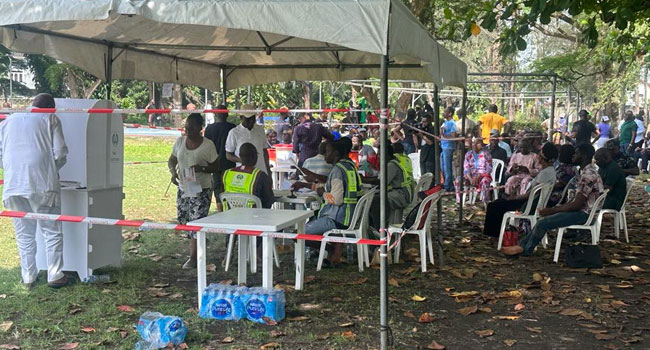
The outcome of the 2026 Osun State governorship election has reignited debate over whether Nigerian voters can replicate the level of resilience and vigilance displayed during the poll ahead of the 2027 general elections.
Governor Ademola Adeleke of the Accord Party defeated the APC candidate, Bola Oyebamiji, after polling 511,067 votes against Oyebamiji’s 444,815. ADC candidate Najeem Salaam finished third with 17,180 votes.
Adeleke won in 19 of the state’s 30 local government areas, while Oyebamiji secured victories in 11.
The election has attracted attention over the role played by voters, particularly high turnout, grassroots mobilisation and close monitoring of the electoral process.
Civil society organisations and political analysts have pointed to the willingness of voters to remain at polling units after casting their ballots, observe the counting process, record results and monitor their transmission as key factors that helped protect the integrity of the election.
Another issue that emerged was the practice informally described as “collect and vote your conscience.” Some voters reportedly accepted cash or food items offered by political actors but still voted for their preferred candidates.
However, analysts warn that replicating the Osun experience nationwide may prove difficult because of differences in political structures, voter mobilisation and the level of influence wielded by political actors across states.
Pearse: 2027 could be bloody
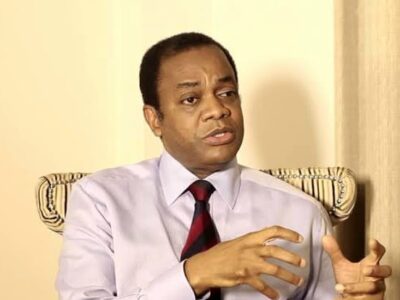
Dr Adetokunbo Pearse, a chieftain of the Peoples Democratic Party and convener of Reset Lagos PDP, said Nigerians should not underestimate the challenges that could accompany the 2027 elections.
Pearse argued that vote buying alone does not necessarily determine electoral outcomes, claiming that many voters still vote according to their preferences despite accepting financial inducements.
He cited Peter Obi’s performance in the 2023 presidential election, including his victory in Lagos, as evidence that voters can reject candidates despite the financial resources available to their opponents.
According to Pearse, the greater threat comes from alleged intimidation, electoral manipulation and the use of political machinery to influence results.
He maintained that the Osun election demonstrated the importance of not only voting but also remaining at polling units and following the ballot through the collation process.
“What happened in Osun was that the governorship candidate, the incumbent Governor Adeleke, was able to match them force for force,” Pearse said.
He warned that not every state has the political structure or influential personalities capable of mounting the level of resistance witnessed in Osun.
“Not every state can survive like Osun,” he said, adding that the 2027 elections could be marked by heightened tension and violence.
Ene Obi: Don’t blame hungry voters
Former ActionAid Nigeria Country Director and Nigerian Civil Society Situation Room Steering Committee member, Ene Obi, meanwhile, focused on the economic hardship that makes voters vulnerable to financial inducements.
Obi criticised politicians for allegedly exploiting poverty and hunger to influence voters, while urging authorities to strengthen voter protection and civic education.
She argued that citizens should not be solely blamed for accepting money during elections, particularly amid widespread economic hardship.
Obi also called on the Independent National Electoral Commission (INEC) to ensure greater privacy at polling units so voters can cast their ballots freely without fear of being monitored.
She recalled an incident in Osogbo where a party agent reportedly challenged the positioning of a voting cubicle and insisted that it be moved to protect voters’ privacy.
According to her, ensuring that voters can mark their ballots privately is essential to protecting the integrity of elections.
“If voting occurs in privacy and it is not visible to others, what will be the outcome?” she asked.
Obi stressed the need for stronger voter education and active citizenship, arguing that citizens must understand their role in protecting democracy beyond simply casting their ballots.
“The lifeblood of democracy is active citizenship,” she said.
She also condemned the alleged use of poverty as a political tool, questioning why politicians would offer voters relatively small sums of money after failing to deliver on their promises over an entire political term.
The debate over the Osun election has therefore shifted beyond the question of who won the poll, with political actors and civil society groups examining whether the strategies employed by voters in the state can provide a model for protecting electoral integrity across Nigeria ahead of the 2027 elections.










Comments