

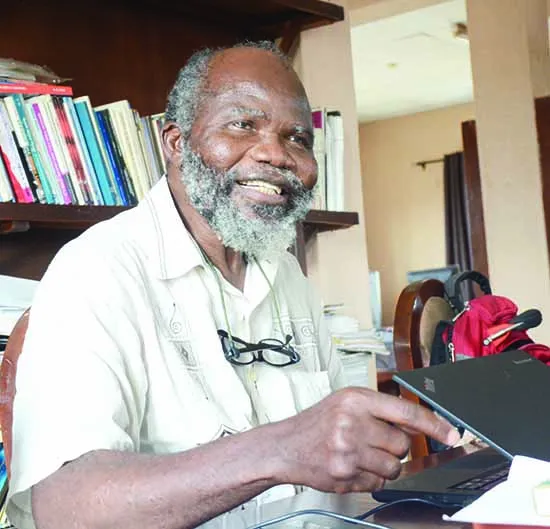
A retired Nigerian Army Major General, Ishola Williams, has argued that Nigeria’s prolonged debate over state policing is misplaced, insisting that the country already operates a form of state police through regional security outfits and only needs constitutional recognition to make the system effective.
Speaking on Frontline, a current affairs programme on Eagle 102.5 FM, Ilese-Ijebu, Ogun State, on Friday, Williams said security networks such as Amotekun have effectively established state-level policing structures, despite lacking constitutional backing.
According to him, the persistent calls for the creation of state police overlook the reality that sub-national security outfits are already functioning across the country, albeit with legal and operational limitations.
“We’ve already got a state police in practice. What we actually need now is a constitutional amendment to recognise and properly structure what already exists on the ground,” he said.
Williams maintained that endless debates on the issue have slowed down meaningful reforms, while insecurity continues to worsen across the country.
The retired military officer described Nigeria as facing a “dual national emergency” of insecurity and economic hardship, warning that citizens are increasingly trapped between fear of violence and the struggle for survival.
“The reality is that Nigerians are now living in fear and deprivation at the same time. People cannot afford basic living, and at the same time, they cannot move safely. When both fear of hunger and fear of violence exist together, then the nation is in danger,” he stated.
He criticised what he described as the Federal Government’s inadequate response to security challenges, particularly in the South-West, and questioned the visibility and effectiveness of the Office of the Special Adviser to the President on Homeland Security.
“We have an office that was created for homeland security, but there is no public engagement, no briefing, no visible strategy. It raises serious concerns about whether the system is even coordinated,” Williams said.
The retired general also faulted proposals to recruit large numbers of personnel without adequate training, arguing that such measures would do little to combat organised criminal groups.
“Those 1,000 people, have they been trained already to be able to rescue those who are kidnapped in the forest? Does it make sense?” he queried.
Williams further expressed concerns over what he described as weak intelligence coordination and a lack of strategic thinking within the country’s security architecture.
He lamented that several policy recommendations he had submitted over the years, particularly on protecting schools from attacks and abductions, had not been implemented.
“Do you know that nobody has taken up that proposal?” he asked.
The retired officer emphasised the need to clearly distinguish between public safety and national security, arguing that confusion between the two concepts has contributed to institutional inefficiency.
“Government is confused. Stop confusing public safety with security,” he said.
Williams also questioned the public visibility of the Special Adviser on Homeland Security, Adeyinka Famadewa, noting that little has been heard from the office despite rising insecurity across several regions.
He criticised the handling of recent security incidents, including kidnappings in Oyo State, arguing that authorities often fail to deploy rapid-response capabilities during the critical early hours of an abduction.
According to him, specialised security units equipped with drones and helicopters should be mobilised immediately after kidnapping incidents are reported.
Williams reiterated that Nigeria’s challenge is not the absence of security institutions but the lack of coordination, constitutional clarity and accountability.
“We’ve already got a state police. What is Amotekun? Tell me. What is Amotekun?” he asked.
He accused political leaders of delaying decisions on state policing and restructuring, alleging that vested interests within existing institutions were slowing progress.
“The IGP wants to protect his interests. But we want independent state police. He too wants to have control,” Williams claimed.
The retired general further warned that insurgent groups continue to strengthen their foothold in parts of the North-East due to prolonged conflict and inadequate responses.
He also criticised security cooperation across West Africa, describing the regional security framework as weak and poorly coordinated.
“The whole security system along the West Coast is in a mess,” he said.
Williams concluded that Nigeria’s security crisis is fundamentally rooted in structural confusion, policy inconsistency, constitutional ambiguities and weak accountability mechanisms, stressing that reforming and legally empowering existing security structures should take priority over creating new ones.
















Comments