

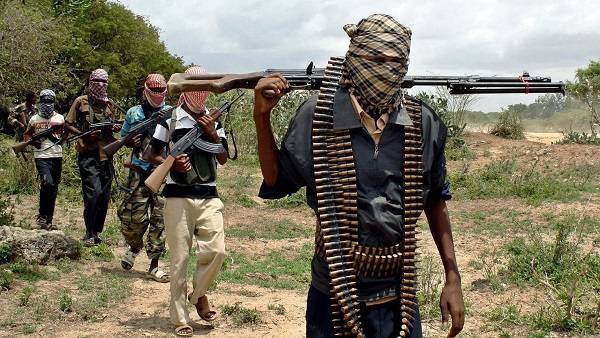
No fewer than 484 residents, including 271 children, were displaced after armed bandits attacked communities in Gummi Local Government Area of Zamfara State on June 15, 2026, according to the International Organisation for Migration (IOM).
The latest figures, contained in the IOM’s Flash Report 291 on Population Displacement obtained on June 25, revealed that the attack affected 101 households, with children accounting for more than half of those forced to flee their homes.
The displaced residents reportedly escaped from Gamo Gidan Bita in Birnin Magaji Ward to Ubandawaki in Magaji Gari Ward following the assault.
According to the IOM, its Displacement Tracking Matrix (DTM) activated a rapid assessment on June 16, barely 24 hours after the attack, in line with its 72-hour emergency response protocol.
The report described the incident as part of the persistent wave of violence ravaging Nigeria’s North-West, driven by long-standing conflicts between farmers and herders, as well as ethnic and religious tensions that have evolved into organised armed criminality.
Of the 484 displaced persons, 271 were children, 129 were women and 84 were men. Females accounted for 60 per cent of the displaced population, while males made up the remaining 40 per cent.
Further analysis showed that girls aged between six and 12 years formed the largest female age group among the displaced, representing 12 per cent of the affected population. Women aged 18 to 59 accounted for 25 per cent, while adult men within the same age bracket represented 16 per cent. Infants below one year were also among those displaced.
The attack claimed three lives and left two others injured, bringing the total casualties to five.
The IOM identified food, emergency shelter and essential non-food items as the most urgent humanitarian needs, noting that all affected households require immediate assistance.
The latest incident adds to the growing humanitarian crisis in the North-West. Between December 2025 and June 2026, more than 143,189 people were displaced across the region, raising the total number of internally displaced persons to over 794,000.
Separate data previously analysed from the UNHCR Nigeria Forcibly Displaced Populations Dashboard also indicated that at least 8,521 Nigerians fled insecurity in the North-West and North-East during the same period, seeking refuge in neighbouring Niger, Cameroon and Chad.
The June 15 attack is the latest in a series of deadly bandit assaults that have plagued Zamfara and neighbouring states since 2011. What initially began as clashes between farming and pastoral communities has gradually transformed into widespread armed banditry across Zamfara, Katsina, Kaduna, Sokoto and Kebbi states.
Data referenced by Human Rights Watch from SBM Intelligence showed that Zamfara recorded 1,203 kidnapping incidents between July 2024 and June 2025 — the highest in Nigeria. Kaduna followed with 629 cases, while Katsina recorded 566. Nationwide, 4,722 kidnapping incidents were documented during the period.
As of early 2026, Zamfara’s internally displaced population had risen to 279,224, representing an increase of 74,648 people compared to the previous reporting period.
The IOM also disclosed that attacks in neighbouring Katsina State displaced 3,830 people from 517 households between May 21 and June 1.
Meanwhile, the agency’s Transhumance Tracking Tool Dashboard reported that 388 herders moved 10,572 livestock across Katsina and Zamfara states in May 2026. The livestock included 6,527 cattle, 2,205 sheep, 1,303 goats and 537 other animals.
The report identified Zamfara as Nigeria’s third-largest destination for livestock migration during the period, receiving 1,528 animals, while the Kaduna–Zamfara corridor emerged as the busiest domestic transhumance route.
According to the IOM, worsening desertification, climate change, inadequate rainfall and rapid population growth continue to intensify competition over land and water resources, further fuelling conflicts between farming and pastoral communities across the North-West.
Efforts to obtain a reaction from the Special Adviser to the President on Information and Strategy, Bayo Onanuga, were unsuccessful, as calls and text messages sent to him were not responded to as of the time of filing this report.

















Comments