

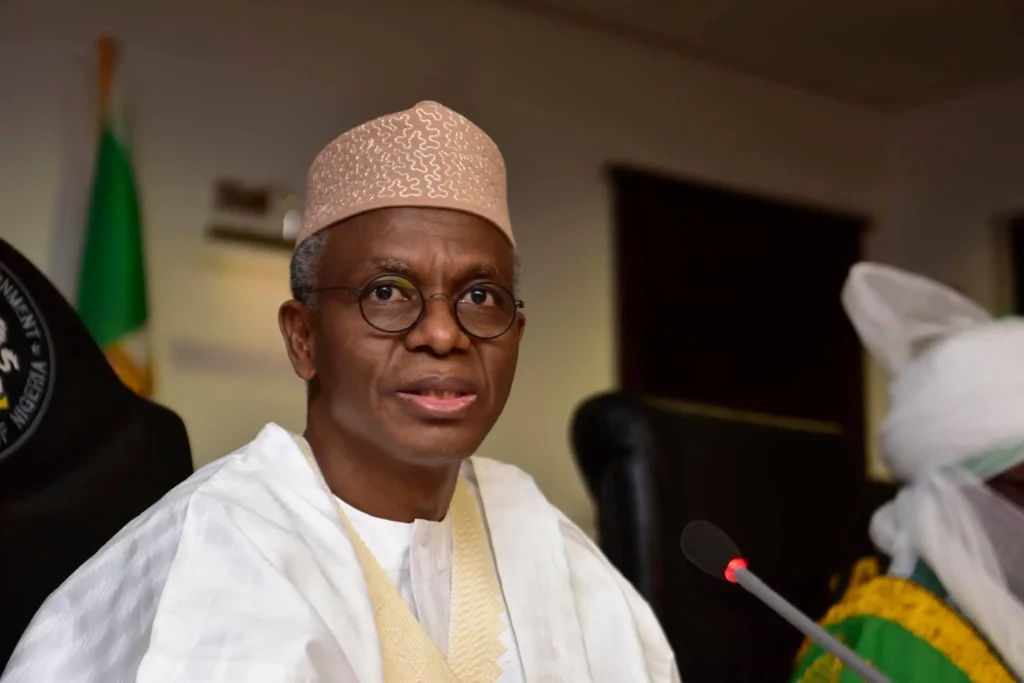
Mixed reactions have continued to trail comments by Minister of Defence, Gen. Christopher Musa (retd.), concerning the administration of former Kaduna State Governor and African Democratic Congress (ADC) chieftain, Nasir El-Rufai.
Musa made the remarks during an appearance on Channels Television’s Politics Today, where he accused El-Rufai of policies and actions that allegedly worsened divisions and insecurity in Kaduna State during his tenure between 2015 and 2023.
The Defence Minister claimed that El-Rufai’s administration deepened regional divisions in the state, alleging that residents from Southern Kaduna faced difficulties relocating to the northern part of the state.
His comments have since triggered a heated debate on social media, with Nigerians divided over the allegations and the former governor’s record in office.
A teacher, Nura Bako Zango, questioned the minister’s claims, arguing that communal and religious conflicts in Kaduna predated El-Rufai’s administration.
Zango cited the 2011 post-election violence and the 1992 Zangon Kataf crisis, insisting that the state’s history of ethnic and religious tensions should be considered before placing responsibility solely on the former governor.
Similarly, Abdulmatin Muhammed Jibril challenged Musa to provide evidence to support his allegations, questioning whether the minister had previously spoken out against El-Rufai while serving as a military officer.
Another commentator, Ibrahim Idris Muazzam, described Musa’s remarks as unfortunate and maintained that El-Rufai governed the state without discrimination.
Sani Ahmed also rejected the allegations, arguing that Kaduna’s ethnic and religious divisions existed long before El-Rufai assumed office.
However, former Secretary to the Government of the Federation, Babachir Lawal, backed Musa’s position, saying the experiences of many Southern Kaduna residents during El-Rufai’s administration should not be dismissed.
Lawal acknowledged that El-Rufai’s supporters had the right to defend the former governor but argued that such support should not invalidate the grievances expressed by some residents of Southern Kaduna.
In a controversial comparison, Lawal likened the perception of El-Rufai among some Southern Kaduna residents to that of Adolf Hitler among Jews, while noting that the administration of current Governor Uba Sani was working to address longstanding divisions.
Meanwhile, Victor Mathew Bobai, Senior Special Adviser on Public Affairs to Governor Uba Sani, urged Nigerians to focus on the substance of Musa’s comments rather than speculate about his political motives.
Bobai stressed that Musa’s remarks should be understood as part of democratic discourse and not as an official military position.
He said, “We must distinguish between an official directive and a political opinion. General Musa did not issue a military order, announce a defence policy, or instruct the Armed Forces to support any political party. He participated in a public conversation and expressed his assessment of the political environment.”
The controversy has continued to fuel debate over Kaduna State’s history of ethnic and religious tensions, as well as the legacy of El-Rufai’s eight-year administration.











Comments