

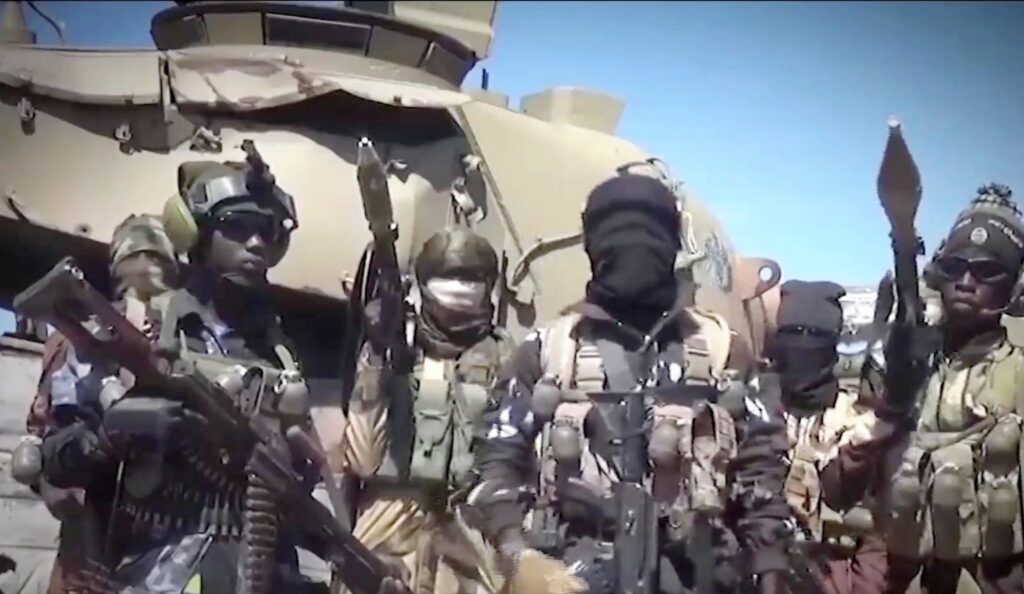
The Islamic State West Africa Province (ISWAP) has claimed responsibility for a series of coordinated attacks targeting Nigerian security forces and locations in neighbouring countries, according to a statement released on Thursday.
The material, originally written in Arabic and later translated into English, surfaced on X (formerly Twitter) and was reviewed by our correspondent. In the document, the group alleged that it carried out multiple operations, including roadside bombings, checkpoint assaults, and the destruction of military vehicles.
Among the claims is an attack on a military patrol in northern Nigeria, where ISWAP stated that an improvised explosive device (IED) detonated, killing seven soldiers, including a Major, and injuring others. The group also claimed that a four-wheel-drive vehicle was destroyed in the incident.
In a separate operation, ISWAP alleged that its fighters attacked an army position on the outskirts of a town in an attempt to lure troops into an ambush.
The group further accused Nigerian troops of retaliatory actions against civilians in areas around Monguno, claiming that homes were burned for allegedly failing to provide information on insurgent movements. It described the purported response as “desperate and uncivilised.”
Beyond Nigeria, ISWAP also claimed responsibility for attacks on police personnel and local militias, as well as an assault on a checkpoint at the entrance of Rifa city in neighbouring Niger Republic. According to the group, five individuals were killed or wounded during the operation, a vehicle was destroyed, and weapons were seized.
The publication included a graphic summary alleging that 11 attacks were carried out within a week, resulting in the destruction or disabling of 42 vehicles.
It also referenced operations outside West Africa, including an alleged attack on a government vehicle north of Raqqa, Syria.
However, security experts have cautioned that such claims are often part of broader propaganda efforts aimed at exaggerating battlefield successes, instilling fear, and attracting recruits.
A security source noted that insurgent groups frequently deploy misinformation as a tool of psychological warfare, particularly when facing sustained military pressure.
“These claims should always be treated with caution,” the source said, adding that independent verification is often difficult in conflict zones.
















Comments