

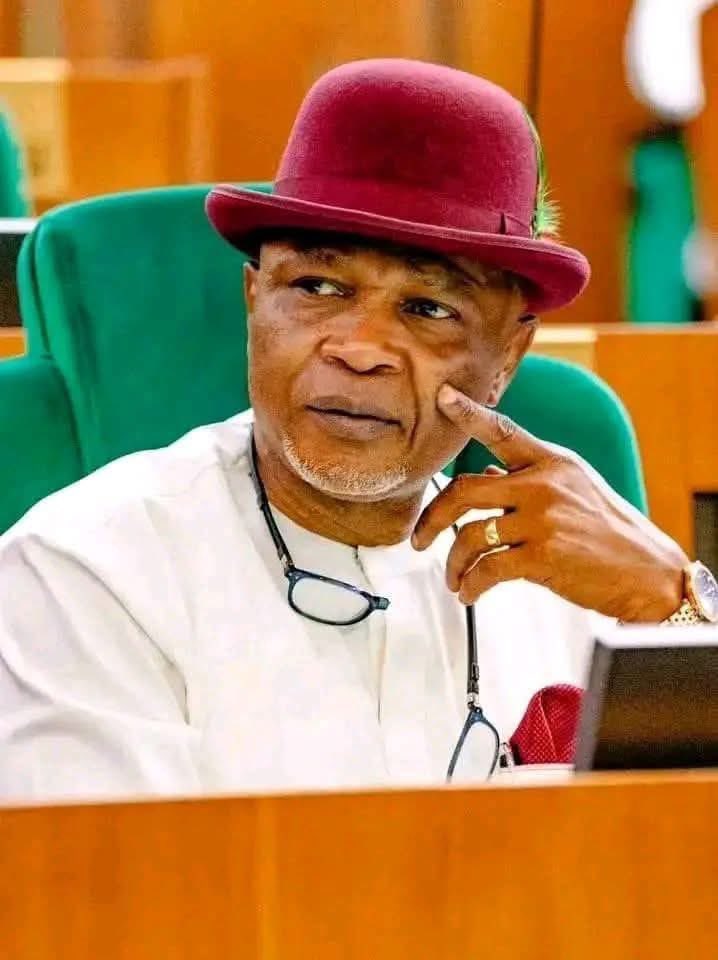
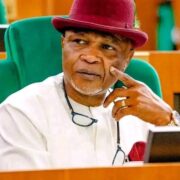
Fresh legal troubles have emerged for Rivers State governorship candidate and House Minority Leader, Kingsley Chinda, as an Abuja Federal High Court has been asked to stop him from participating in the 2027 governorship election over alleged unlawful defection from the Peoples Democratic Party to the All Progressives Congress.
The development adds another layer to the lingering political crisis rocking Rivers State, where tensions between loyalists of Nyesom Wike and Governor Siminalayi Fubara continue to shape the state’s political landscape ahead of the 2027 elections.
Chinda, a close ally of Wike, emerged as the APC governorship candidate during the party’s primary election held on May 21, 2026, after other aspirants, including Fubara, Tonye Cole and Alabo Dakorinama George-Kelly, reportedly withdrew from the race at the last minute.
Despite emerging as APC flagbearer, Chinda still occupies the position of Minority Leader in the House of Representatives — a role tied to his membership of the PDP — raising questions over his political status and alleged dual party affiliation.
The controversy intensified after a group of lawyers under the aegis of the Incorporated Trustees of the Association of Legislative Drafting and Advocacy Practitioners filed a suit before an Abuja Federal High Court on May 12, 2026, seeking to disqualify Chinda from the governorship race.
In court documents obtained by DAILY POST, the lawyers argued that Chinda’s defection to the APC violated provisions of Section 68(1)(g) of the 1999 Constitution, the Electoral Act 2026, and a February 27, 2025 Supreme Court judgment outlining procedures for lawmakers seeking to defect from political parties.
The suit, filed by J.B. Lamay Esq., listed Chinda, George-Kelly, the Independent National Electoral Commission, Speaker of the House of Representatives, APC, Department of State Services and the Attorney-General of the Federation as respondents.
Among the reliefs sought, the plaintiffs asked the court to restrain INEC from recognising Chinda’s nomination or candidature, order his immediate removal as Minority Leader, declare his House seat vacant, and direct INEC to conduct a bye-election for his constituency.
The plaintiffs also argued that George-Kelly was ineligible to contest the APC primary because he allegedly failed to resign as Director-General of the Border Communities Development Agency before the March 30, 2026 deadline reportedly set for political appointees seeking elective office.
Although George-Kelly later withdrew from the race, the lawsuit continues to cast uncertainty over Chinda’s candidacy and could potentially reshape the political equation in Rivers State ahead of the 2027 governorship election.
In an affidavit supporting the suit, the association’s Administrative Secretary, Jesse Amuga, stated that Chinda’s continued stay in the National Assembly while actively participating in APC governorship activities was “unlawful and contrary to democratic ethics and constitutional order.”
The group further claimed that legal representatives from Chinda’s Obio/Akpor Federal Constituency had earlier issued a pre-action notice warning him against defecting from the PDP, threatening recall proceedings if he proceeded with the move.
With the matter now before the court, political observers say the outcome could become a major test case on party defection, legislative loyalty and constitutional compliance ahead of Nigeria’s 2027 general elections.










Comments