

Tensions in the Middle East escalated sharply on Tuesday after United States forces launched attacks on missile installations in southern Iran and targeted boats allegedly attempting to deploy naval mines, raising fears that a fragile ceasefire could unravel and derail ongoing peace negotiations.
According to the US Central Command, the strikes were carried out as “self-defense operations” aimed at protecting American troops from what it described as imminent threats posed by Iranian forces.
“US forces conducted self-defense strikes in southern Iran today to protect our troops from threats posed by Iranian forces,” Central Command spokesman Tim Hawkins said in a statement.
The military, however, did not disclose the exact locations or extent of the operation, only stating that the targets included missile launch sites and vessels attempting to “emplace mines.”
The latest escalation comes at a delicate moment, as senior Iranian negotiators arrived in Doha, Qatar, for another round of diplomatic talks aimed at ending months of conflict that have destabilized the region and disrupted global energy markets.
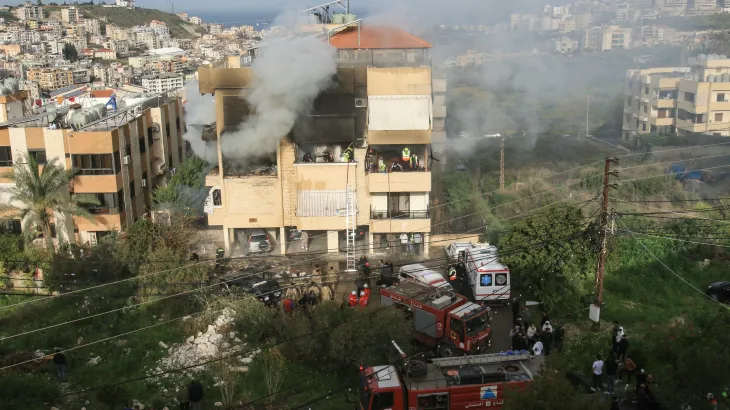
At the same time, Israel intensified military operations against the Iran-backed Hezbollah group in southern Lebanon, further complicating efforts to secure a broader regional truce.
Oil Markets React
Global oil markets responded nervously to the developments amid growing concerns over the security of the Strait of Hormuz — a critical maritime route through which a significant portion of the world’s oil supply passes.
West Texas Intermediate crude reportedly dropped by more than five percent, while Brent crude prices recorded modest gains as investors weighed the possibility of further disruptions to global fuel supplies.
US Secretary of State Marco Rubio acknowledged that negotiations with Iran were still ongoing despite the military action.
“There were some talks going on in Qatar today, so we’ll see if we can make progress,” Rubio told reporters during an official visit to India.
“I think it’s a lot of talking back and forth about specific language in the initial document, so it’ll take a few days,” he added.
Rubio also maintained a hardline stance on the Strait of Hormuz, insisting that the waterway “was going to remain open one way or the other.”
“What’s happening there is unlawful, illegal, unsustainable for the world and unacceptable,” he stated.
Explosions Reported in Southern Iran
Iran’s state broadcaster, IRIB, reported multiple loud explosions near the strategic port city of Bandar Abbas late Monday night.
While authorities confirmed the blasts, officials said normalcy had returned to the area and investigations into the cause of the explosions were ongoing.
The strikes now threaten the ceasefire agreement that took effect on April 8, as Washington and Tehran continue efforts to negotiate an accord capable of ending a conflict that has severely impacted global trade and energy flows.
Trump Pushes Tough Conditions
US President Donald Trump further heightened tensions after demanding that Iran surrender its enriched uranium stockpile to the United States for destruction or agree to supervised disposal inside Iran under international monitoring.
In a social media post, Trump said the nuclear material “will either be immediately turned over to the United States to be brought home and destroyed or destroyed in place with international witnesses present.”
He also renewed calls for more Middle Eastern nations to join the Abraham Accords — the US-brokered normalization agreements between Israel and several Arab countries.
Trump suggested that Saudi Arabia, Qatar, Pakistan, Egypt, Turkey, Jordan and Bahrain should all formally recognize Israel as part of any future peace settlement involving Iran.
However, Gulf nations have repeatedly insisted that normalization with Israel remains tied to the creation of an independent Palestinian state.
Israel Intensifies Offensive
Israeli Prime Minister Benjamin Netanyahu also signaled that military operations against Hezbollah would intensify following recent drone attacks targeting Israeli forces.
Netanyahu said he had ordered an “even greater acceleration” of Israel’s offensive in Lebanon and insisted that any agreement with Iran “must eliminate the nuclear threat entirely.”
Iranian officials, meanwhile, maintained that discussions surrounding Tehran’s uranium enrichment programme would only take place after an initial peace agreement is reached.
Political analysts warn that the combination of renewed military action, rising oil tensions and unresolved regional conflicts could significantly undermine ongoing diplomatic efforts and push the Middle East closer to a wider confrontation.













Comments