

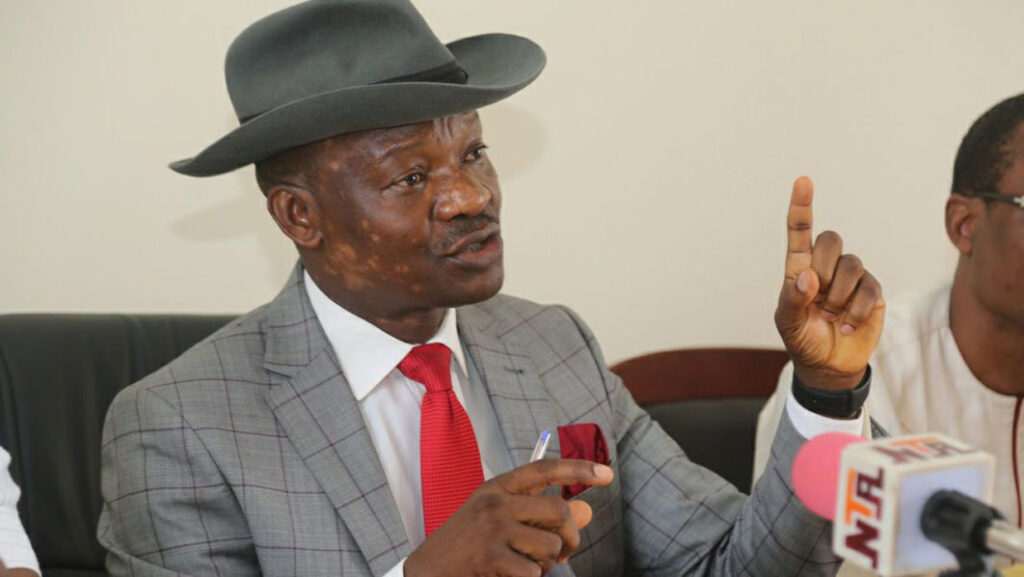
The Delta State Commissioner for Works, Rural Roads and Public Information, Charles Aniagwu, has alleged that Senator Ned Nwoko lost the All Progressives Congress (APC) senatorial primary in Delta North due to what he described as the senator’s poor relationship with political stakeholders and grassroots leaders across the district.
Speaking during an interview on Channels Television, Aniagwu said former Delta State governor, Ifeanyi Okowa, overwhelmingly defeated Nwoko after mounting an extensive grassroots consultation campaign across the nine local government areas in Delta North Senatorial District.
According to him, Okowa secured 113,309 votes in the primary election, while Nwoko polled just 2,612 votes.
Aniagwu argued that party primaries differ significantly from general elections because success depends largely on internal political relationships and grassroots mobilisation.
He accused Nwoko of failing to engage party leaders across the district’s 98 wards ahead of the exercise.
“Ned Nwoko was nowhere in any of the wards,” Aniagwu said, adding that the senator neither consulted ward leaders nor informed party stakeholders about his intention to contest the primary.
The commissioner further alleged that despite spending nearly three years in the Senate, Nwoko had maintained little contact with traditional rulers and political leaders in the district.
He claimed the senator rarely visited communities or participated in grassroots political activities, alleging that he did not know the names of ward chairmen, including the chairman in his own ward.
Aniagwu also stated that Nwoko failed to consult commissioners, House of Assembly members, and local government chairmen before the primary election.
“For instance, I am a commissioner in the Delta State Executive Council and also a ward leader. Ned Nwoko never sent me a text message informing me he was going to run,” he said.
The commissioner further alleged that Nwoko had longstanding disputes within his community in Aniocha North Local Government Area, claiming the senator opposed the recognition of the traditional ruler before the state government eventually presented the monarch with a staff of office.
Aniagwu also accused the senator of intimidating members of his community through arrests, questioning how such individuals could be expected to support him politically.
He contrasted Nwoko’s approach with that of Okowa, whom he described as actively engaging stakeholders, political appointees, and party leaders across the senatorial district ahead of the primary.
Aniagwu additionally dismissed claims of massive support for Nwoko at the primary venue, alleging that many of those seen around the senator were students brought from his sports university community.
He maintained that unlike Okowa, who queued and was properly accredited during the exercise, Nwoko merely stood among supporters speaking with journalists while votes were being counted.















Comments