

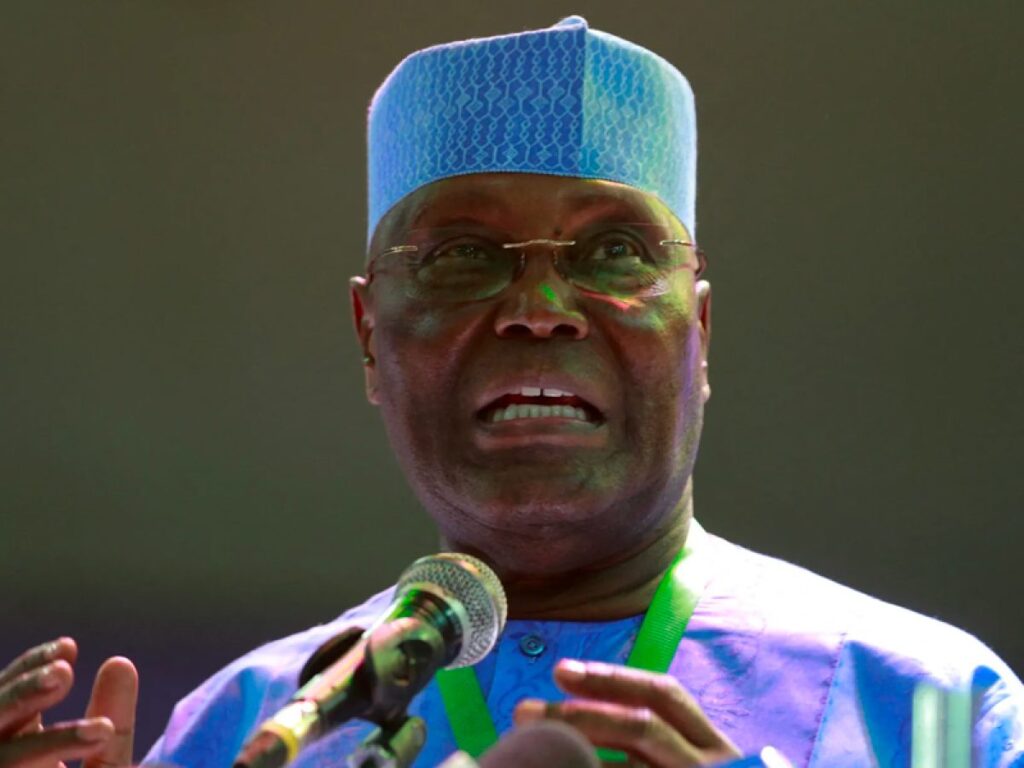
ABUJA — What was expected to be a major demonstration of internal democracy by the African Democratic Congress (ADC) has instead exposed underlying tensions within Nigeria’s emerging opposition coalition, following disputes over the party’s presidential primary election.
Former Vice President Atiku Abubakar emerged as the winner of the nationwide direct primary after polling 1,846,370 votes. Former Rivers State Governor and ex-Minister of Transportation, Rotimi Amaechi, secured 504,117 votes, while businessman and banker Mohammed Hayatu-Deen garnered 177,120 votes.
While the outcome appeared decisive on paper, controversy quickly followed as rival camps raised questions about aspects of the collation process and the credibility of some results.
Allegations Cloud Victory
Even before the official declaration of results, tensions had begun to surface among supporters of the various aspirants.
Amaechi rejected the outcome, describing the exercise as compromised, while Hayatu-Deen boycotted the final announcement, citing alleged irregularities and claiming to have personally witnessed some of the concerns raised.
The controversy shifted attention away from the scale of Atiku’s victory and toward broader questions about whether the contest had been genuinely competitive.
Atiku’s Political Advantage
Few political observers were surprised by Atiku’s victory.
The former vice president entered the race with one of the most extensive political networks within the opposition, backed by decades of national political experience and multiple presidential campaigns.
Long before the primary, there had been widespread speculation within opposition circles that the ADC coalition was gradually becoming Atiku’s preferred political platform following his departure from the Peoples Democratic Party (PDP).
As a result, the overwhelming margin of victory reinforced perceptions among some coalition members that the race may have been heavily tilted in his favour from the outset.
However, even some critics privately acknowledge that Atiku possessed a far stronger nationwide political structure than his rivals, making a comfortable victory entirely plausible.
The debate, therefore, has centred not only on allegations of irregularities but also on whether Atiku’s political dominance simply overwhelmed the competition.
Opposition Faces Its Own Democratic Test
The dispute has created an uncomfortable situation for a coalition that has consistently criticised the ruling All Progressives Congress (APC) over issues of internal democracy and candidate selection.
Accusations of imposition, manipulation and predetermined outcomes—criticisms often directed at the APC—have now surfaced within the ADC itself.
Before the exercise, the party had promoted the primary as evidence of its commitment to transparency and democratic participation.
Chairman of the Presidential Primary Election Committee, Ikechi Emenike, had described the exercise as a departure from what he called the culture of imposition and predetermined outcomes common in many political parties.
Yet as controversy emerged, party officials adopted a more cautious tone.
National Publicity Secretary, Bolaji Abdullahi, stated that the party had not yet gathered sufficient evidence to either confirm or dismiss the allegations being raised.
Amaechi’s Protest Highlights Deeper Concerns
Political analysts believe the significance of Amaechi’s reaction lies not simply in his defeat but in his standing within the coalition.
As one of the opposition’s most influential southern political figures, his rejection of the process has amplified concerns about trust and confidence among key stakeholders.
According to sources familiar with coalition discussions, the dispute reflects deeper anxieties among some members who believe critical decisions may have been effectively settled before voting commenced.
For many observers, the controversy is less about the numerical outcome and more about perceptions of fairness within a coalition bringing together politicians with competing ambitions.
Swift Reconciliation Efforts
Recognising the potential danger of a prolonged dispute, coalition leaders moved quickly to contain tensions.
Within hours of the controversy, Atiku met with Amaechi in Abuja alongside former Sokoto State Governor Aminu Tambuwal and former ADC National Chairman Ralph Nwosu.
Official discussions focused on national issues, including insecurity, economic challenges and strategies for the 2027 general election. Reports of light-hearted exchanges over football and shared meals were widely interpreted as deliberate efforts to project unity.
Nwosu dismissed suggestions of internal divisions, insisting that there was no faction within the ADC and accusing political opponents of attempting to undermine the coalition.
Nevertheless, political observers note that the speed of the reconciliation effort underscores the coalition’s awareness of the risks posed by public disagreements at such an early stage.
Coalition’s Strength and Weakness Exposed
ADC National Chairman and former Senate President David Mark sought to reassure party members by framing the dispute as part of the broader struggle to strengthen Nigeria’s democracy.
However, analysts argue that the primary may have simultaneously revealed both the coalition’s greatest asset and its most significant vulnerability.
Its greatest strength remains its ability to unite influential political figures under a common platform aimed at challenging the APC in 2027.
Its greatest weakness may be the lingering suspicion among some members that influence and power within the coalition are already unevenly distributed.
As preparations for the next general election intensify, many believe the ADC’s most immediate challenge may not be confronting the ruling party, but maintaining cohesion among the powerful political interests gathered within its own ranks.
For a coalition seeking to present itself as a credible alternative government, the management of these internal tensions could prove just as important as the battle for votes in 2027.













Comments