

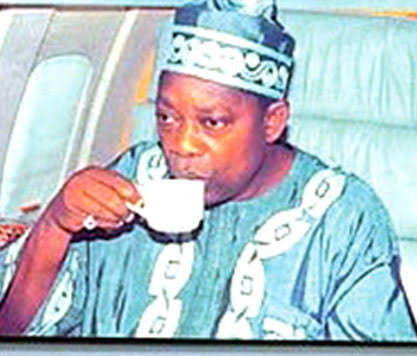
Nearly three decades after the death of Chief Moshood Kashimawo Olawale Abiola in military custody, fresh calls have emerged for the Federal Government to reopen investigations into the circumstances surrounding the death of the presumed winner of the June 12, 1993 presidential election.
Abiola declared himself president on June 12, 1994, exactly one year after the annulled election which he was widely believed to have won. He was subsequently arrested by the regime of the late General Sani Abacha and charged with treasonable felony.
For about four years, Abiola remained in detention, during which his health reportedly deteriorated significantly. His condition was also raised by international figures, including Archbishop Desmond Tutu, who visited him in April 1998 at the instance of former South African President Nelson Mandela.
Tutu reportedly expressed concern over Abiola’s deteriorating health and called for his urgent release to enable him to receive proper medical attention. The appeal was not acted upon before Abacha died on June 8, 1998.
Abacha was succeeded by General Abdulsalami Abubakar, who ordered the release of several political prisoners and convicted coup plotters. Abiola, however, remained in detention because he reportedly refused to renounce his claim to the June 12 mandate.
On July 7, 1998, Abiola died shortly after meeting a delegation of American officials who had visited him in detention. His death immediately generated controversy, with questions raised about his health, medical treatment and the circumstances surrounding his final meeting.
Foreign pathologists who examined his remains reportedly attributed his death to natural causes associated with an existing heart condition. Abubakar, in his autobiography, Call of Duty, has relied on that conclusion to reject allegations that Abiola was poisoned.
However, accounts by members of the American delegation also documented concerns about Abiola’s health. Susan Rice, who was part of the delegation, reportedly observed that Abiola’s ankles were swollen and that he developed a severe cough during their conversation.
A radiological report dated September 28, 1994, by Colonel O. Awofeso, then Chief Consultant Radiologist at the Nigerian Army Defence Hospital, Sokoto, had also reportedly found that Abiola’s heart was enlarged, with findings consistent with hypertensive cardiac disease.
Critics argue, however, that the existence of a pre-existing medical condition does not by itself resolve questions surrounding the quality of medical care Abiola received during his prolonged incarceration.
Before his death, Abiola had reportedly been subjected to several efforts by Nigerian and international figures to persuade him to abandon his claim to the presidency in exchange for his release.
Former United Nations Secretary-General Kofi Annan later disclosed in his memoir, Interventions: A Life in War and Peace, that he had pressed Abubakar to release Abiola, but the military leader insisted that Abiola would have to agree not to reclaim the presidency.
Abiola himself rejected such a condition. In a letter to the late human rights lawyer Chief Gani Fawehinmi dated July 6, 1998, he reportedly described any release tied to abandoning his mandate as a form of capitulation.
The circumstances surrounding his final meeting with the American delegation have also remained a subject of controversy.
According to testimony reportedly given before the Oputa Panel, Assistant Commissioner of Police Zadok, who guarded Abiola between 1996 and 1998, said he routinely tasted food, water or tea prepared for the detainee before it was served to him, in accordance with security procedures.
Zadok reportedly said he was removed from his post on the day the American delegation visited Abiola.
Major A.S. Aliyu, who was then Chief Security Officer to the Head of State, also testified before the panel and reportedly confirmed that Susan Rice served tea to Abiola without tasting it first. He further acknowledged that it was the first and only occasion on which a foreign visitor was allowed to serve tea to a detainee under his watch.
The conflicting accounts surrounding the tea, the security arrangements during the visit and the circumstances of Abiola’s death subsequently featured prominently in the proceedings of the Human Rights Violations Investigation Commission, popularly known as the Oputa Panel.
The panel concluded that Abiola’s death occurred under suspicious circumstances and criticised the failure of the authorities to provide him with adequate medical care.
The commission stated that the government of the time knew more about the circumstances surrounding Abiola’s death than it had admitted and recommended a thorough investigation to establish the actual cause of his death.
Abubakar, however, declined an invitation to appear before the Oputa Panel to answer questions about his role in the events.
Nearly 28 years after Abiola’s death, the controversy therefore remains unresolved in the eyes of many Nigerians.
While Abubakar and members of the American delegation have denied involvement in any wrongdoing, concerns about Abiola’s prolonged detention, alleged medical neglect, the conditions surrounding his final meeting and the contradictory evidence presented before the Oputa Panel continue to fuel calls for a fresh investigation.
Those calling for a reopening of the case argue that such an investigation would not necessarily have to presume that Abiola was poisoned. Rather, they say, it should independently establish the circumstances that led to his death and determine whether any individual or institution failed in its duty of care.
Given the Oputa Panel’s recommendation that the circumstances surrounding Abiola’s death be thoroughly investigated, the Federal Government has been urged to revisit the case and finally provide Nigerians with a definitive account of what happened to the presumed winner of the June 12 election while in government custody.










Comments