

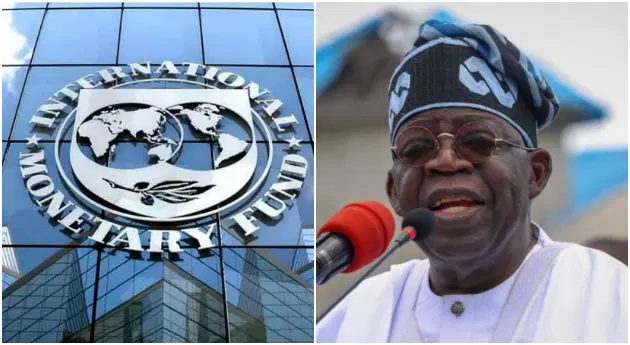
The International Monetary Fund (IMF) has revealed that the Federal Government failed to capture public expenditure worth an estimated ₦8.83 trillion—equivalent to about 2% of Nigeria’s Gross Domestic Product (GDP)—in recent national budgets, resulting in an understatement of the country’s actual fiscal deficit and borrowing needs.
The disclosure was made on Wednesday by the IMF’s Resident Representative in Nigeria, Christian Ebeke, during a meeting with business executives in Lagos.
According to the IMF, the omission has created a mismatch between Nigeria’s reported fiscal deficit and its true financing requirements, as significant government spending, particularly on capital projects, was executed outside the official budget framework.
Based on Vanguard’s findings, Nigeria’s nominal GDP for 2025 stands at ₦441.5 trillion, with government expenditure accounting for approximately 11.73% of GDP. However, an additional ₦8.83 trillion in public spending was not reflected in official budget documents, distorting the country’s fiscal position.
“So far, we think that there are about two per cent of GDP of expenditure that were not reported that should be reported and should be recorded, so that this statistical discrepancy will disappear,” Ebeke said.
He explained that the unreported expenditure was largely linked to major government projects carried out outside the approved budget, making it more difficult to accurately assess the scale of public investment and the government’s financing obligations.
Ebeke warned that incomplete fiscal reporting complicates coordination between fiscal and monetary authorities, as policymakers may be making decisions without a full picture of the government’s financial commitments.
He noted that Nigerian authorities have begun addressing the issue by revising budget legislation to accommodate previously unrecorded expenditure. However, he stressed that updated budget implementation reports would be necessary to fully reflect the adjustments.
The IMF also called for greater fiscal transparency, warning that off-budget spending raises concerns over procurement processes, accountability, and public oversight.
The remarks come shortly after the IMF concluded its latest Article IV consultation on Nigeria, where it praised the Federal Government’s ongoing macroeconomic reforms for strengthening economic stability and improving investor confidence.
Despite the progress, the Fund cautioned that the reforms have yet to translate into broad-based improvements in living standards and remain exposed to external risks, including geopolitical tensions and the ongoing conflict in the Middle East.











Comments