


The Senator David Mark-led faction of the African Democratic Congress (ADC) on Friday proceeded with its National Convention in Abuja, despite a subsisting court order directing the party to halt the exercise.
The convention, which drew over 1,500 delegates and prominent political figures from across the country, ratified key party decisions, including the processes that led to Mark’s emergence as National Chairman.
Earlier in the day, a Federal High Court in Abuja, presided over by Joyce Abdulmalik, had ordered the party to maintain the status quo and refrain from proceeding with the convention pending the determination of a suit filed by aggrieved members.
Despite the order, ADC leaders went ahead with the gathering, insisting the exercise was valid and necessary to safeguard Nigeria’s democracy.
Heavyweight Attendance Signals Political Realignment
The convention witnessed the presence of several political heavyweights, including former Vice President Atiku Abubakar, Labour Party’s 2023 presidential candidate Peter Obi, and former governors such as Rotimi Amaechi, Rauf Aregbesola and Rabiu Kwankwaso.
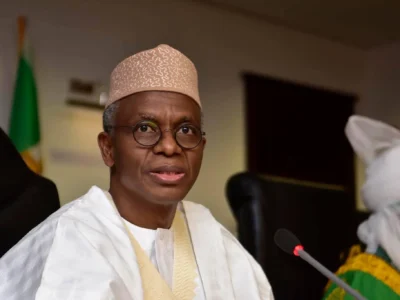
Also in attendance was former Kaduna State governor, Nasir El-Rufai, whose presence drew significant attention following recent political developments.
Foreign diplomats, including representatives from China, the United Kingdom, and Norway, were also present.
Convention Resolutions and Party Shake-Up
A major highlight of the convention was the ratification of decisions from recent National Executive Committee (NEC) meetings, including:
- Dissolution of the National Working Committee (NWC)
- Installation of a caretaker committee led by David Mark
- Expulsion of members accused of anti-party activities
Among those expelled were Nafiu Bala Gombe and Leke Abejide.
Delegates also endorsed constitutional amendments aimed at broadening participation, including the suspension of zoning provisions and relaxation of membership requirements.
ADC Alleges Political Pressure
Ahead of the convention, the party alleged attempts to frustrate the exercise, including threats to revoke the licence of its venue, the Rainbow Event Centre in Abuja.
ADC National Publicity Secretary, Bolaji Abdullahi, claimed the venue owner came under pressure from authorities linked to the Federal Capital Territory administration.
Despite this, party leaders insisted on proceeding, citing a binding agreement with the venue.
‘We Will Not Bow’ — Mark
Speaking at the event, David Mark declared that the party would resist intimidation and remain committed to democratic ideals.
“We will not bow, we will not be cowed, and we will not retreat. What is at stake is not just the opposition, but the survival of democracy in Nigeria,” he said.
He called for unity among opposition forces, stressing that the ADC aims to provide a credible alternative and strengthen democratic governance.
Legal Battle Deepens
The convention comes amid an escalating legal battle over the party’s leadership.
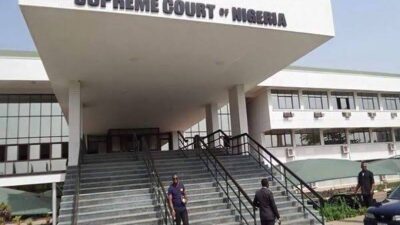
The Federal High Court adjourned the case to April 23 for hearing, while the Supreme Court of Nigeria has fixed April 22 to hear an appeal related to the crisis.
In a separate ruling, another Federal High Court declined an application by the Mark-led leadership seeking to consolidate and fast-track proceedings in a suit filed by Nafiu Bala Gombe, opting instead to await the Supreme Court’s decision.
INEC Under Fire
ADC National Secretary, Rauf Aregbesola, criticised the Independent National Electoral Commission (INEC) for failing to monitor the convention, describing the move as a breach of its statutory duty.
He maintained that the party had fulfilled all legal requirements, including issuing the mandatory notice, and warned that INEC’s absence could undermine confidence in the electoral process ahead of 2027.
Democracy at a Crossroads
Despite mounting legal and political challenges, ADC leaders insisted the convention was valid, framing the moment as a test of Nigeria’s democratic resilience.
They vowed to continue resisting what they described as attempts to weaken opposition voices, warning that the country’s democratic future depends on a vibrant and independent political landscape.









Comments