

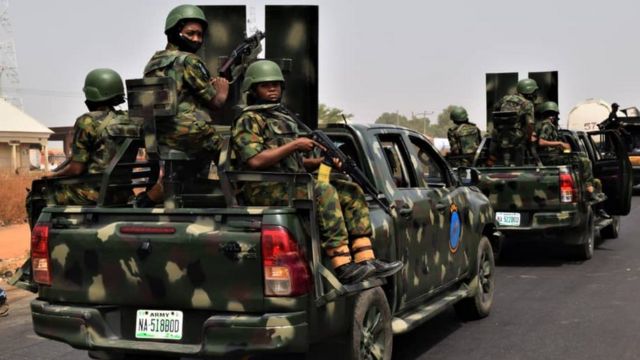
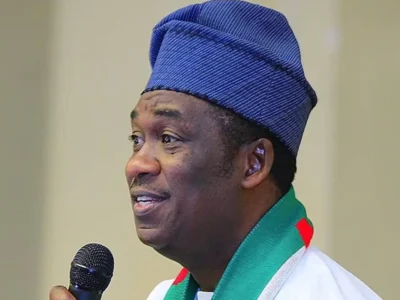
ABUJA — Nigeria’s Armed Forces have moved from a largely reactive stance to sustained offensive operations against terrorists and bandits, according to House of Representatives Deputy Spokesperson Philip Agbese.
Speaking in an interview on Monday, Agbese said recent gains in the North-East and North-West point to a sharper focus on intelligence-driven raids, coordinated air and ground assaults, and the dismantling of terrorist supply lines and command structures.
“Nigeria’s Armed Forces have gone beyond rhetorics. We are now deadly threats to terrorists,” he said.
The numbers
His remarks followed figures attributed to the Defence Headquarters showing that, during operations in July and August, troops:
- Neutralised 1,487 terrorists and insurgents
- Rescued 777 kidnapped victims
- Arrested 354 suspects
- Recovered 91 firearms, 1,331 rounds of ammunition and 44 improvised explosive devices
Fronts in the North
Agbese, who represents a Benue State constituency, said troops under Operation Hadin Kai are continuing offensives against Boko Haram and Islamic State West Africa Province (ISWAP) elements in the North-East. Operation Fansan Yamma remains active across the North-West.
He argued that success should not be measured by body counts alone, but by how far military operations disrupt the networks that recruit fighters, move weapons, secure supplies and maintain bases.
“The significance goes beyond the number of terrorists neutralised or arrested,” he said. “What is important is the weakening of their logistics and command structures and the restoration of normal life in affected communities.”
Praise for military leadership
The lawmaker commended troops for their sacrifices and credited Minister of State for Defence Bello Matawalle, Chief of Defence Staff General Olufemi Oluyede, and Chief of Army Staff Lieutenant General Waidi Shaibu for their roles in the ongoing operations.
He also lauded coordination among the Armed Forces and other security agencies, stressing that intelligence sharing and joint operations are essential because terrorist and bandit networks operate across state and administrative boundaries. The Defence Headquarters has likewise emphasised regional intelligence, integrated border management, security partnerships and joint operations against transnational threats.
Rescued civilians
Agbese described the rescue of civilians, including women and children held captive for months, as a key measure of the operations’ impact.
“The rescue of hundreds of innocent Nigerians, many of them women and children who had spent months in captivity, speaks volumes about the commitment and professionalism of our troops,” he said.
A call against complacency
Despite the gains, Agbese warned against letting up. He urged sustained investment in weapons, intelligence gathering, surveillance, logistics and the welfare of troops operating in difficult terrain.
He also appealed to Nigerians to give security agencies credible information on suspicious movements and activities, noting that community intelligence remains vital in identifying terrorist hideouts, collaborators and supply networks.
“The current momentum must be sustained,” he said. “We cannot allow terrorists to regroup and rebuild their networks.”















Comments