

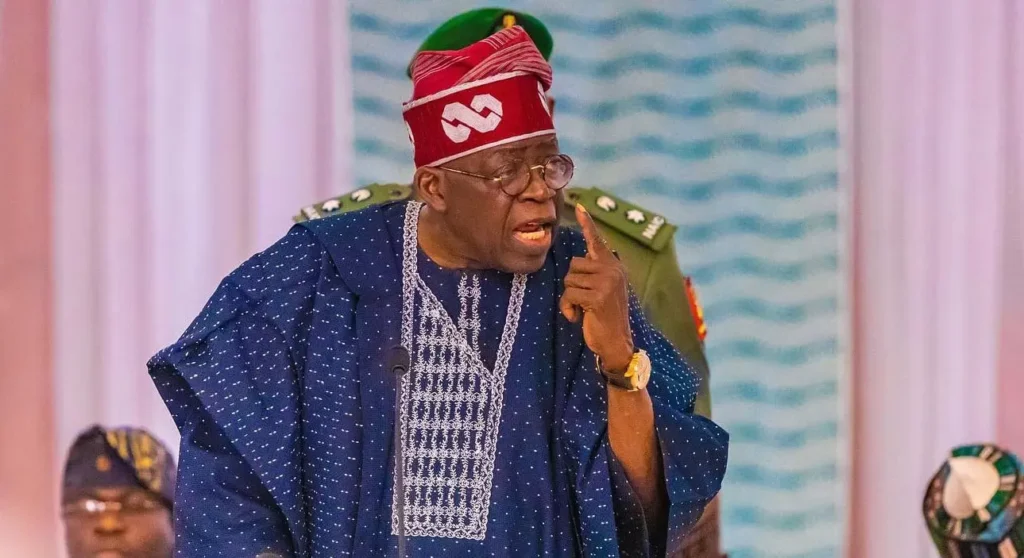
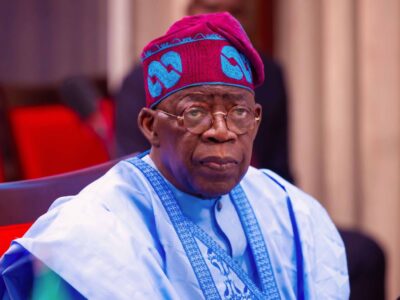
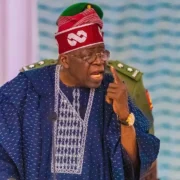
President Bola Ahmed Tinubu’s claim that Northern Nigeria remains the biggest beneficiary of his administration’s economic reforms has triggered sharp disagreement among major Northern groups.
The Arewa Consultative Forum (ACF) and Middle Belt Forum (MBF) rejected the claim, describing it as unrealistic and out of touch with the economic challenges facing millions of people in the region.
However, Northern Christian leaders took a different position, arguing that the North has benefited from several projects and policies under the Tinubu administration and that his government has performed better in some areas than that of former President Muhammadu Buhari.
Tinubu had maintained that the removal of fuel subsidy and other economic reforms were difficult but necessary decisions designed to redirect government resources towards productive sectors.
Represented by the National Chairman of the All Progressives Congress (APC), Prof. Nentawe Yilwatda, at a policy roundtable organised by the APC Professionals Forum, Tinubu said the North would emerge as a major beneficiary of increased economic activity and infrastructure development.
He cited the region’s strategic location and potential for trade with neighbouring countries, including Niger, Chad, Burkina Faso, Sudan, Cameroon and the Central African Republic.
“The biggest beneficiaries of this economy will be the Northern part of Nigeria,” Tinubu said, pointing to projects including the Ajaokuta-Kaduna-Kano gas pipeline, road and rail corridors, education initiatives and credit schemes.
The President also highlighted improvements in foreign reserves, non-oil revenue, trade and economic growth as evidence of progress under his administration.
He urged Nigerians to decide in the 2027 elections whether to consolidate the reforms or reverse them.
ACF: Claim ‘surreal and cynical’
The ACF, however, strongly rejected the President’s assessment.
Its spokesman, Prof. Tukur Muhammad Baba, described the claim that the North is the biggest beneficiary of the reforms as “surreal,” “cynical” and “in sour taste.”
Baba argued that the region continues to face severe challenges in agriculture, insecurity, education, infrastructure and poverty.
He questioned how the North could be considered the biggest beneficiary when insecurity continues to disrupt agricultural activities and millions of residents face worsening economic hardship.
He also criticised what he described as disparities in federal appointments, infrastructure and the allocation of government resources between Northern states and parts of the South.
“If the President made the statement based on information supplied to him, he needs to resort to alternative sources,” Baba said, suggesting that the President may not be receiving an accurate picture of the situation in the region.
MBF: ‘It is a funny assertion’
The Middle Belt Forum also dismissed Tinubu’s claim.
Its National President, Dr Bitrus Pogu, said policies such as fuel subsidy removal and the introduction of Compressed Natural Gas (CNG) affected Nigerians across the country and could not reasonably be described as benefiting one region more than others.
“For him to say that Northern Nigeria is the greatest beneficiary is a funny assertion. Politics should go along with some sincerity,” Pogu said.
He questioned whether the reforms had significantly improved living conditions for Nigerians, including those in the North.
Pogu also criticised the subsidy removal, arguing that Nigerians had yet to experience sufficient benefits from the policy.
Northern Christians defend Tinubu
In contrast, Chairman of the Northern Christian Association, Rev. John Hayab, said the North could not honestly deny benefiting from the Tinubu administration.
Hayab pointed to major road projects across Northern Nigeria, including the Akwanga-Maiduguri, Jos-Jalingo and Kaduna-Birnin Gwari-Mokwa-Lagos corridors.
He also compared Tinubu’s administration favourably with Buhari’s, saying the current government had shown greater commitment to some infrastructure projects.
“Buhari didn’t perform and they are doing better than his. So, why don’t you acknowledge it?” Hayab said.
He also cited the presence of Northerners in key government positions, including the APC national chairmanship and the ministries of Information and Defence.
For Southern Kaduna, Hayab pointed to the establishment of a federal university and federal medical centre as examples of government investment in the region.
He acknowledged that insecurity, hunger and poverty remained serious problems but maintained that these challenges should not prevent Northerners from recognising areas where the government had made progress.
“When he is bad, we will tell him. But in this case, I think he is right,” Hayab said.
Subsidy debate deepens ahead of 2027
The disagreement comes amid an intensifying political debate over fuel subsidy ahead of the 2027 presidential election.
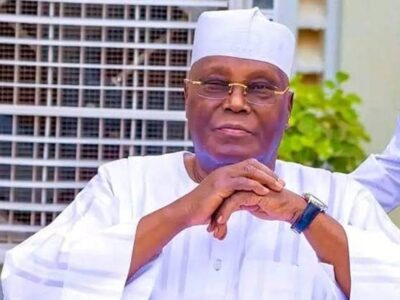
The APC has criticised a proposal by former Vice President Atiku Abubakar to restore the subsidy if elected, arguing that the old system was plagued by fraud, inefficiency and significant financial leakages.
The ADC, which is backing Atiku’s position, said restoring fuel subsidy remains a key part of its strategy to address the rising cost of living.
ADC National Publicity Secretary, Bolaji Abdullahi, described the issue as non-negotiable for the party and said it could become one of the major ideological issues shaping any opposition coalition ahead of 2027.
The growing disagreement highlights the wider political battle over Tinubu’s economic reforms, with supporters pointing to macroeconomic and infrastructure gains, while critics continue to focus on the impact of rising living costs, poverty and insecurity on ordinary Nigerians.






Comments