

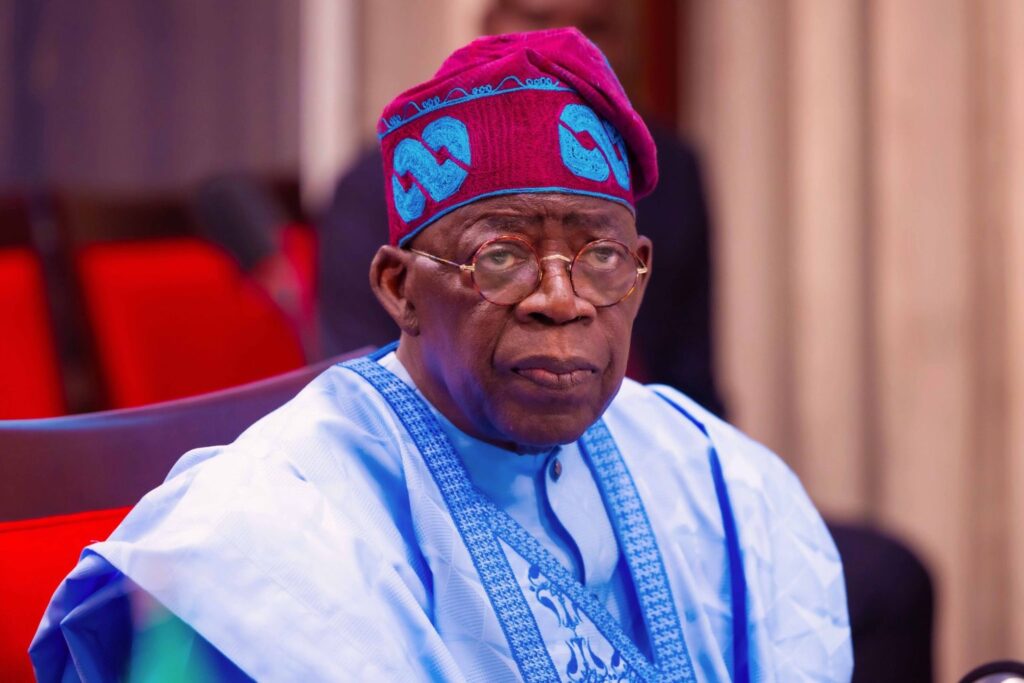
The United States Federal Bureau of Investigation (FBI) has confirmed that President Bola Ahmed Tinubu was investigated in connection with alleged drug-trafficking activities in the early 1990s.
The confirmation was contained in a sworn declaration filed by the FBI on August 28, 2026, before the US District Court for the District of Columbia.
The filing was made in connection with a Freedom of Information Act (FOIA) lawsuit seeking access to FBI records relating to Tinubu.
In the declaration, the FBI stated that the records sought “were compiled in furtherance of the FBI’s investigation of multiple individuals for drug trafficking crimes.”
The agency also noted that the court had previously determined that there had been an official acknowledgement of an investigation involving Tinubu.
The latest filing follows an April 2025 ruling by US District Judge Beryl Howell, who held that the FBI and the Drug Enforcement Administration (DEA) could no longer rely on so-called “Glomar” responses to refuse to confirm or deny the existence of records concerning Tinubu.
Howell ruled that the agencies had failed to establish sufficient privacy grounds to conceal the fact that Tinubu had been investigated. She subsequently ordered the agencies to process the FOIA requests, subject to applicable legal exemptions.
However, the ruling did not establish that Tinubu committed a drug-trafficking offence, nor did it state that he was convicted of any crime.
The FOIA requests were filed by American transparency activist Aaron Greenspan, who sought the “entire FBI file for Bola Ahmed Tinubu,” as well as FBI Form 302 interview records involving Tinubu in FBI Case No. 245-IP-71386-UUUUUU covering the period between 1992 and 1993.
The requests were part of a broader effort to obtain records relating to a Chicago heroin-trafficking investigation conducted by US authorities during the early 1990s.
While the FBI has acknowledged the investigation, it continues to withhold portions of the records, citing exemptions under FOIA relating to personal privacy, confidential sources, law-enforcement techniques and information that could endanger individuals.
The agency said it could not publicly disclose the full details underlying some of the exemptions.
The release of additional records could provide further information about the nature and scope of the investigation, although the FBI’s latest filing, on its own, does not establish criminal wrongdoing by Tinubu.
















Comments