

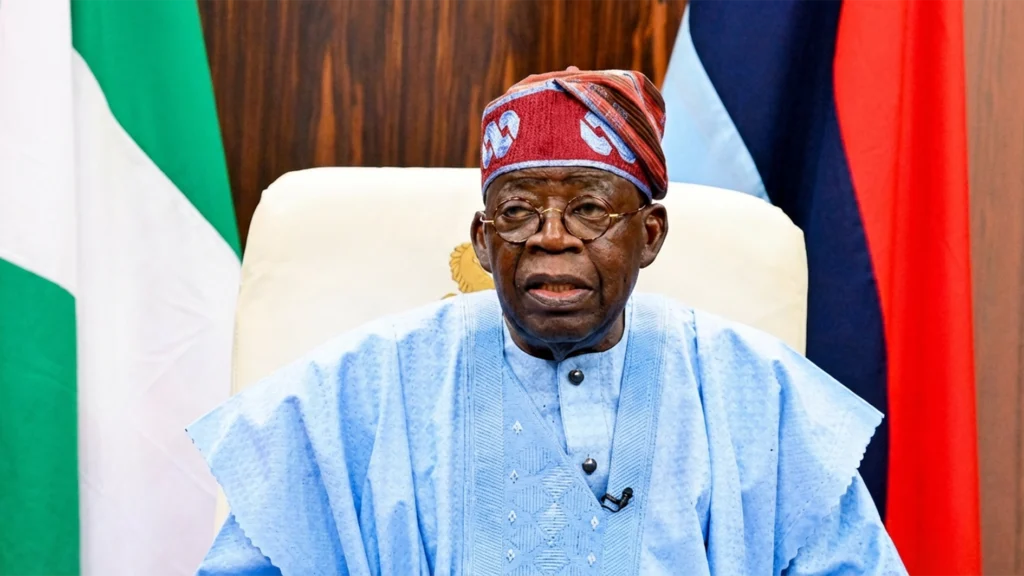
As Nigeria gradually enters another election season, President Bola Tinubu’s administration is facing renewed scrutiny over promises made by the All Progressives Congress (APC) ahead of the 2023 presidential election.
Tinubu came into office with his Renewed Hope Agenda, promising to tackle insecurity, revive the economy, create jobs, improve electricity supply, reduce poverty and enhance the living standards of Nigerians.
While the administration and its supporters maintain that its economic reforms and infrastructure programmes are yielding significant results, opposition figures and other critics argue that the policies have instead worsened economic hardship for millions of Nigerians.
The debate is expected to intensify as political parties prepare their manifestos and campaigns ahead of the 2027 presidential election.
According to the International Monetary Fund’s 2026 Article IV consultation, poverty stood at 63 per cent at the national poverty line, highlighting the difficult economic conditions facing many Nigerians.
Job Creation
During his 2022 campaign, Tinubu pledged to create sufficient jobs with decent wages, particularly for young Nigerians.
He also promised to harness emerging sectors, including the digital economy, entertainment, culture and tourism, to create opportunities for youths and women.
Official unemployment figures from the National Bureau of Statistics indicate that Nigeria’s unemployment rate has declined from 5.3 per cent in the fourth quarter of 2022 to between 4.3 and 4.9 per cent in 2026.
However, opposition figures argue that the official figures do not adequately reflect the level of economic hardship and underemployment experienced by Nigerians.
Electricity Supply
Tinubu also promised to provide sufficient and affordable electricity, with the President famously challenging Nigerians not to vote for him for a second term if his administration failed to deliver constant power supply.
“By all means necessary, you must have electricity and you will not pay for an estimated bill anymore. If I don’t keep the promise and I come back for the second term, don’t vote for me,” Tinubu had said during the campaign.
Although the frequency of national grid collapses has reportedly reduced compared with previous administrations, several communities across the country continue to experience prolonged power outages.
Security
Security was another major component of Tinubu’s campaign promises. His manifesto pledged to establish a strong national security architecture capable of tackling terrorism, kidnapping, banditry and other forms of violent extremism.
However, insecurity remains a major concern across several parts of the country.
At least 750 people were reportedly killed by terrorists in 2025, while thousands of Nigerians have also been displaced by attacks involving terrorists, bandits and other criminal groups.
Nigeria has also been ranked among the countries most affected by terrorism, while thousands of kidnapping incidents have been recorded since Tinubu assumed office in May 2023.
The security crisis has also affected schools, with several mass abductions involving students and school workers recorded during the period.
‘They Made Nigerians Poor’
Leader Sampson, immediate past chairman of the African Democratic Congress (ADC) in Rivers State, accused the Tinubu administration of failing to fulfil its campaign promises.
“Tinubu’s Renewed Hope Agenda has only succeeded in impoverishing Nigerians. They have only enriched themselves and that’s all about the hope agenda,” he said.
Sampson blamed some of the economic hardship on the removal of the fuel subsidy, which was announced by Tinubu shortly after he assumed office.
He also criticised the administration over insecurity and electricity supply, arguing that the government had failed to deliver meaningful improvements in the lives of ordinary Nigerians.
‘What Are They Going to Tell Nigerians?’
Political analyst and grassroots mobiliser Aaron Akogwu also questioned how the APC would approach the 2027 campaign.
He argued that the ruling party would face difficulties explaining to Nigerians how it had fulfilled its previous promises.
“The campaign is going to be difficult for them because what are they going to say to the people? The promises you made before we brought you in, have you been able to keep them? Are we expecting a new lie?” he asked.
Fayose Faults Economic Reforms
Businessman Prince Isaac Fayose also dismissed claims of significant economic improvement under the Tinubu administration, alleging that the benefits of government policies had largely favoured wealthy Nigerians.
He criticised the removal of fuel and electricity subsidies, arguing that ordinary Nigerians had borne the brunt of the reforms without seeing corresponding improvements in infrastructure and living standards.
Fayose also questioned the impact of government cash-transfer programmes, arguing that the amounts provided were insufficient to significantly improve the economic circumstances of poor Nigerians.
Government Defends Reforms
The Federal Government, however, maintains that its economic policies are beginning to deliver results.
Finance Minister and Coordinating Minister of the Economy, Taiwo Oyedele, on Saturday described Moody’s decision to upgrade Nigeria’s economic outlook from ‘stable’ to ‘positive’ as an important external validation of the reforms introduced by the Tinubu administration.
Oyedele said the government’s next objective was to move Nigeria towards investment-grade status, arguing that the improved outlook reflected growing confidence in the country’s economic direction.
With the 2027 election approaching, the competing claims over the impact of Tinubu’s reforms are expected to become a major issue as Nigerians assess the administration’s record against the promises made before the 2023 election.






Comments