

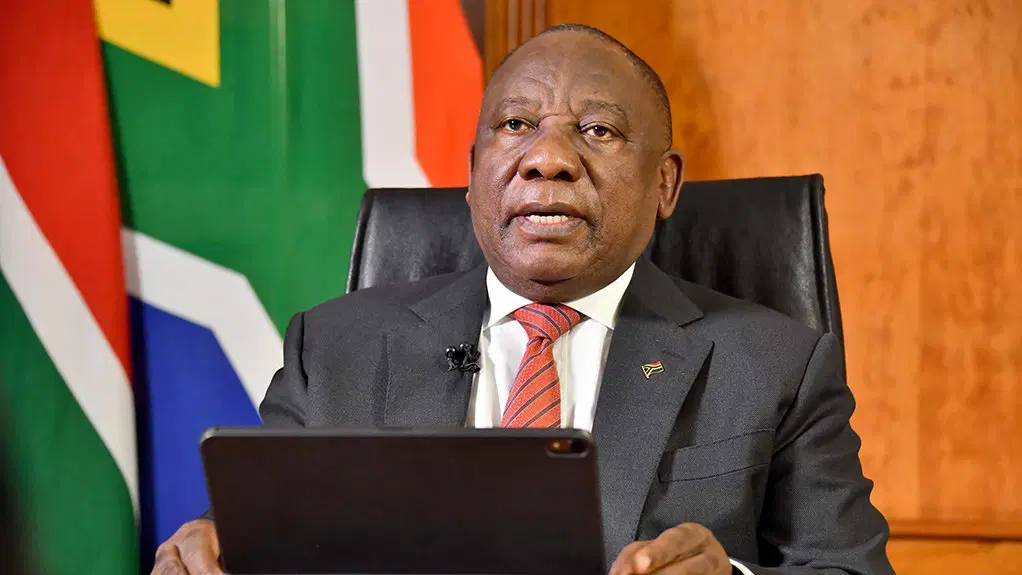
President Bola Tinubu on Monday declined to personally receive a special delegation from South African President Cyril Ramaphosa over the ongoing xenophobic attacks on Nigerians in South Africa, directing the envoys to instead meet with the Minister of State for Foreign Affairs, Ambassador Sola Enikanolaiye.
The South African delegation, led by the country’s Minister of International Relations and Cooperation, Ronald Lamola, had arrived in Abuja on Friday seeking an audience with Tinubu to deliver a message from President Ramaphosa.
However, multiple Presidency sources confirmed that the President opted not to meet the delegation, instructing them to engage with Enikanolaiye, who would subsequently brief him on the outcome of the discussions.
According to one Presidency official, the delegation arrived without prior notice and initially requested an audience with the President.
“They came on Friday hoping to see the President, but there was no prior arrangement. After informing the President, he agreed they could return on Monday. However, when Monday came, he directed them to meet the Minister of State for Foreign Affairs instead,” the source disclosed.
Another Presidency source confirmed that Tinubu would not be receiving the delegation, while a third official noted that no such meeting appeared on the President’s official schedule.
The diplomatic development comes amid heightened tensions between Nigeria and South Africa following renewed xenophobic attacks targeting Nigerians and other African nationals, forcing the evacuation of nearly 600 Nigerians from South Africa.
Sources also revealed that the Minister of Foreign Affairs, Ambassador Bianca Odumegwu-Ojukwu, who is currently on official duties in Addis Ababa, advised that it would be inappropriate for the President to personally receive the delegation while attacks against Nigerians were still ongoing.
Welcoming the South African envoys in Abuja, Ambassador Enikanolaiye said President Tinubu mandated him to engage with the delegation on finding lasting solutions to the recurring attacks.
He stressed that the long-standing relationship between Nigeria and South Africa should not be overshadowed by violence against African migrants.
“We have been directed by President Bola Ahmed Tinubu to exchange views and explore ways to address the ongoing Afrophobic attacks in South Africa, which have affected Nigerians and other African nationals,” Enikanolaiye said.
The minister lamented the recurring pattern of attacks dating back to the mid-1990s, noting that records showed 98 Nigerians had lost their lives in hate-related mob attacks since 2022 alone.
He also recalled Nigeria’s significant role in supporting South Africa’s struggle against apartheid, describing the violence as inconsistent with the historic ties between both nations.
While emphasizing that Nigeria does not condone criminality, Enikanolaiye insisted that anyone accused of crimes should face prosecution through due legal processes rather than mob justice.
He further expressed concern over reports suggesting that law enforcement authorities in some instances failed to intervene during attacks, raising questions about state responsibility.
Describing the humanitarian impact of the violence, the minister recounted the emotional evacuation of Nigerians who returned home after losing their businesses and properties.
“The experience was heartbreaking. I saw women, children and elderly people returning with virtually nothing after their properties had been looted and destroyed,” he said.
Responding on behalf of President Ramaphosa, Lamola said he had been sent as a special envoy to reaffirm South Africa’s opposition to xenophobia, racism, discrimination and all forms of intolerance.
He, however, maintained that South Africa would continue enforcing its immigration laws and tackling criminal activities within its borders.
Lamola added that migration remains a continental challenge requiring collaborative solutions between African countries and expressed optimism that the Abuja engagement would help strengthen bilateral relations and ease tensions.
Relations between Nigeria and South Africa have worsened in recent weeks following fresh outbreaks of xenophobic violence across several South African provinces.
The crisis prompted President Tinubu to approve Air Peace evacuation flights for stranded Nigerians, while the Nigerian government warned that retaliatory diplomatic measures remained under consideration. The House of Representatives also recommended the suspension of business permits for South African companies operating in Nigeria, while the Senate dispatched a delegation to Pretoria to formally convey Nigeria’s concerns.
Lamola’s visit is widely seen as part of President Ramaphosa’s diplomatic efforts to ease tensions ahead of the African Union Extraordinary Summit on Conflict Prevention and Resolution scheduled to hold in Angola from August 29 to 30, 2026.










Comments