


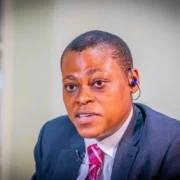
Arise News anchor, Rufai Oseni, has expressed doubts about the ability of Nigerian states to independently generate and distribute electricity, describing the move as impracticable despite the legal framework allowing states to participate in electricity generation and distribution.
Oseni made the remarks on Monday while speaking on Arise Television’s Morning Show, arguing that most states lack the financial resources, technical capacity and infrastructure required to operate independent electricity systems.
According to the broadcaster, electricity generation and distribution require substantial investments in power plants, gas supply, transmission infrastructure and distribution networks, which many state governments cannot afford.
He questioned how states struggling to meet their financial obligations, including the payment of workers’ salaries, would raise the billions of dollars required to establish and maintain electricity infrastructure.
“How many states can generate power? Where is the gas? Where is the grid? Where is the money?” he asked.
Oseni also questioned the capacity of state governments to manage electricity generation when the Federal Government, despite decades of involvement in the sector, continues to struggle to provide adequate power for the country.
He noted that Nigeria’s national grid has continued to experience repeated collapses, while electricity generation remains insufficient to meet the needs of more than 200 million people.
The broadcaster further argued that electricity distribution companies (DisCos) have struggled to effectively distribute the power currently generated, warning that allowing states to establish independent electricity systems without addressing existing challenges could create additional problems.
He maintained that rather than introducing what he described as unrealistic expectations, the Federal Government should prioritise fixing the national grid, improving gas supply to generation companies (GenCos) and strengthening transmission infrastructure.
“If we cannot give Nigerians 24 hours electricity from one centre, how do you want to break it into 36 centres? It will never work,” he said.
Oseni’s comments come amid efforts to decentralise Nigeria’s electricity sector following the Electricity Act 2023, which allows state governments to establish and regulate electricity markets within their jurisdictions, subject to the provisions of the law.






Comments