

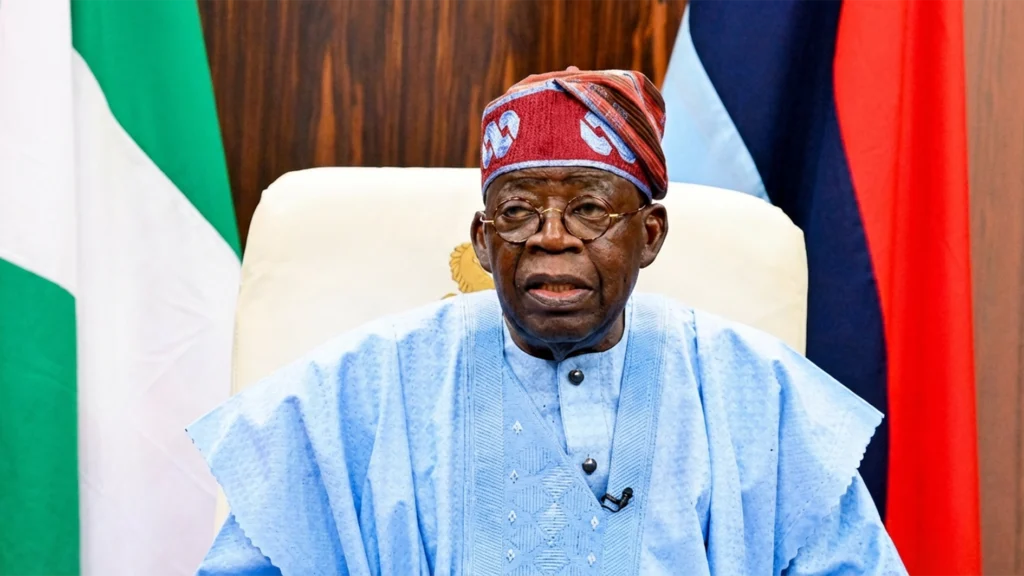
The Presidency has described the strong financial performance of major Nigerian companies in the first half of 2026 as evidence that President Bola Ahmed Tinubu’s economic reforms are delivering positive results for businesses and the wider economy.
In a statement on Wednesday, the President’s Special Adviser on Information and Strategy, Bayo Onanuga, said improved earnings across the energy, manufacturing and banking sectors reflected the impact of the administration’s structural reforms introduced since 2023.
According to Onanuga, the unification of the foreign exchange market remains one of the administration’s most significant reforms, providing a market-driven exchange rate that has improved price discovery and enabled companies with foreign currency earnings to accurately reflect the value of their revenues.
He noted that export-oriented firms such as Aradel Holdings and Seplat Energy have particularly benefited from the policy due to their foreign currency-denominated earnings.
The presidential aide also credited Tinubu’s approval of major upstream oil and gas transactions for strengthening investor confidence. He cited the approval of Renaissance Africa Energy Consortium’s acquisition of Shell Petroleum Development Company (SPDC) assets, in which Aradel Holdings is a member, alongside Seplat Energy’s acquisition of Mobil Producing Nigeria Unlimited (MPNU) assets.
According to him, the approvals expanded the reserve base and production capacity of both companies while eliminating regulatory uncertainty surrounding two of Nigeria’s largest upstream oil transactions.
Onanuga further said the President’s approval of crude oil sales in naira has strengthened local refining capacity, helping position the Dangote Refinery as a net exporter of Premium Motor Spirit (PMS) and aviation fuel.
He added that manufacturers, including Dangote Cement, BUA Cement and HBM Nigeria Plc (formerly Lafarge Africa), have benefited from improved access to foreign exchange and greater exchange rate stability, allowing them to better plan production, source imported inputs and make long-term investment decisions.
The Presidency also linked improved corporate performance to the removal of the petrol subsidy, arguing that the policy has strengthened government finances, increased fiscal capacity for infrastructure investment and created a more stable business environment.
Onanuga said ongoing monetary, banking and tax reforms have further enhanced macroeconomic stability through improved liquidity, exchange rate stability and banking sector recapitalisation, making it easier for businesses to access financing and expand operations.
He maintained that the combined effect of the reforms has improved market efficiency, strengthened investor confidence and created a more predictable operating environment for capital-intensive and export-oriented businesses.
According to the Presidency, the improved corporate results reflect broader gains from the administration’s economic reforms rather than isolated successes by individual companies.
Several companies listed on the Nigerian Exchange (NGX) reported stronger financial results in the first half of 2026, contributing to an estimated N47 trillion in capital gains for investors during the period.
In the telecommunications sector, MTN Nigeria declared an interim dividend of N26 per share after reporting a 13 per cent increase in revenue to N1.49 trillion.
HBM Nigeria Plc posted a 57 per cent rise in profit after tax to N208 billion, driven by higher sales volumes, improved operational efficiency and stronger distribution performance. The company also announced plans to develop a three-million-ton integrated cement production line in Calabar to expand production capacity.
Group Managing Director of HBM Nigeria Plc, Lolu Alade-Akinyemi, expressed optimism about the industry’s outlook, citing continued infrastructure development, rapid urbanisation and sustained construction activities as key drivers of future demand.












Comments