

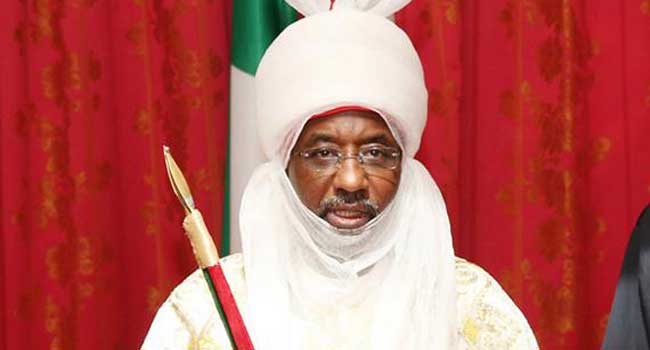
The Emir of Kano, Muhammadu Sanusi II, has called on Nigerian leaders to prioritise economic policies that directly improve the welfare of citizens, stressing that the success of any policy should be measured by its impact on people’s lives.
Speaking at a conference in Kano on Thursday, the monarch, represented by the Danmadamin Kano and Professor of Economics at Bayero University, Kano, Abubakar Aliyu Sanusi, described the gathering as timely in light of the country’s prevailing economic and political challenges.
Sanusi said policies that fail to reduce poverty, improve living standards and promote inclusive economic growth cannot be regarded as successful.
“Economic policies should be assessed based on their impact on the welfare of citizens. Any economic policy that does not improve the welfare of the people is inherently ineffective,” he said.
The emir also urged leaders to draw lessons from history, strengthen democratic institutions and uphold justice, warning that Nigeria cannot build a prosperous future without confronting unresolved issues from its past.
He identified insecurity, corruption, widespread poverty and inadequate infrastructure as some of the nation’s most pressing challenges, calling on political leaders to abandon self-serving politics in favour of governance that prioritises the interests of the people.
According to him, power-sharing should extend beyond geographical considerations and focus on producing credible, competent and compassionate leaders capable of delivering effective leadership.
“Power-sharing should not only be about geographical rotation but about ensuring that credible, competent and compassionate leaders emerge to serve the people,” he added.
Sanusi further appealed to Nigerians, irrespective of religion or political affiliation, to embrace unity, tolerance and collective responsibility in addressing the country’s challenges.
While acknowledging Nigeria’s progress since independence, the emir noted that the country continues to grapple with political instability, ethnic and religious divisions, insecurity and economic hardship, urging all stakeholders to work together towards sustainable national development.











Comments