

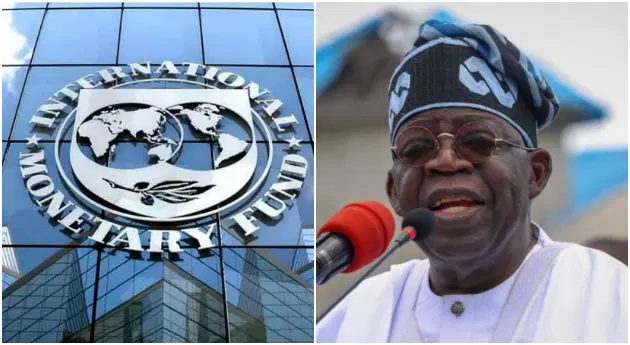
The International Monetary Fund (IMF) has commended the Nigerian government for implementing reforms that have strengthened the country’s economy, while warning that rising poverty and food insecurity remain major challenges for millions of citizens.
In a statement released on Tuesday following its annual assessment of Nigeria’s economy, the IMF said economic reforms introduced by President Bola Tinubu’s administration over the past three years have improved macroeconomic stability and increased the country’s resilience.
Since assuming office in 2023, Tinubu has undertaken a series of major economic reforms, including the removal of the long-standing fuel subsidy, liberalisation of the foreign exchange market, and significant tax policy adjustments.
According to the IMF, these measures have produced positive economic outcomes and placed the country on a more sustainable fiscal path.
“Strong reforms over the past three years have yielded improved macroeconomic outcomes and built resilience,” the Fund stated.
Despite these gains, the IMF noted that living conditions remain difficult for a large segment of the population. It revealed that about 63 percent of Nigerians were living in poverty by the end of 2025, while more than 27 million people experienced food insecurity during the year.
The report aligns with previous findings by the World Bank, which estimated that approximately 61 percent of Nigerians were living below the poverty line, compared to 40 percent in 2019. The World Bank also noted that most of the increase in poverty levels occurred before Tinubu assumed office.
The IMF further identified widespread insecurity, particularly in northern Nigeria, as a major threat to economic activities and food production. Armed conflicts and attacks by criminal groups continue to disrupt farming operations in regions responsible for a significant share of the country’s food supply.
Meanwhile, inflation remains a concern. Official data showed that Nigeria’s inflation rate rose to 15.7 percent in April, marking its highest level in five months. Analysts linked the increase partly to rising fuel costs driven by the ongoing conflict in the Middle East.
Looking ahead, the IMF projected Nigeria’s economy to grow by 4.1 percent in 2026, up from four percent recorded in 2025.
However, the Fund cautioned that higher global prices for food, fertiliser and fuel could have mixed consequences for the country. While increased oil prices may boost government revenues as Africa’s largest crude oil producer, they could also worsen inflationary pressures and deepen hardship for vulnerable households.
The warning comes as Nigeria prepares for the January general election, where President Tinubu is expected to seek a second term in office.
The IMF urged authorities to sustain economic reforms while strengthening social protection measures aimed at cushioning the impact of rising living costs on low-income Nigerians.














Comments