

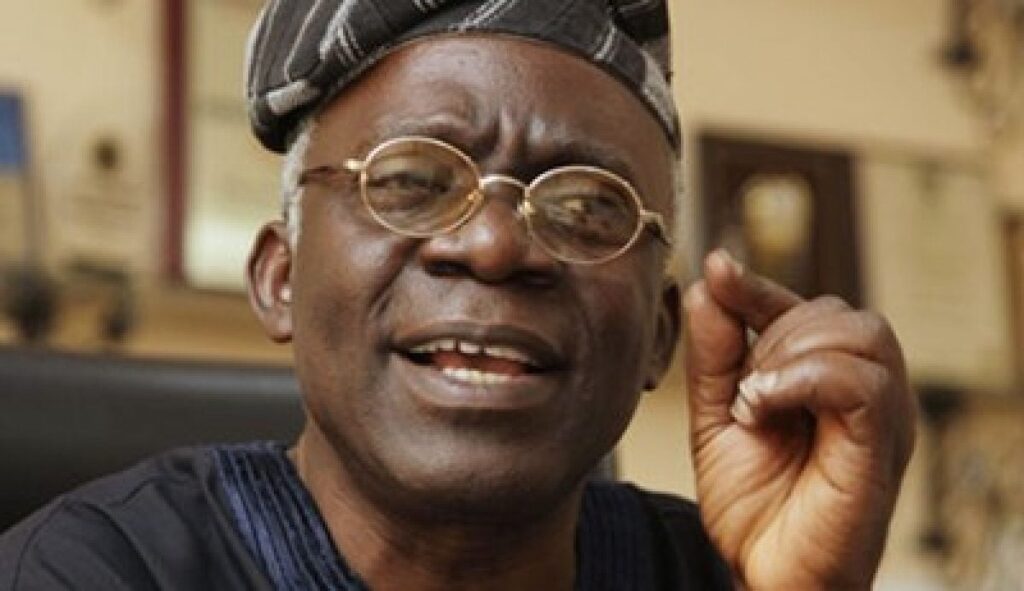
Human rights lawyer, Femi Falana (SAN), has raised strong objections to the dress code prescribed for prosecutors and defence counsel set to appear before the General Court Martial convened to try 36 military officers accused of plotting to overthrow President Bola Tinubu.
In a statement issued on Sunday, Falana argued that the directive issued by the military authorities contradicts established legal ethics governing the conduct of lawyers in Nigeria, particularly the Rules of Professional Conduct for Legal Practitioners 2023.
The controversy stems from a Convening Order dated April 23, 2026, signed by Major General A.M. Alechenu. The order outlines a specific mode of dressing for all participants in the proceedings. It mandates that military officers wear No. 4 dress (or its equivalent), while soldiers are to appear in No. 5 dress. Civilian lawyers, however, are required to be fully robed.
The directive also provides an option for serving military officers who are lawyers, allowing them to either appear in military uniform or wear legal robes during the trial.
Falana described the arrangement as inconsistent with existing professional rules. He cited provisions of the Rules of Professional Conduct which clearly distinguish the roles and appearance of legal practitioners, especially those serving in the armed forces.
According to him, Rule 8(5) stipulates that a lawyer who is also a military officer may only appear before a court martial in their capacity as an officer, not as a legal practitioner. Additionally, Rule 45 restricts the wearing of legal robes to courtroom settings, unless otherwise permitted by the Bar Council.
He warned that compliance with the military’s directive could expose both defence counsel and military prosecutors to disciplinary action by the Legal Practitioners Disciplinary Committee for professional misconduct.
Falana maintained that the military authorities should withdraw the directive to avoid placing legal practitioners in a position that could compromise their professional standing.
The ongoing case, which has drawn national attention, continues to raise legal and constitutional questions, particularly regarding the use of a military court to try alleged coup plotters.










Comments