

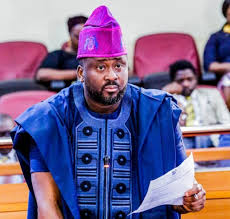
The political storm surrounding Lagos lawmaker and Nollywood actor, Desmond Elliot, is fast becoming more than a constituency dispute in Surulere. What began as tensions over his reported fourth-term ambition has now drawn attention to the deeper workings — and possible vulnerabilities — of President Bola Tinubu’s long-standing political structure in Lagos.
Elliot, who represents Surulere Constituency I in the Lagos State House of Assembly, has reportedly come under pressure following allegations linking him to the internal crisis that recently rocked the Assembly.
The situation was said to have escalated to the point where President Tinubu allegedly directed his Chief of Staff, Femi Gbajabiamila, to caution Elliot, who is widely regarded in political circles as one of Gbajabiamila’s loyal protégés.
Political observers say the development highlights Tinubu’s decades-old strategy of managing Lagos politics through multiple layers of influence and competing power blocs.
For years, the Lagos political structure under Tinubu has operated on a system where loyalists are allowed to build their own followerships, while remaining ultimately accountable to him as the central authority. The arrangement created a network of rival camps, overlapping loyalties and alternative reporting channels that enabled Tinubu to maintain firm control over the state’s political machinery.
Under that framework, leaders such as Gbajabiamila developed their own loyal political bases, including figures like Elliot, while Tinubu simultaneously maintained independent channels for intelligence and political feedback from the same constituencies.
It was reportedly through one of those alternative channels that allegations reached Tinubu accusing Elliot of playing a role in moves against Lagos Assembly Speaker, Mudashiru Obasa, considered one of Tinubu’s long-standing political strongmen in the state.
Despite criticisms and strained relationships with several political actors, Obasa has remained influential within the Lagos structure, largely because of his strategic value in balancing competing centres of power, particularly against emerging forces around Governor Babajide Sanwo-Olu.
Analysts note that Tinubu’s political philosophy has consistently revolved around preventing any single loyalist from becoming too dominant or indispensable.
The system thrives on internal competition, with rival camps monitoring one another and political information constantly flowing upward. Ambition is tolerated, insiders say, but only within carefully managed limits.
Historically, Tinubu deployed influential blocs such as the Justice Forum and the Mandate Group to maintain balance within Lagos politics. The Mandate Group, strongly associated at the time with Rauf Aregbesola, played a key role during the internal resistance linked to the camp of former Governor Babatunde Fashola, helping Tinubu reassert control over the state’s political structure.
However, the Desmond Elliot controversy is now raising fresh questions about whether the once tightly controlled system is becoming harder to manage.
Although Tinubu’s political machinery remains powerful and influential, insiders suggest some grassroots structures have grown increasingly independent. The recent local government elections reportedly demonstrated the enduring strength of old blocs such as the Justice Forum, whose members were said to have secured more than 40 council positions across Lagos.
The same pattern is reportedly emerging in conversations surrounding the 2027 Lagos governorship succession.
Unlike the emergence of Fashola in 2007 and Akinwunmi Ambode in 2015, insiders say the growing support for Deputy Governor Femi Hamzat within the Governance Advisory Council (GAC) reflects broader internal consensus rather than a direct imposition from Tinubu.
Political sources claim many influential GAC members favour Hamzat because of his family’s historic roots within the Lagos political establishment, making it difficult for Tinubu to openly oppose the momentum without risking deeper fractures within the APC structure in the state.
Observers say Elliot’s current troubles ultimately reveal a broader transformation within Tinubu’s political empire.
While Tinubu remains the undisputed leader of Lagos politics, the structure he built has evolved into a network of powerful sub-centres controlled by ambitious loyalists, many of whom are increasingly pursuing their own political calculations.
Gbajabiamila’s reported intervention in the Elliot matter is also being interpreted as part of a wider struggle for influence among Tinubu’s closest allies, especially as the President’s relocation to Abuja and the demands of national leadership create new openings for regional power consolidation within Lagos.
For many analysts, the Desmond Elliot episode is no longer simply about one lawmaker’s re-election ambition. Instead, it has become a symbol of a political machine still feared and formidable, but now facing the complex realities of succession, competing ambitions and shifting loyalties within its own ranks.












Comments