

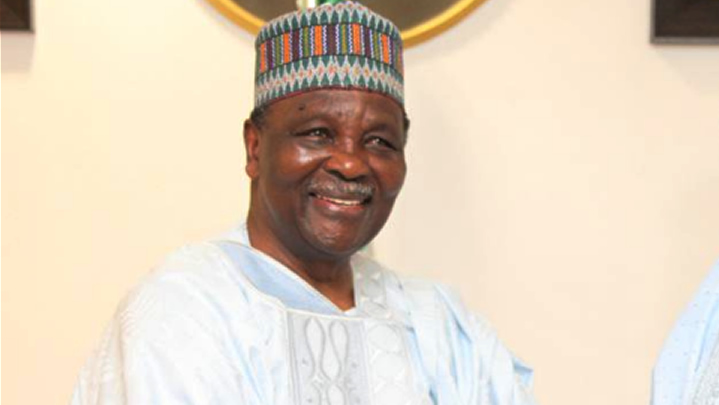
Former Nigerian Head of State, Yakubu Gowon, has revealed the atmosphere of fear, suspicion and betrayal that surrounded the final days of his government before the July 29, 1975 coup, warning that leaders who govern through fear often become prisoners of manipulative advisers, rumours and personal anxiety.
In his autobiography, My Life of Duty & Allegiance, Gowon offered a deeply personal account of the events leading to his overthrow while attending the Organisation of African Unity (OAU) summit in Kampala, Uganda, describing not only the political tension within the military but also the emotional burden carried by his family as uncertainty closed in around his administration.
Reflecting on leadership during Nigeria’s military era, Gowon wrote that rulers who constantly fear being removed from office often lose the ability to govern effectively.
“Any leader who lives in fear and acts on every rumour of plots to remove him or her from office can hardly accomplish anything,” he stated.
He added that such leaders risk becoming dependent on “wily and self-serving advisers” as well as “prophets” and “marabouts” who exploit insecurity for influence and access to power.
According to Gowon, rumours of coups became a permanent feature of governance after the military entered politics in January 1966.
“From the night of January 15, 1966 when the military made its incursion into governance in Nigeria, it became routine to instinctively associate ‘something’ with a coup d’état in the works,” he wrote.
The former Head of State disclosed that by early 1975, intelligence reports from several sources warned him that young officers from the old Northern Region were plotting to overthrow his government.
He recalled that then Commissioner of Police and head of Special Branch intelligence, D. Yusuf, informed him that some officers were allegedly preparing to seize power while he attended the OAU summit in Kampala.
The names later mentioned included Col. Joseph Nanven Garba and Col. Anthony Ochefu, both of whom occupied highly sensitive security positions close to the presidency.
Gowon admitted that the allegations against Garba particularly unsettled him because of their close relationship and the confidence he had personally reposed in him over the years.
“Indeed, it was an open secret amongst officers that I was genuinely fond of him,” Gowon wrote.
Despite mounting intelligence reports, Gowon said he initially resisted believing the allegations, insisting on stronger evidence before taking action.
However, tension deepened when Ochefu reportedly ignored repeated summons to appear before him prior to his departure for Uganda.
According to the memoir, Gowon eventually confronted Garba directly before leaving the country.
“If you boys want to take over, you can try. If you succeed, you can call it your ‘revolution’ and you can do whatever you want,” he recalled telling him.
The former military ruler said he still chose to travel to Kampala because of Nigeria’s diplomatic commitment to supporting Angola’s independence struggle and broader African interests.
But while attending the summit, the coup eventually took place on July 29, 1975, bringing an end to his nearly nine-year administration without bloodshed.
Beyond the political events, Gowon’s memoir paints a striking picture of the emotional aftermath of losing power.
He described the quiet moment in a Kampala hotel room when the reality of his removal finally sank in.
“The reality that I was out of office dawned on me early enough when I left the conference hall and had a few moments alone with myself in my hotel room in Kampala,” he wrote.
Rather than thinking about political retaliation or reclaiming office, Gowon said his immediate concern became the welfare of his family and where they would now live.
“I began to think about the future and where to settle my family, who, like me, had become unprepared and reluctant sojourners in foreign lands,” he stated.
The memoir also revealed that then Cameroonian President Ahmadou Ahidjo offered him temporary refuge following the overthrow.
According to Gowon, the experience taught him how fear and insecurity around power can weaken leadership and create opportunities for ambitious subordinates to manipulate the state.
“Any leader who permitted this sort of thing would automatically have signed off his own death warrant, undermined his own authority and irrevocably programmed his country to self-destruct,” he warned.
For historians and political observers, the autobiography provides one of the clearest insider accounts yet of the tense final days of the Gowon administration, while also exposing the deeply human reality behind the sudden collapse of power.
At the centre of the story remains a haunting image: a former ruler alone in a Kampala hotel room, no longer thinking about authority or statecraft, but about the uncertain future of a displaced family far from home.












Comments