

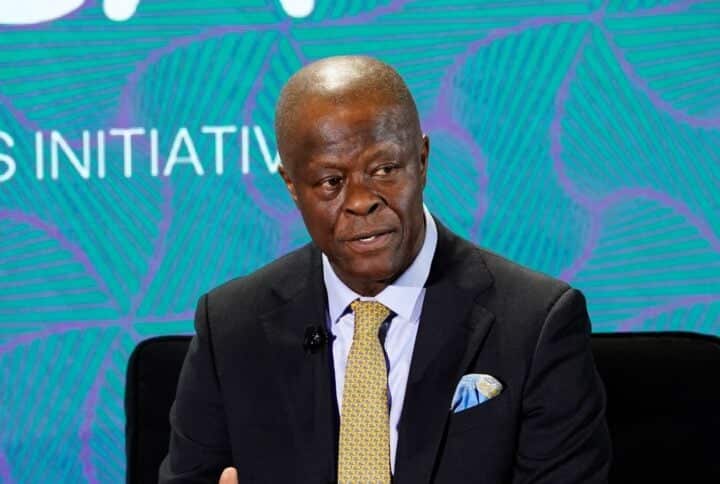
Former Minister of Youth and Sports Development, Solomon Dalung, has weighed in on the exit of former Finance Minister Wale Edun, describing him as a man of strong integrity who struggled to fit into the realities of Nigeria’s political environment under President Bola Tinubu.
Speaking in an interview on Trust TV, Dalung said Edun’s resignation—officially linked to health reasons—was, in his view, only part of the story, insisting that deeper political dynamics may have influenced his departure.
According to him, Edun’s personal values and the system he operated in were fundamentally at odds.
Dalung said he had known Edun closely over the years and held him in very high regard, describing him as “one of the best Nigerians” he has encountered. However, he argued that such integrity could become a disadvantage in a highly political environment.
He suggested that Edun may have reached a point where staying in office was no longer sustainable.
“In my opinion, he tolerated the situation until it became too much, and he had to step away,” Dalung said, while acknowledging that the official explanation given was health-related.
He added that while he would not openly dispute the government’s position, those familiar with Edun’s character might interpret the situation differently.
Dalung also used the opportunity to reflect on what Edun’s exit says about political loyalty and security within the current administration, arguing that even long-standing allies of the President are not insulated from sudden changes.
“No one is truly untouchable in that circle,” he remarked, suggesting that Edun’s departure should serve as a signal to others in government.
On a more personal note, Dalung revealed that his relationship with Edun had become distant since his appointment as minister, noting that his calls were no longer returned after Edun assumed office.
He also said he once privately sympathized with Edun’s appointment, believing the demands of the role might clash with his temperament and values.
In a separate comment on internal party politics within the African Democratic Congress (ADC), Dalung reacted to discussions around adopting Labour Party’s Peter Obi under a proposed political alignment.
He described the idea as “interesting and potentially strong,” but stressed that as a party leader, he could not publicly endorse any single candidate over others, insisting on fairness within the party structure.
Dalung warned that the ADC must avoid repeating what he described as the mistakes of other major political parties, emphasizing transparency and internal democracy as key to its survival and credibility.
The comments come amid ongoing political realignments and speculations ahead of the 2027 general elections, where alliances and defections are already shaping early narratives.












Comments