

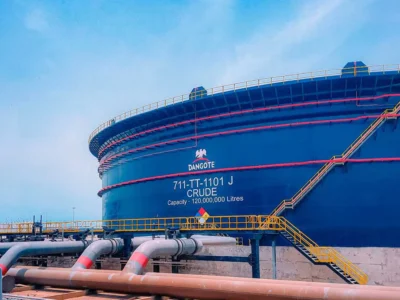
The Independent Petroleum Marketers Association of Nigeria (IPMAN) has strongly opposed the continued importation of Premium Motor Spirit (PMS), insisting that local production—particularly from the Dangote Petroleum Refinery—is sufficient to meet Nigeria’s fuel needs.
The association also dismissed reports linking a surge in petrol imports in November 2025 to an alleged collapse of supply arrangements between Dangote Refinery and petroleum marketers, describing such claims as inaccurate and misleading.
In a statement, IPMAN said the reports do not reflect the realities faced by its members, stressing that the commencement of supply from Dangote Refinery has significantly improved fuel availability across the country.
Speaking on the issue, IPMAN National President, Abubakar Maigandi Shettima, said the association fully supports Dangote Refinery and its operations in the downstream sector.
“Our members fully support Dangote Refinery. Since supply began, marketers have consistently lifted products without any complaints. We oppose continued importation because Dangote Refinery has the capacity to meet the country’s entire PMS demand,” Shettima said.
He added that members are satisfied with the reliability of supply and welcomed the refinery’s plan for direct delivery to filling stations, describing it as a critical step toward stabilising distribution and protecting consumers.
According to him, improved access to locally refined products has eased supply pressures nationwide and boosted confidence among independent marketers, reaffirming IPMAN’s commitment to domestic refining as a sustainable solution for Nigeria’s downstream petroleum sector.
Similarly, Dangote Petroleum Refinery dismissed the media reports as baseless, clarifying that no supply agreement with marketers had collapsed. The refinery said its engagement with the downstream market was deliberately structured to meet rising demand while improving access, competition, and efficiency.
The refinery disclosed that supply under the marketers’ arrangement began in October 2025 with an agreed offtake volume of 600 million litres of PMS, which was increased to 900 million litres in November and further expanded to 1.5 billion litres in December.
“In line with market growth and absorption capacity, volumes were scaled up accordingly. Subsequently, and in line with downstream market liberalisation, we opened PMS supply to all qualified marketers, bulk consumers, and filling station operators,” the statement, signed by Group Chief Branding and Communications Officer, Anthony Chiejina, said.
Since December 16, 2025, the refinery noted that it has consistently loaded between 31 million and 48 million litres of PMS daily from its gantry, depending on market demand—figures it said are verifiable through depot and regulatory records.
To improve participation and distribution efficiency, Dangote Refinery said it reduced minimum purchase volumes from two million litres to 250,000 litres and introduced a 10-day credit facility backed by bank guarantees. These measures, it explained, are aimed at supporting small and medium-scale operators, enhancing liquidity, and reducing reliance on imported fuel.
The refinery also dismissed claims that marketers withdrew due to pricing concerns, insisting that its ex-gantry prices remain competitive, market-driven, and aligned with import parity benchmarks while meeting all regulatory and quality standards.
Addressing the spike in petrol imports recorded in November 2025, Dangote Refinery explained that the increase followed import licences approved by the former leadership of the Nigerian Midstream and Downstream Petroleum Regulatory Authority (NMDPRA), which sanctioned volumes beyond prevailing domestic demand. It stressed that the development was unrelated to its operational capacity or supply commitments.
Reaffirming its commitment to transparency and reliable supply, Dangote Refinery pledged continued collaboration with regulators and industry stakeholders to promote domestic refining, conserve foreign exchange, stabilise prices, and strengthen Nigeria’s long-term energy security.
















Comments