

The African Democratic Congress (ADC) has explained why its 2027 presidential candidate, Atiku Abubakar, was absent from Monday’s G100 opposition summit in Abuja.
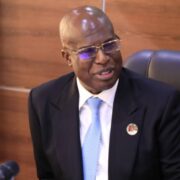
ADC National Publicity Secretary, Bolaji Abdullahi, said the summit was primarily focused on discussions among political parties rather than presidential candidates.
Abdullahi made the clarification on Tuesday during an appearance on Arise Television’s Day Break.
According to him, the meeting was designed to explore areas of cooperation among opposition parties ahead of the 2027 general elections, making the absence of individual presidential candidates less significant.
“The summit is more about conversation between political parties, rather than conversation among candidates. It’s more about exploring cooperation opportunities among political parties. So, it’s not consequential that Alhaji Atiku Abubakar was not present,” he said.
Abdullahi said the ADC was fully represented at the summit, noting that he attended alongside four of the party’s vice chairmen.
“I was there, the party was highly represented—we had like four Vice Chairmen there at the G100 Summit. So, ADC was fully represented, and we participated in the process,” he added.
The summit, held at the Shehu Musa Yar’Adua Centre in Abuja, brought together representatives of six opposition parties to discuss possible areas of collaboration ahead of the 2027 elections.
The talks form part of ongoing efforts by opposition parties to establish a common platform capable of challenging the ruling All Progressives Congress (APC).
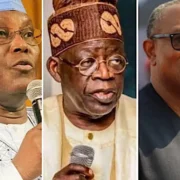
Several prominent opposition figures, including Peter Obi, Oyo State Governor Seyi Makinde and Atiku Abubakar, were absent from the gathering.
Presidential candidates present at the summit included Donald Duke of the Peoples Redemption Party, Adewole Adebayo of the Social Democratic Party and Moses Adebisi of the Democratic Leadership Alliance.
Abdullahi also stressed that the ADC’s participation in the opposition discussions was not conditional on the emergence of a single presidential candidate.
“We in the African Democratic Congress are happy to have this conversation, but everything we are doing is not dependent on whether we are able to produce a single presidential candidate,” he said.
He maintained that the ADC was confident of defeating President Bola Tinubu in 2027 on its own, while acknowledging that cooperation among opposition parties could make the task easier.
“We are saying that on our own, as the ADC, we can defeat President Bola Tinubu in 2027. But if we are able to negotiate this cooperation, then it makes the job easier,” Abdullahi said.
However, he identified the issue of fuel subsidy as a potential stumbling block in any proposed opposition coalition.
According to him, the ADC considers the return of fuel subsidy a key component of its strategy to address the rising cost of living and would not compromise on the issue.
He said any potential coalition would have to address ideological differences among the participating parties, particularly over whether fuel subsidies should be restored.
“For us, it is non-negotiable. We are convinced, our economists are working day and night looking at some of the numbers in greater detail than I can give you—I’m not an economist—but for us, it is something that we are not going back on,” he said.
Abdullahi added that the ADC could find common ground with opposition figures who share its position on fuel subsidies, citing Olawepo-Hashim and Omoyele Sowore as examples.
He said agreement among politicians on the issue could provide a basis for broader cooperation ahead of the 2027 elections.





Comments