

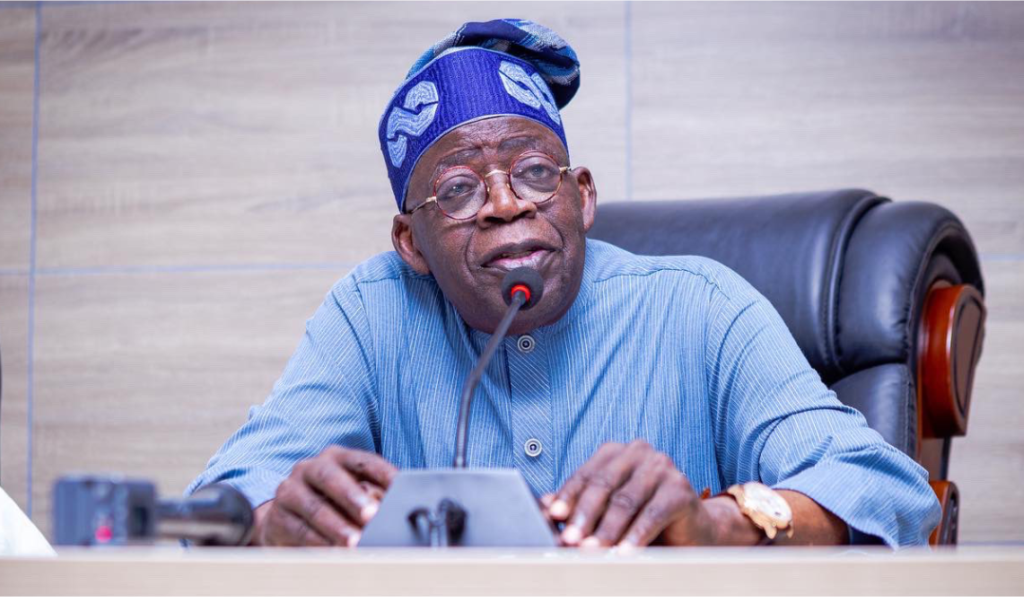
President Bola Ahmed Tinubu never expressed interest in becoming the running mate to former President Muhammadu Buhari ahead of the 2015 presidential election, a new book by veteran journalist Sam Omatseye has revealed.
The book, titled From AD to APC: The Evolution of Nigerian Political Parties and the Exploits of One Man (1998–2015), provides fresh insights into the political negotiations and power struggles that shaped the emergence of the All Progressives Congress (APC) and its eventual victory in the 2015 general election.
The book is scheduled for presentation at the State House, Abuja, with President Tinubu expected to attend as the guest of honour.
In Chapter 27, titled The Vice President Question, Omatseye, Chairman of The Nation’s Editorial Board, detailed how former Lagos State Attorney-General and Commissioner for Justice, Professor Yemi Osinbajo, eventually emerged as Buhari’s running mate after other prominent figures reportedly declined the position.
According to the author, contrary to claims that Tinubu had initially sought the vice-presidential ticket but was pressured into relinquishing it, the former Lagos State governor never indicated an interest in the position.
Omatseye wrote that Tinubu consistently suggested two individuals for the role: Osinbajo and former Lagos State Commissioner for Economic Planning and Budget, Yemi Cardoso.
The author further recalled that during the negotiations for an alliance between the Action Congress of Nigeria (ACN) and Buhari’s Congress for Progressive Change (CPC) in 2011, the ACN had already nominated Osinbajo as Buhari’s potential running mate.
He cited former presidential aspirant Nuhu Ribadu’s account to support the claim that Tinubu did not offer himself for the position during the earlier negotiations.
Omatseye also quoted Bisoye Coker, whom he interviewed while researching the book, as insisting that Tinubu never wanted to become vice-president because he was unwilling to play second fiddle to anyone.
Coker reportedly disclosed that Tinubu’s first choice for Buhari’s running mate was former Lagos State Governor Babatunde Fashola, SAN.
However, Fashola declined the offer, explaining that he needed time to recover from the demanding eight-year experience of governing Lagos State.
In an interview quoted in the book, Fashola confirmed that Tinubu personally approached him about the possibility of becoming Buhari’s running mate.
According to Fashola, Tinubu told him that the party was considering the vice-presidential position, prompting him to suggest that Tinubu himself should take the opportunity.
When Tinubu rejected the suggestion, Fashola said he was subsequently offered the position but turned it down because he wanted to rest after completing his tenure as governor.
Fashola further revealed that Tinubu contacted former Osun State Governor and APC Interim National Chairman, Chief Bisi Akande, to persuade him to convince Fashola to accept the offer.
However, Fashola maintained his position, telling Akande that he had completed his political assignment in Lagos and needed a break.
The book also provides details of the internal APC discussions over the zoning of the vice-presidential position following Buhari’s emergence as the party’s presidential candidate.
Fashola recalled a meeting at the Abuja residence of former Rivers State Governor Rotimi Amaechi, where party leaders debated whether the running mate should come from the South.
He said then-APC National Chairman John Odigie-Oyegun argued that the position should go to the South because Buhari was from the North.
Fashola, however, insisted that the position should specifically be allocated to the Southwest, although he maintained that he was not seeking the position for himself.
Among those reportedly present at the meeting were former governors Kayode Fayemi of Ekiti State, Isiaka Ajimobi of Oyo State and Rauf Aregbesola of Osun State. Tinubu was said not to have attended.
Another major revelation in the book concerns the controversy surrounding the proposed Muslim-Muslim presidential ticket.
Omatseye disclosed that Buhari initially preferred a running mate from the Southwest who was a Christian, a position that reportedly created tension between him and Tinubu.
The disagreement was eventually resolved after both men held a private meeting and agreed that Buhari’s running mate should be a Southern Christian.
Osinbajo subsequently emerged as the preferred candidate, a development that reportedly brought relief to several party leaders.
The author also quoted former Nasarawa State Governor Tanko Al-Makura as saying that there was considerable tension within Buhari’s camp while waiting for Tinubu to submit his preferred candidate.
Al-Makura reportedly disclosed that former Ekiti State Governor Kayode Fayemi was among the prominent names being considered by Buhari and could have been selected if Tinubu had failed to communicate his choice before the nomination deadline.
Omatseye further examined the political divisions within the APC at the time, noting that some influential party leaders opposed the possibility of a Muslim running mate partly because they suspected Tinubu would be the person selected.
He identified former Rivers State Governor Rotimi Amaechi as one of the prominent figures who reportedly complained about Tinubu’s influence in the party after his preferred candidate was not selected.
The book also traced how suspicions surrounding Tinubu’s growing influence within the APC contributed to political tensions during Buhari’s presidency and later resurfaced during the contest to succeed him.
The revelations offer a fresh account of the negotiations, disagreements and political calculations that shaped the APC’s 2015 presidential ticket and the eventual emergence of Osinbajo as Buhari’s running mate.









Comments